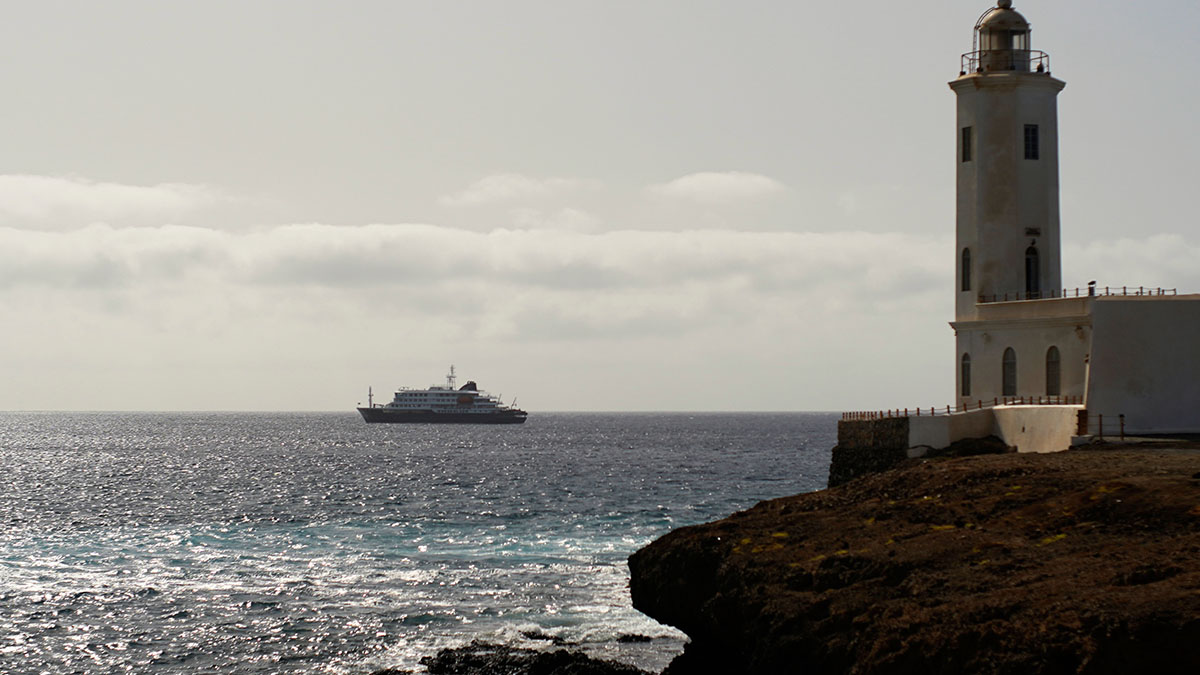
A cruise ship carrying nearly 150 people is stranded off Cape Verde after three passengers died and three others became seriously ill in a suspected hantavirus outbreak; only one case has been confirmed so far. Cape Verde is refusing to let the vessel dock, while WHO and local authorities are coordinating evacuations and contact tracing. The incident creates a clear operational and reputational hit for Oceanwide Expeditions and a broader near-term caution for the cruise/travel sector.
This is not a generic isolated health headline; it is a live stress test of how fragile premium expedition travel is when a vessel becomes a quarantine node far from tertiary care. The immediate economic damage is concentrated in operators with small fleets and high fixed-cost utilization: one extended off-hire event can erase a meaningful share of a season’s EBITDA because the asset cannot be redeployed quickly and refunds/reaccommodation costs compound. The bigger second-order effect is on buyer behavior for polar and remote itineraries, where travelers pay for perceived safety as much as destination access; even a low-probability pathogen event can lift cancellation rates and insurance costs across the niche. The market likely underestimates the operational cascade: medical evacuation constraints, port-state public health decisions, and repatriation delays all raise the probability that a single incident becomes a multi-week revenue interruption rather than a one-off headline. For cruise and expedition operators, the key risk is not direct contagion alone but the loss of scheduling reliability, which can ripple into charter customers, local service providers, and adjacent tourism infrastructure in Atlantic and Southern Hemisphere gateway cities. Airports and evacuation hubs in Cape Verde, South Africa, and Spanish Atlantic islands may see short-lived incremental demand, but that is noise relative to the negative read-through for specialty leisure names. Contrarianly, the broader cruise complex may be less exposed than investors reflexively assume because mainstream mass-market operators have stronger medical protocols, larger ships, and better route flexibility. The more actionable short is the small-cap, expedition/luxury end where one bad event can impair forward bookings for multiple quarters; investors should focus on forward commentary and booking trends rather than the headline death toll. If authorities resolve the case quickly and no secondary transmission emerges over the next 1-2 weeks, the trade becomes a volatility fade rather than a structural earnings event.
AI-powered research, real-time alerts, and portfolio analytics for institutional investors.
Request DemoOverall Sentiment
strongly negative
Sentiment Score
-0.72
