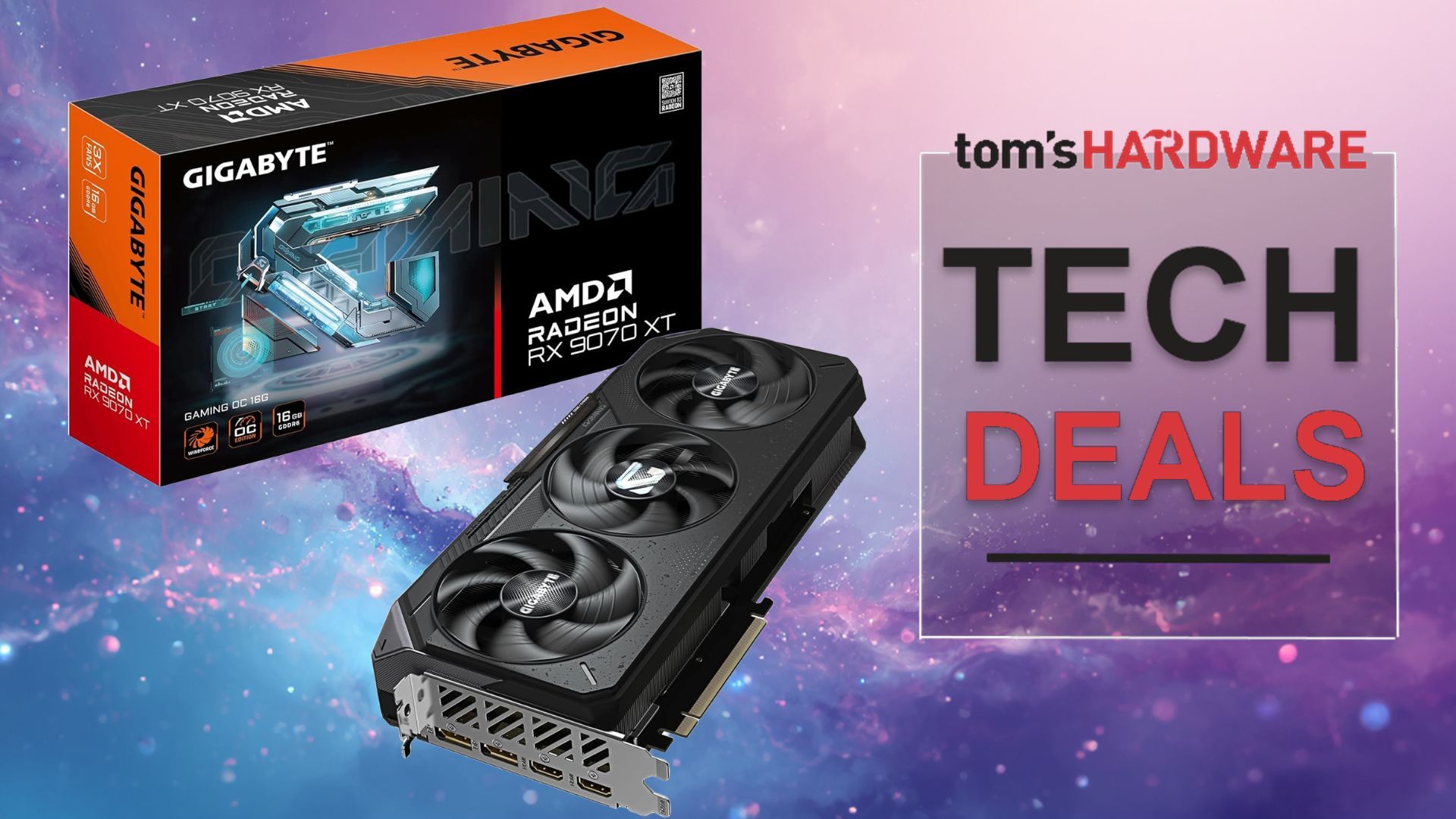
AMD's Gigabyte Gaming OC Radeon RX 9070 XT is being sold on Amazon for $629, a new low for this model and $110.99 below its usual $739.99 price. The card is positioned as a strong 1440p option with 16GB of GDDR6 VRAM and a factory overclocked 3,060MHz boost clock. The article is primarily a retail deal alert, so the broader market impact should be limited.
This is marginally bullish for AMD in the near term, but the cleaner read is channel validation rather than a demand inflection. A flagship SKU at an aggressive retail discount suggests the market is still clearing inventory and competing on value, which helps AMD gain mindshare in the performance-per-dollar tier without needing Nvidia to stumble. The second-order effect is that price discovery in the enthusiast channel can support broader board partner sell-through and keep AMD’s add-in board ecosystem warm heading into the next product cycle.
The real loser is Nvidia’s mid-to-upper mainstream pricing power, not its absolute unit share. If a 16GB card with credible 1440p performance can sit materially below Nvidia’s comparable alternative, the pressure migrates into the segment where Nvidia historically relied on a premium multiple; that matters because board-level elasticity tends to show up first in channel promotions before it appears in reported shipments. For AMZN, the benefit is modest but real: lightning-sale mechanics drive conversion and basket engagement, though the dollar amount is too small to move retail metrics meaningfully.
The contrarian issue is that this kind of deal can be read as demand strength when it may simply be promotional clearing. If the discount cadence persists into the next few weeks, it would imply either channel overstock or slower-than-expected end-user absorption, which is bearish for AMD gross-margin mix. The key catalyst window is 1-8 weeks: if the price snaps back quickly, that supports scarcity/healthy take-rate; if it stays pinned, the market should assume more aggressive rebate support is needed to keep volumes moving.
For NVDA, the risk is less fundamental and more sentiment-driven: repeated value comparisons at the retail edge can widen the narrative gap between superior ecosystem quality and perceived affordability, which can matter for gamer/channel preference even if datacenter dominates the equity story. Any meaningful response from Nvidia would likely come through pricing or bundle incentives in the midrange over the next 1-2 quarters, not through a broad strategic reset.
AI-powered research, real-time alerts, and portfolio analytics for institutional investors.
Request DemoOverall Sentiment
mildly positive
Sentiment Score
0.25
Ticker Sentiment
