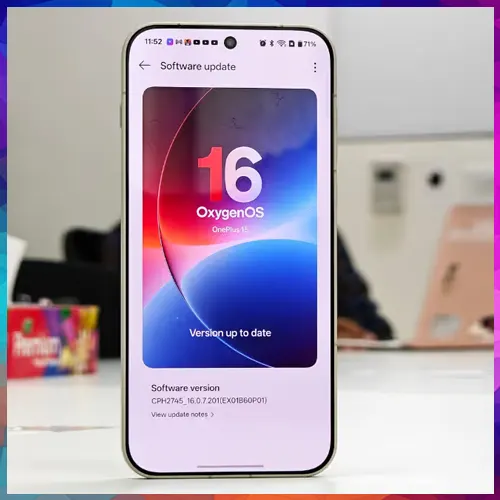
OnePlus has paused rollout of two OxygenOS 16 builds, versions 16.0.7.XXX and 16.0.5.XXX, after users reported abnormal restart and boot issues. The company is conducting root-cause analysis, additional reliability testing, and a review of its QA process before resuming distribution, with no timeline provided. Separately, OxygenOS 16.1 is still rolling out to OnePlus 15 and OnePlus 13 series devices with new AI and interface features.
This is a contained quality-control event, but the second-order risk is trust leakage rather than direct revenue loss. In smartphones, one bad OTA build is rarely fatal; the bigger issue is that it increases user sensitivity to future updates, which can slow adoption of higher-margin software features and reduce the attach rate of ecosystem services over the next 1-2 quarters. If the problem is tied to device/configuration fragmentation, the cost curve rises nonlinearly as the installed base expands across more SKUs and regions.
The near-term winner is not a named rival so much as the category’s premium incumbents with stronger update reputations. Competitors with tighter vertical integration and more conservative rollout discipline can frame reliability as a product feature, which matters because AI-driven UI layers only monetize if users are willing to install frequent updates. That creates a subtle advantage for platforms where software cadence is a retention lever, while ODM-heavy or mid-tier Android vendors face a higher support burden and more reputational downside from similar incidents.
The contrarian read is that this may be mildly bullish for the company’s long-term software discipline if management actually tightens QA and staged deployment processes. The market usually overreacts to isolated boot-loop headlines, but underreacts to the fact that improved update governance can lower warranty, support, and rollback costs over time. The real catalyst is not the pause itself but whether the subsequent release restores confidence; if fixes ship cleanly within days, the event fades, but if the issue recurs over the next 4-8 weeks, it becomes a brand-tax story rather than a one-off bug.
For investors, the tradeable angle is more relative than absolute: own the names with superior software reliability narratives and avoid vendors where update risk can bleed into premium hardware pricing. On the consumer-side ecosystem, any delay in AI-feature adoption slightly benefits platforms with more mature on-device AI and stronger lock-in, because willingness to upgrade software is a prerequisite for those features to matter.
AI-powered research, real-time alerts, and portfolio analytics for institutional investors.
Request DemoOverall Sentiment
mildly negative
Sentiment Score
-0.20
