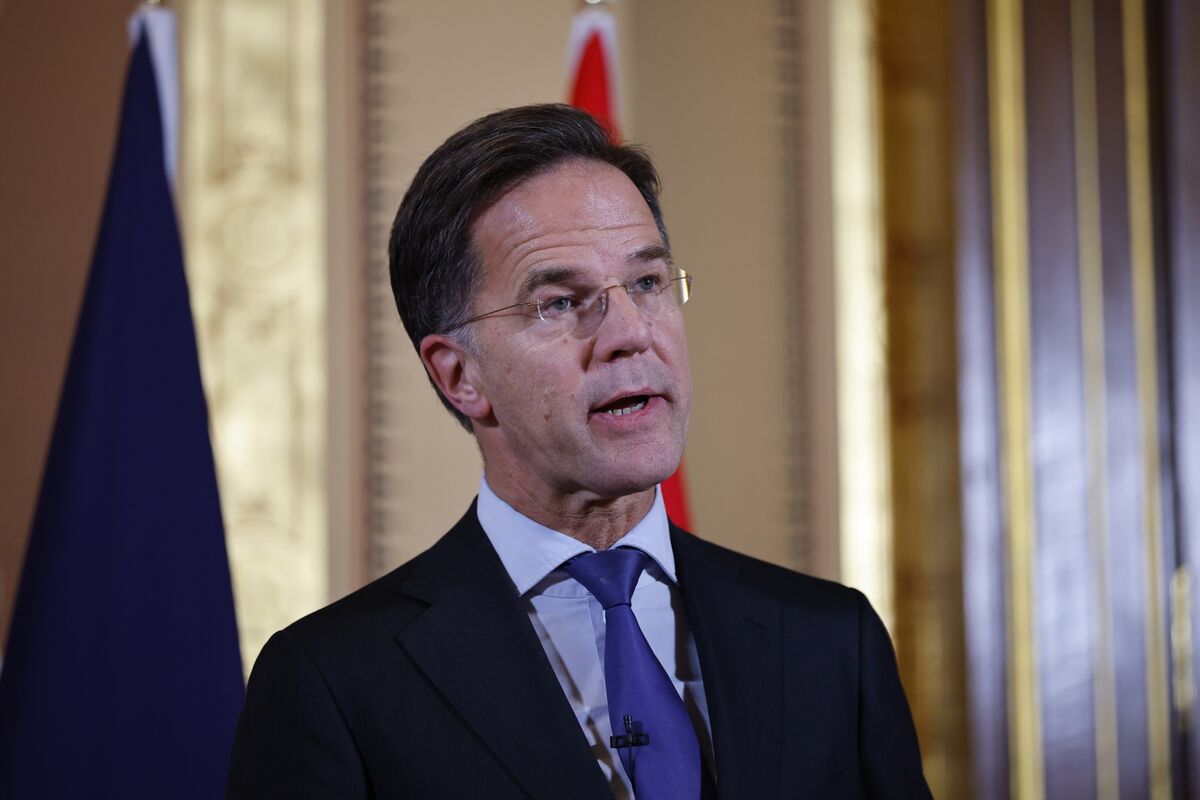
Dutch leader Mark Rutte said U.S. negotiations with Russia over a plan to end the war in Ukraine will not unilaterally determine NATO’s future and that NATO-related decisions will be settled through a separate channel, remarks made in Brussels ahead of a foreign ministers’ meeting. The statement clarifies diplomatic boundaries between conflict resolution and alliance policymaking, which reduces immediate policy uncertainty around NATO governance but is unlikely to produce significant near-term market moves.
Market structure: Rutte’s comment — that US-Russia talks won’t unilaterally decide NATO’s future — signals continuation of a status-quo geopolitical framework rather than a rapid de-escalation. That favors defense, aerospace, and cybersecurity suppliers (sustained procurement budgets likely adding ~5–15% incremental demand across 12–36 months) and keeps sanctions/energy-friction premiums intact, while pressuring travel, Russian-exposed commodities and EM risk assets.
Risk assessment: Tail risks include a low-probability rapid peace that triggers a 20–40% drawdown in defense stocks, or conversely escalation bringing NATO contingent exposure and broad sanctions that spike energy and sovereign credit spreads. Immediate (days) market moves should be muted; short-term (weeks–months) depends on foreign-ministers’ communiqués and sanctions updates; long-term (quarters–years) is higher defense budgets, supply-chain bottlenecks (munitions, semis) and rerouting of energy flows.
Trade implications: Favored exposures are US defense primes and cyber names with 12-month horizons (convex upside if budgets rise and limited downside if risk-off hits). Use options to cap cost and express convexity; consider pair trades long defense/cyber vs short travel/EM cyclicals. Monitor NATO ministerial outcomes (next 7–30 days) and EU sanctions cadence (30–90 days) as primary catalysts.
Contrarian angles: Consensus may underweight mid/small-cap defense suppliers and specialty MROs that can reprice power contracts quickly — look for mispricings in HEICO/BAE vs large-cap LMT/NOC where some upside is already discounted. Unintended consequence: sustained military capex could crowd out civilian infrastructure spending, pressuring industrial SMEs while inflating defense supplier margins.
AI-powered research, real-time alerts, and portfolio analytics for institutional investors.
Request DemoOverall Sentiment
neutral
Sentiment Score
0.00
