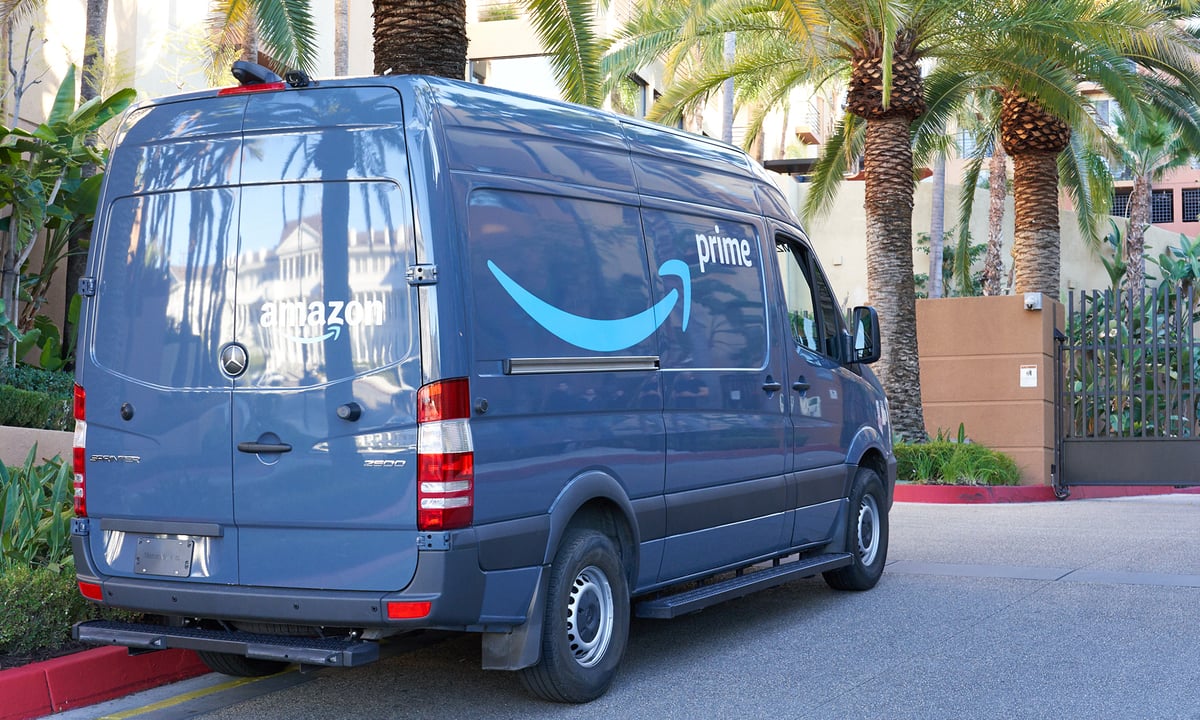
Amazon's durable competitive advantages — a global delivery/fulfillment network (recently shifted to a U.S. regional model) and its Prime ecosystem — underpin continued e-commerce revenue growth and customer retention. More than half of Amazon's operating income now comes from AWS (65% in the most recent quarter), with AWS's annualized revenue run rate near $132 billion and receiving an additional tailwind from AI adoption, positioning the cloud unit as the primary profit driver while the stock has appreciated over 500% in the past decade.
Market structure: Amazon and AWS are clear winners—AWS contributes ~65% of operating income and a $132B annualized run rate, which strengthens pricing power across cloud, ads and marketplace fees. Losers include smaller e‑tailers and pure-play marketplaces (Shopify merchants, regional grocers) who can’t match fulfillment scale or Prime lock‑in; capital intensity in logistics raises barriers to entry. Cross‑asset: strong AMZN outperformance should tighten its credit spreads (supporting IG corporate bonds) and depress implied volatility in equity options; higher logistics capex nudges demand for diesel and industrial metals modestly over 12–36 months and can affect FX flows by shifting capex and import patterns.
Risk assessment: Tail risks include regulatory remedies or breakup (US/EU antitrust) with >$10B penalties or forced structural changes that could reduce GMV by 5–15%, major AWS outages causing multi‑day revenue hit, or an economic recession compressing e‑commerce by 8–12% YoY. Immediate (days): earnings/AI announcements drive 5–10% moves; short term (weeks–months): guidance and government probes; long term (years): AI capex cycles and Prime retention determine margins. Hidden deps: Prime retention hinges on fulfillment costs and labor; AWS AI revenue concentration risk—top 10 clients could represent outsized share.
Trade implications: Direct play—establish a 2–3% long position in AMZN (12–24 month horizon), scaling in on 5–12% pullbacks; hedge with 10–15% stop or trailing stop. Options—buy 12–18 month LEAP 12–20% OTM call spread sized 0.5–1% notional to cap downside while retaining upside if AWS AI monetization accelerates. Pair trade—long AMZN vs short SHOP (1:0.6 notional) over 6–12 months to capture structural share shift; rebalance if spread moves >20%.
Contrarian angles: Consensus underestimates the cost of AI‑scale infrastructure—margins could compress if Amazon overinvests in chips/data centers, offsetting AWS revenue growth; conversely, market may underprice sticky Prime/ad revenue synergy, leaving upside if retention stays >90% and AWS growth reaccelerates >20% YoY. Historical parallel: MSFT’s Azure era shows cloud leaders can expand margins after scale but face regulatory scrutiny; unintended consequence—aggressive logistics expansion could become stranded capital if consumer volumes drop 10%+.
AI-powered research, real-time alerts, and portfolio analytics for institutional investors.
Request DemoOverall Sentiment
strongly positive
Sentiment Score
0.75
Ticker Sentiment
