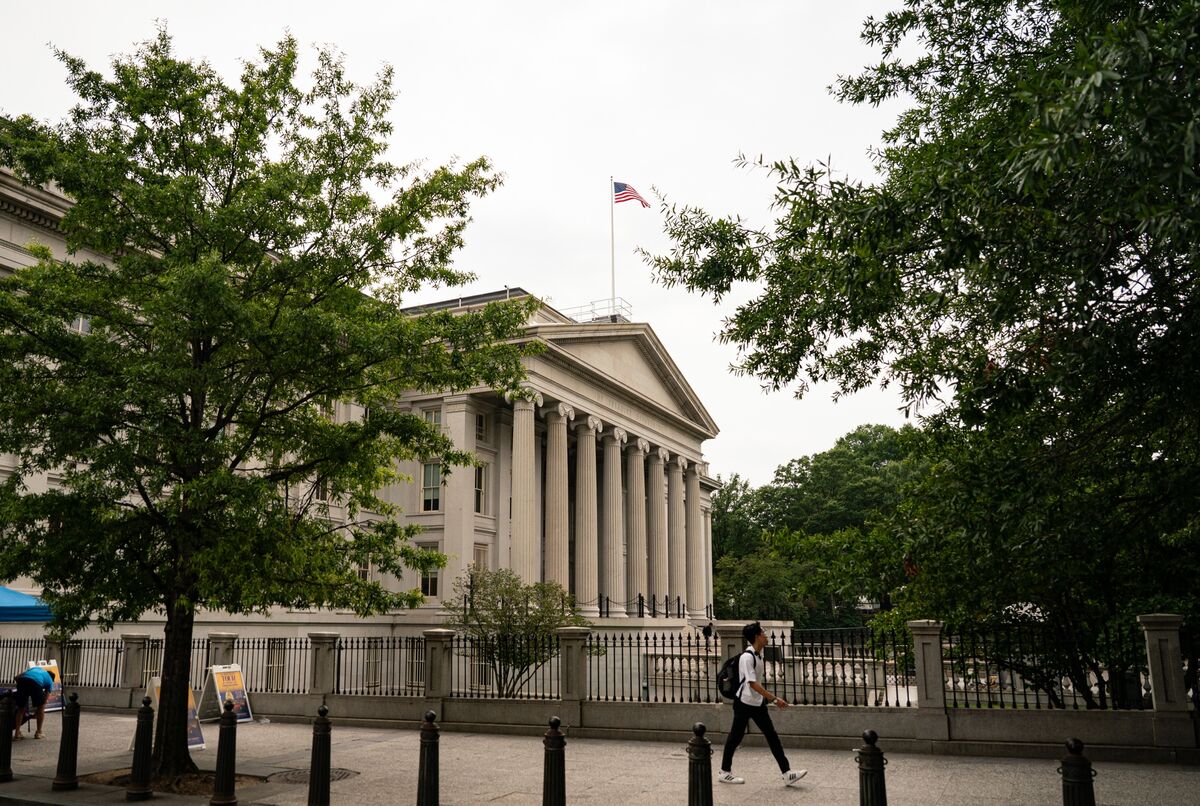
Treasury yields rose 2 to 3 basis points intraday after Tuesday’s rally stalled, leaving closing levels near the lowest since mid-March. The move followed stabilization in oil prices after a nearly 8% drop in US benchmark crude, with Middle East supply curbed by the US war on Iran. The article points to a risk-off yield rally that paused rather than reversed.
The rates move is signaling that the market is still treating the latest risk-off impulse as a growth scare, not a regime shift. The stall in the rally matters because bond positioning likely got stretched into the most obvious geopolitical hedge: once energy stops falling, duration loses its cleanest fundamental tailwind and the market quickly reverts to trading inflation compensation rather than pure safety demand.
The second-order effect is that this setup is less bullish for long duration than it looks. If crude stabilizes rather than collapses, breakeven inflation can stop widening and real yields may be the pressure point; that is a more dangerous mix for rate-sensitive equities than a parallel bull move in bonds. In other words, the market can keep nominal yields contained while still tightening financial conditions through higher inflation uncertainty, which is exactly where credit and long-duration growth names become vulnerable.
The consensus is probably overweighting the idea that “lower oil = lower yields = lower risk,” when the more important question is whether Middle East supply disruption persists long enough to reprice inflation expectations. If the disruption lasts only days, the Treasury rally is likely to fade further and the market will have paid too much for a geopolitical hedge. If it lasts weeks, the next leg is not necessarily lower nominal yields; it is likely flatter curves, weaker credit, and broader dispersion across sectors with energy input exposure.
Near term, the cleanest expression is that the bond market is vulnerable to a mean-reversion trade in yields if oil remains stable or rebounds. The bigger tail risk is a second disruption headline that forces the market to reprice not just growth but imported inflation and fiscal stress simultaneously, which would be the worst case for both Treasuries and risk assets. That argues for staying tactical rather than calling this a durable duration bull market.
AI-powered research, real-time alerts, and portfolio analytics for institutional investors.
Request TrialOverall Sentiment
neutral
Sentiment Score
-0.05
