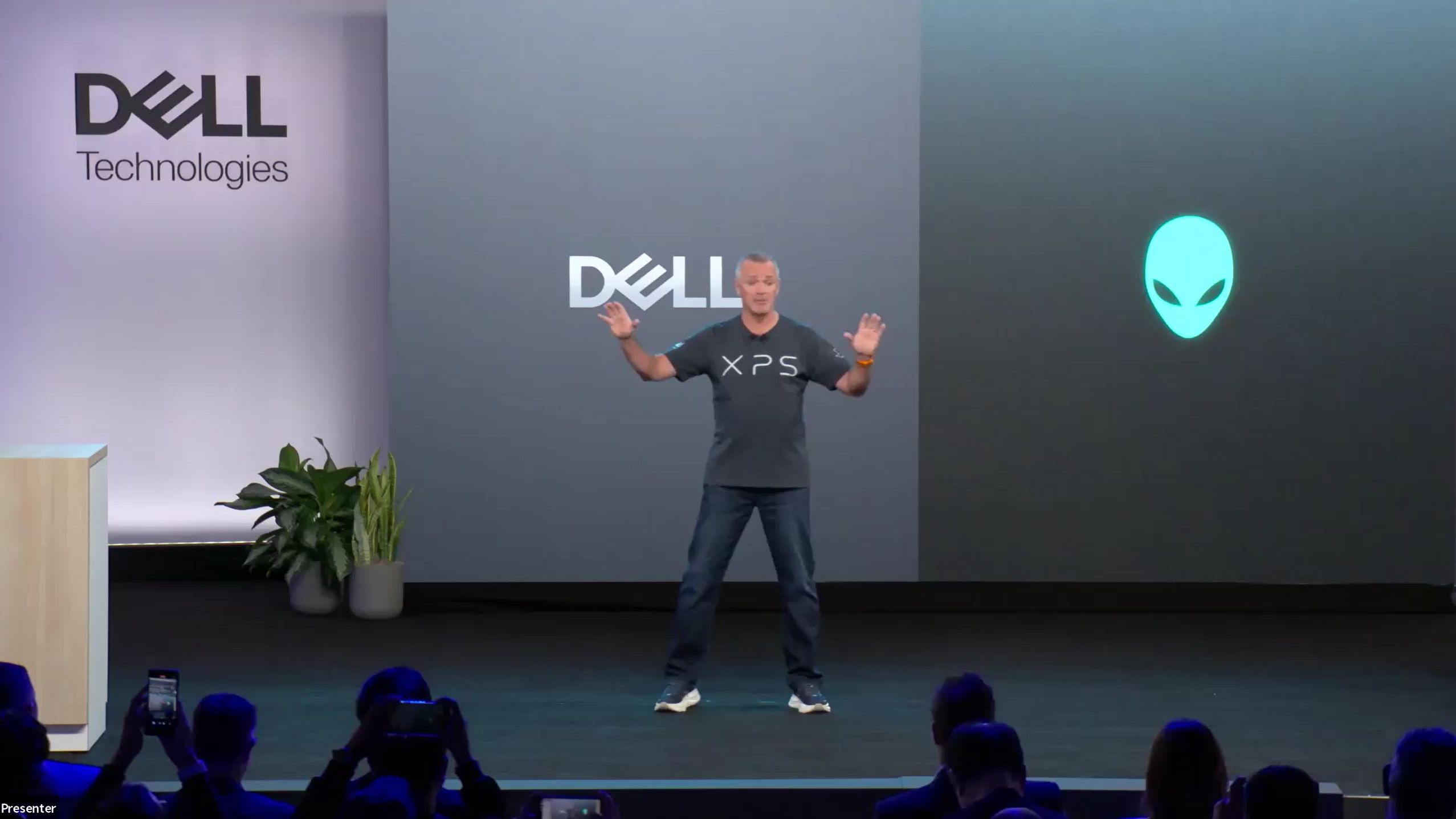
At CES 2026 Dell signalled a tactical shift away from AI-first marketing, launching refreshed XPS machines, new high-end and entry-level Alienware laptops, Area-51 desktop updates and several monitors while noting every device includes an NPU. Executives flagged tariffs and a 'pretty significant' memory shortage entering 2026, which could tighten component supply and buoy memory pricing, while the consumer-focused repositioning may reduce the premium afforded to AI-branded PCs and affect demand dynamics across PC vendors and component suppliers.
Market structure: Dell's explicit retreat from 'AI-first' consumer messaging and a refreshed XPS/Alienware line points to modest share gains in mainstream premium PCs versus hype-driven competitors; expect Dell (DELL) unit growth 3–6% YoY in consumer notebooks over 12 months if channel pricing remains stable. A disclosed "significant" memory shortage implies DRAM suppliers (Micron MU, SK Hynix) will enjoy positive price/mix shock near term; model a 5–15% ASP lift in DRAM revenues over the next 2–4 quarters if inventories remain tight. GPU/data-center winners like NVDA are insulated on enterprise demand, but consumer AI-PC weakness shifts wallet share back to GPU/CPU pricing competition rather than AI features alone.
Risk assessment: Tail risks include a rapid DRAM destock (inventory correction) that would erase price gains within 3–6 months, or renewed AI-driven consumer demand that invalidates Dell's bet—both +/- 20–30% impact on related supplier revenues. Near-term (days-weeks) watch CES sell-through and initial retail preorders; short-term (1–3 months) watch Q1 guidance from DELL and MU; long-term (12–24 months) monitor structural OEM design wins and tariff changes. Hidden dependency: OEMs embedding NPUs still require DRAM/NAND sizing—memory pricing is a larger profit swing than NPU marketing for margins.
Trade implications: Direct plays: selective long DELL (compressed valuation, product refresh) and MU (memory price tailwind) for 3–9 month horizon; avoid long NVDA exposure purely for consumer PC cycle as data-center remains primary growth driver. Pair trade: long MU / short a PC GPU-focused discretionary OEM (e.g., a gaming OEM ETF or weak-margin GPU supplier) to isolate DRAM tailwind from GPU cyclicality. Options: buy MU 6–9 month call spread (e.g., MU Jan+9/Jan+12.5) to cap cost; consider selling short-dated covered calls on DELL to harvest premium into potential pullbacks.
Contrarian angles: Consensus overweights 'AI PC' as a standalone consumer driver—mispricing risks include underappreciated OEM benefits from non-AI product refresh and a prolonged DRAM squeeze raising supplier EPS by >10% in FY+1. Historical parallel: 2017 CPU shortages drove component suppliers' profits despite weak end-user feature demand; a similar memory-driven rebound could outperform headline AI narratives. Unintended consequence: marketing de-emphasis on AI may cool speculative multiple expansion even as fundamentals improve—timing mismatch creates alpha for event-driven trades.
AI-powered research, real-time alerts, and portfolio analytics for institutional investors.
Request DemoOverall Sentiment
mildly positive
Sentiment Score
0.25
Ticker Sentiment
