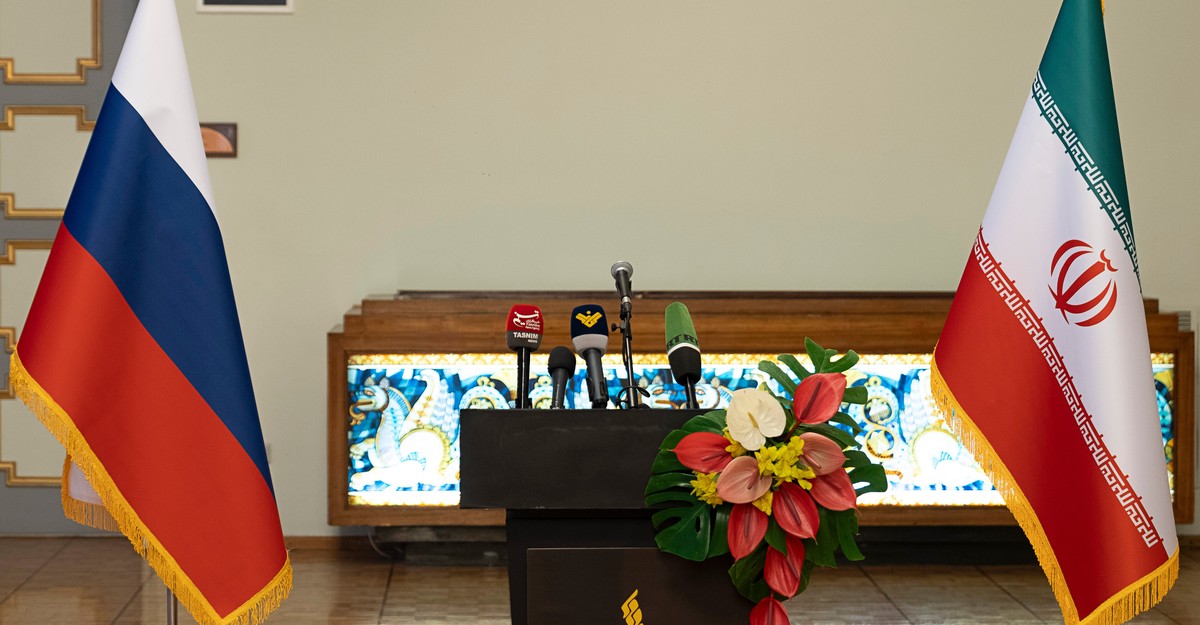
Russia's limited support for Iran stems from its strategic priorities, including maintaining relations with Israel and OPEC, and avoiding military entanglement while focused on the Ukraine war. Despite a strategic partnership treaty, Russia has refrained from providing Iran with advanced military aid, particularly after recent Israeli strikes exposed vulnerabilities in Iran's defenses. While a protracted Iran-Israel conflict could benefit Russia through elevated oil prices and diverted U.S. attention, Russia seeks to avoid Iran acquiring nuclear weapons or facing further U.S. military action, signaling a complex balancing act between supporting an anti-Western ally and pursuing its own regional interests.
Russia's strategic posture towards Iran reveals a complex calculus, where initial alignment against the West, particularly beneficial during the Ukraine conflict through Iranian Shahed drone supplies, has been significantly tempered by emerging regional dynamics and Moscow's overarching interests. Despite a strategic partnership treaty signed in January, Russia has refrained from providing substantial military support, such as advanced fighter jets or sophisticated air defense systems, to Tehran. This reluctance was underscored after Israeli strikes in April and October 2024 exposed critical vulnerabilities in Iran's military capabilities, including its Russian-made S-300 missile systems. Moscow's cautious approach is primarily driven by its deep involvement in the Ukraine war, the necessity of maintaining pragmatic relations with Israel and coordinating with OPEC on oil prices, and a consistent policy to avoid direct military entanglement in the Middle East. Furthermore, Russia remains wary of Iran acquiring nuclear weapons, cognizant of U.S. red lines and the potential erosion of its own influence over a nuclear-armed Tehran. While a protracted Iran-Israel conflict could offer tactical advantages to Russia—such as elevated oil prices if Iran were to close the Strait of Hormuz, thereby alleviating pressure on Russian state finances, and diverting U.S. military resources and global attention from Ukraine—Moscow also faces considerable risks. These include broader regional destabilization, particularly in the South Caucasus, and the unpredictable consequences of a cornered Iranian regime potentially lashing out or accelerating its nuclear ambitions. Consequently, Russia appears to be navigating a delicate balance, attempting to leverage the situation for diplomatic re-engagement with the U.S. on global security issues, while possessing limited capacity to fundamentally alter the conflict's trajectory or Iran's strategic decisions given its current geopolitical priorities.
AI-powered research, real-time alerts, and portfolio analytics for institutional investors.
Request DemoOverall Sentiment
moderately negative
Sentiment Score
-0.40
Ticker Sentiment
