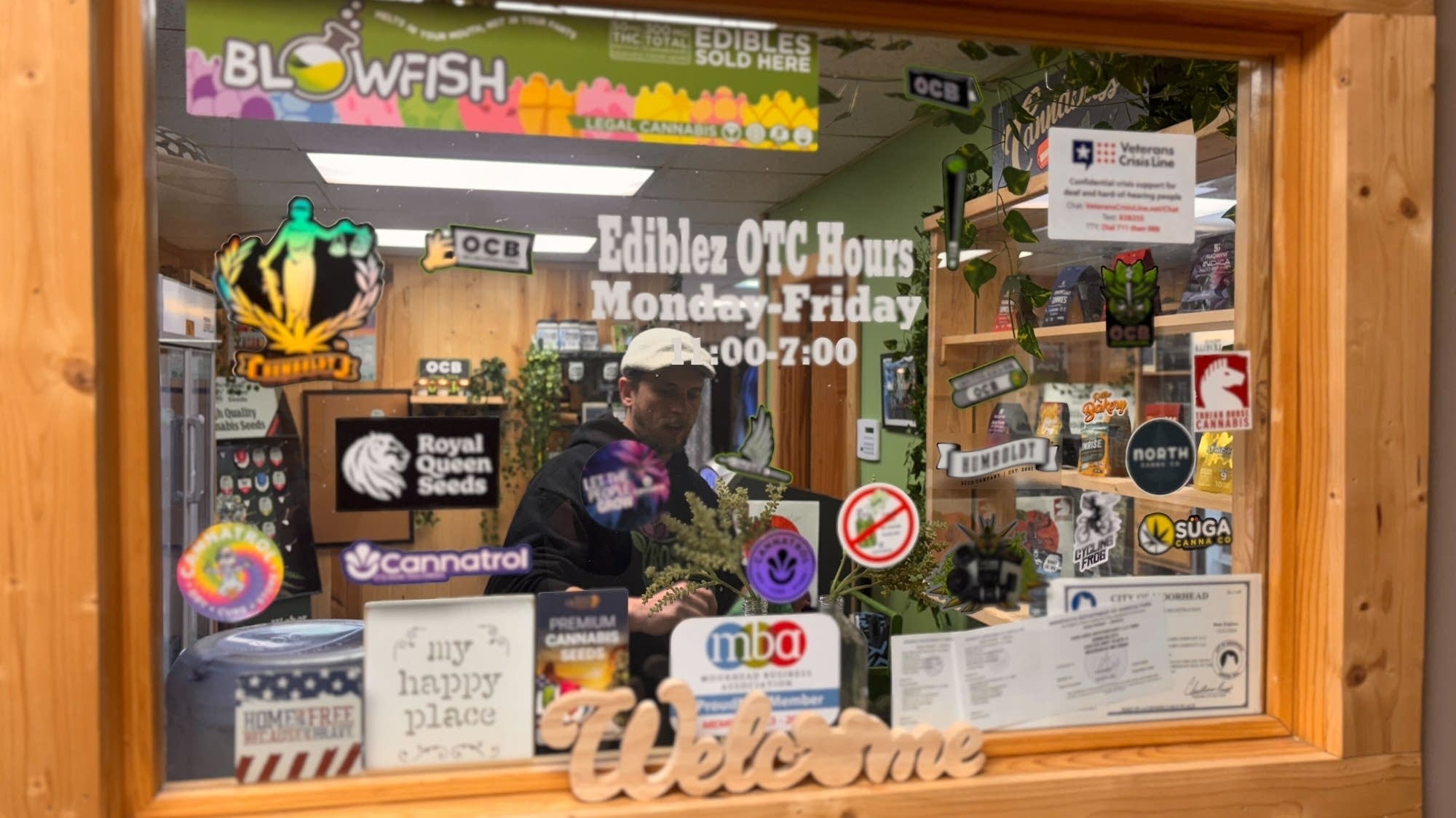
A federal ban on hemp-derived THC products has created regulatory uncertainty for Minnesota THC retailers, leaving sellers in limbo over inventory, sales and potential enforcement risk. The policy shift threatens near-term revenues for small businesses and may spur legal challenges and supply-chain adjustments, though it is unlikely to materially move broader financial markets.
Market structure: A federal hemp THC clampdown directly hurts pure-play hemp/CBD consumer brands (e.g., Charlotte's Web CWBHF) and small retailers in Minnesota; winners are vertically integrated, state-licensed MSOs (e.g., Curaleaf CURLF, Green Thumb GTBIF) and illicit dispensaries that can fill unmet demand. Expect 10–30% pricing power swing toward regulated flower/edibles in states with legal adult-use within 3–12 months as constrained legal supply bids up wholesale flower and finished-product margins. Cross-asset: equity vol in cannabis names will spike; expect ~50–75 bps risk-off move into 10Y Treasuries and USD strength in near-term stress windows.
Risk assessment: Tail risks include a nationwide enforcement sweep (high-impact, low-probability) that could wipe out valuations of hemp-focused equities (>>50% drop) or, alternatively, rapid federal clarification favoring state control that re-rates MSOs +20–40% within 6–12 months. Immediate window (days) is regulatory statement/news driven; short-term (weeks–months) is inventory liquidation and pricing; long-term (quarters–years) is litigation and legislative fixes. Hidden dependencies: bank de-risking and payment processor withdrawal could create distribution bottlenecks independent of product legality; watch hemp biomass price moves as a leading indicator.
Trade implications: Favor relative-value longs in diversified MSOs versus shorts in pure-play hemp/CBD consumer names. Use options to express asymmetric views: buy 90-day puts on pure hemp tickers and buy 3–6 month call spreads on large MSOs to limit premium. Rotate out of discretionary retail exposed to Minnesota hemp SKUs and increase cash/Treasury allocation by 1–3% as volatility hedge.
Contrarian angles: Consensus assumes permanent demand destruction for hemp products — missing that consumers may substitute into state-legal THC, boosting MSO same-store-sales by 5–15% in adjacent states. Reaction could be overdone for well-capitalized MSOs (sell-offs as buying opportunities) but underdone for CBD brands with >50% revenue from THC-adjacent SKUs. Historic precedent: tobacco-flavor vape bans showed demand migration and illicit market growth, implying longer legal recoveries but nonzero pricing power shifts for regulated incumbents.
AI-powered research, real-time alerts, and portfolio analytics for institutional investors.
Request DemoOverall Sentiment
moderately negative
Sentiment Score
-0.35
