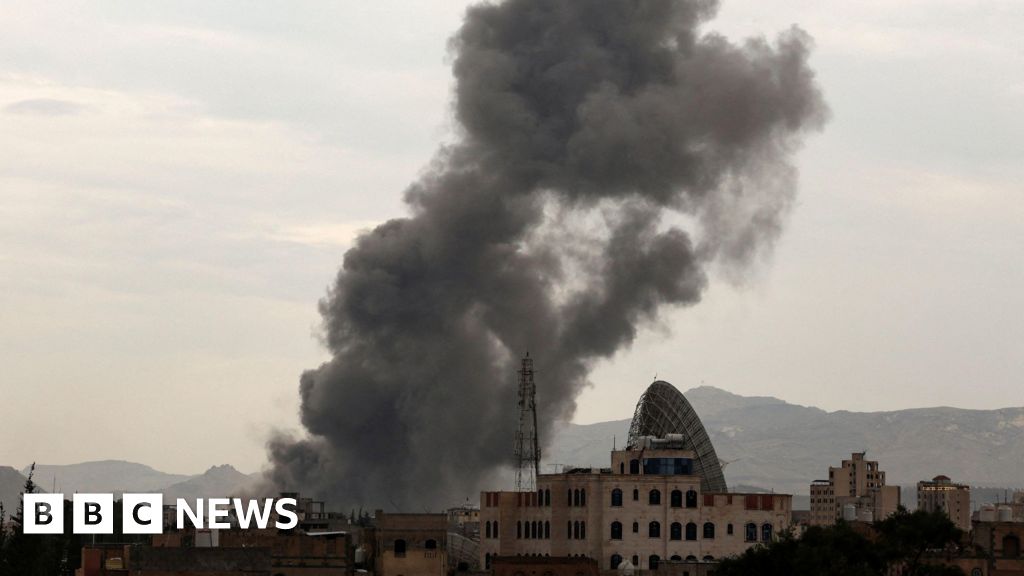
Israeli forces conducted air strikes in Houthi-controlled Yemen on Wednesday, which Houthis claim killed 35 people and hit civilian sites, in retaliation for recent Houthi missile and drone attacks on Israel, including a strike on Ramon airport. Israel stated the targets were military facilities, while Houthis vowed 'inevitable' retaliation, underscoring escalating regional conflict. This ongoing tit-for-tat, including an intercepted Houthi missile on Thursday, exacerbates geopolitical risk and maintains pressure on Red Sea shipping lanes, signaling sustained instability for global markets.
The direct military conflict between Israel and Houthi forces in Yemen is intensifying, marked by significant Israeli air strikes that reportedly killed 35 people and a subsequent Houthi missile launch. Israel states its strikes targeted military facilities, including a 'military public relations headquarters,' in direct retaliation for Houthi attacks like the recent drone strike on Ramon airport. Conversely, the Houthis claim civilian infrastructure, such as newspaper offices and a medical station, were hit. This escalatory cycle, reinforced by vows from Israeli Prime Minister Netanyahu to 'continue to strike' and Houthi leaders promising 'inevitable' retaliation, cements the conflict as a persistent source of regional instability. The sustained nature of these exchanges, which also involve US and UK military action against Houthi attacks on shipping, maintains upward pressure on geopolitical risk premiums and signals ongoing disruption for maritime trade through the Red Sea, a critical global artery.
AI-powered research, real-time alerts, and portfolio analytics for institutional investors.
Request DemoOverall Sentiment
moderately negative
Sentiment Score
-0.30
