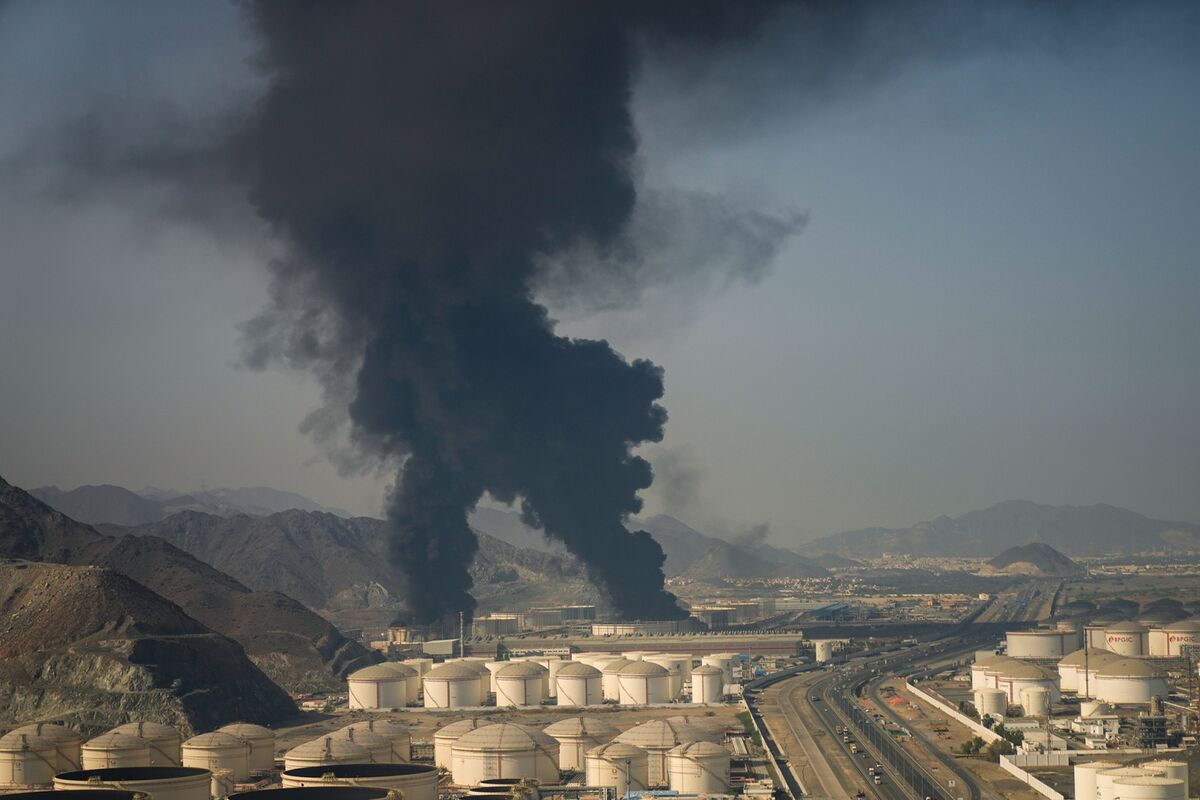
Satellite analysis finds elevated methane and CO2 emissions from Middle East oil and gas infrastructure as airstrikes intensify and the Strait of Hormuz remains closed, driven by flaring of excess natural gas. This increases environmental liabilities and could add near-term volatility to regional energy supplies and prices, complicating ESG assessments for producers ahead of CERAWeek.
Satellite-confirmed flaring and venting create a fungible supply tightness that is not linear: every incremental day of Strait of Hormuz disruption has outsized price impact because it forces rerouting, loading delays and temporary shut-ins rather than smooth incremental cuts. In a stress scenario (0.5–1.0 mbd of effective seaborne displacement sustained 2–6 weeks) model sensitivities imply a $5–12/bbl implied premium on Brent over that window, with a 3–6 month tail as inventories and shipping slots re-normalize.
A second-order winner set is services and capex-facing vendors who sell rapid emissions detection, flare-capture retrofit and small-scale gas monetization (mobile LNG/micro-LNG). If regulators and insurers use satellite feeds to mandate mitigation, expect a wave of sub-$50m retrofit projects across dozens of facilities — that could convert into $200–800m of addressable revenue for vendors in the next 12 months and lift aftermarket margins for equipment suppliers.
Risks and catalysts: diplomatic reopening of Hormuz or coordinated SPR releases are high-probability reversal catalysts inside 30–90 days; conversely, escalation that closes >1.0 mbd for months is a fat-tail that pushes oil >$100 and accelerates longer-term capital reallocation away from regional upstream projects. The consensus underprices the speed at which satellite attribution can force corporate/insurer action — pricing moves will be punctuated and headline-driven, so timing of trades should be event-aware rather than buy-and-hold.
AI-powered research, real-time alerts, and portfolio analytics for institutional investors.
Overall Sentiment
mildly negative
Sentiment Score
-0.30
