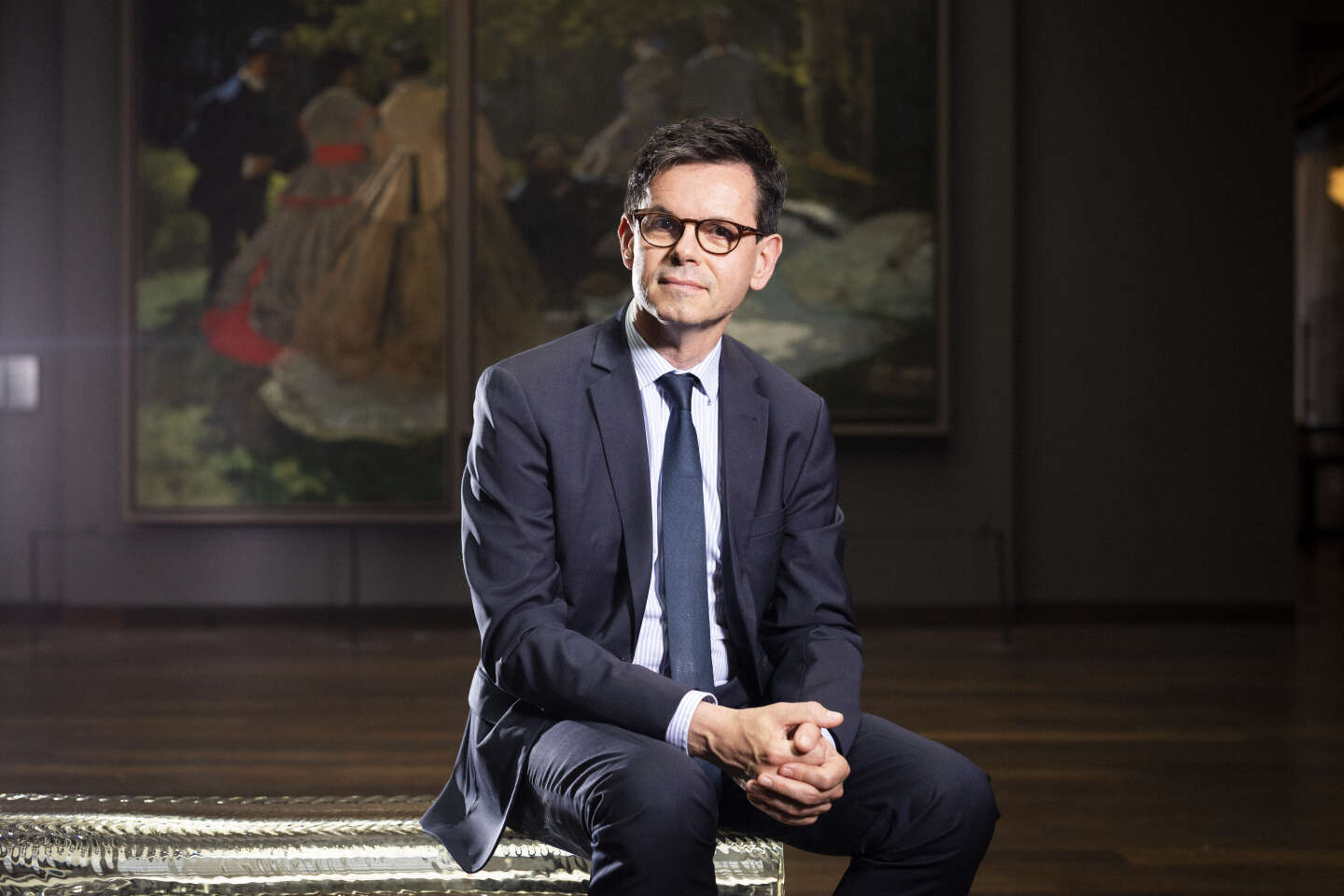
President Emmanuel Macron has appointed Christophe Leribault, 63, as president of the Louvre following the resignation of Laurence des Cars amid a crisis triggered by the Oct. 19 theft of crown jewels. Leribault, a specialist in 18th-century art who was appointed to head the Château de Versailles in 2024 and previously led the Musée d'Orsay, Petit Palais and the Eugène-Delacroix Museum, is seen as an experienced crisis manager with a track record of boosting visitor numbers; the change is material for cultural‑sector governance but carries minimal direct market impact.
Market structure: The quick replacement of the Louvre president with an experienced museum operator signals stabilized governance at a marquee cultural asset, reducing tail-risk to Paris tourism flows; expect marginal positive demand for Paris-centric travel & leisure names (ADP.PA, AC.PA) as visitation volatility declines over 1–12 months. Security and private protection providers (e.g., SECU-B.ST) are incremental winners as museums reallocate CAPEX/OPEX to harden sites; premium on multi-year contracts could raise revenue visibility by +5–15% for firms capturing share. Financial intermediaries (insurers, art-market intermediaries) see a transient repricing of operational risk but no systemic shock, keeping sovereign and corporate credit spreads in France largely unchanged in the near term.
Risk assessment: Tail risks include a repeat large-scale theft or political backlash forcing temporary museum closures (low probability, high impact — visitor revenue drop 20–40% over 1–3 months). Immediate (days) effects are reputational headlines; short-term (weeks–months) effects are security contracting and visitor-booking cadence; long-term (quarters–years) are sustained CAPEX in security and exhibition programming that can lift ancillary revenue. Hidden dependencies: a coordinated French government funding response or EU cultural grants could skew winners toward domestic contractors; conversely, litigation/insurance disputes could suppress museum budgets. Catalysts to accelerate outcomes: official security tender notices, Paris tourism arrival data, and quarterly results from airport/hotel operators within 30–90 days.
Trade implications: Favor tactical long exposure to security-services providers and Paris travel infrastructure: small, conviction-weighted positions (0.5–2% portfolio) with options collars to limit downside; use call spreads to express upside after official tender flow. Relative-value: long ADP.PA (Groupe ADP) vs short LVMH (MC.PA) small pair for 3–12 months if Paris footfall recovery lags luxury spending visibility — target divergence 8–15%. Time entry on pullbacks or confirmed security contract announcements; use 8–12% stop-loss thresholds and trim on 12–18% rallies.
Contrarian angles: The market underreacts to governance fixes — a seasoned curator often restores visitation within 6–12 months, so tourism-linked equities may be underpriced by 5–10% today. Consensus focuses on theft headlines (negative); the contrarian play is modestly pro-cyclical exposure to Paris tourism infrastructure and global security providers, avoiding luxury retail overweights which price in sustained footfall declines. Historical parallels: post-incident governance fixes at cultural institutions (e.g., post-2014 security overhauls) led to faster-than-expected visitor rebounds; downside is a repeat incident, so size positions conservatively and hedge with short-dated protection.
AI-powered research, real-time alerts, and portfolio analytics for institutional investors.
Request DemoOverall Sentiment
neutral
Sentiment Score
0.00
