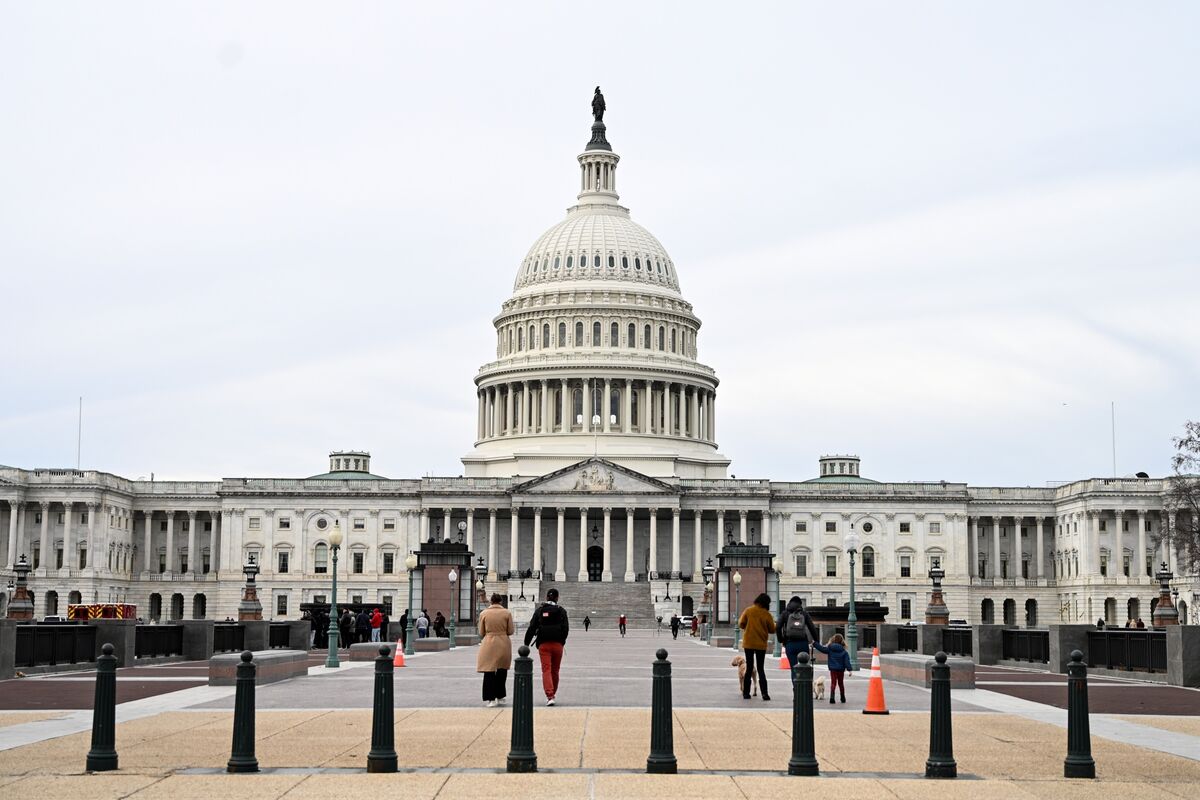
With the year drawing to a close, Congress appears unlikely to enact major measures, leaving an extension of Affordable Care Act premium subsidies unresolved and in limbo. That unresolved healthcare policy raises near-term political and fiscal uncertainty for insurers, consumers and budget planning, though absent a broader fiscal or tax development it is unlikely to be an immediate, large market mover before year-end.
Market structure: An unresolved extension of ACA exchange subsidies disproportionately raises downside for exchange-focused insurers and hospitals that absorb unpaid care; conversely, diversified payors (UNH, CVS) and consumer staples (PG, KO) stand to outperform if consumers tighten discretionary spend. Expect a 6–12 week window of elevated dispersion: insurer guidance and enrollment updates will re-price expected membership by +/-5–15% and drive relative moves in equities and credit. Cross-asset: short-dated equity volatility in HMO/Hospitals will rise, muni healthcare credits in high-exchange states may widen 25–75bps, and USD/real rates moves should be modest unless budget fights widen into larger fiscal standoffs.
Risk assessment: Tail risks include a politically driven abrupt cut with retroactive payment uncertainty (high-impact, <10% prob) or a last-minute bipartisan extension (40–60% prob) that would cause sharp snap-backs. Immediate (days): headline-driven spikes in options vols; short-term (weeks–months): earnings-season revisions to membership and reserve assumptions; long-term (quarters): premium pricing and state-level policy changes that alter market share. Hidden dependencies: insurer reserve levels, Q4/2025 guidance cadence, and state Medicaid backfills can amplify or mute effects; watch 10-K reserve footnotes and statutory surplus trends.
Trade implications: Direct plays — establish a tactical 2–3% long position in UNH (ticker: UNH) via 3-month 1.5–2.5% OTM call spreads to capture upside if subsidies are extended; initiate a 1–2% short in HCA (ticker: HCA) equity or buy a 3-month 5–7% OTM put spread to hedge hospital uncompensated-care risk. Pair trade — long UNH / short CNC (Centene) equal-dollar for 3 months to express extension wins vs exchange exposure. Defensive rotation — overweight PG and KO (1–2% each) for 3–6 months to hedge consumer squeeze; take profits or re-assess on a >6% move.
Contrarian angles: The market may be pricing more structural harm than likely — a retroactive congressional fix has historically been common, so implied vols on large-cap insurers could be underpriced relative to asymmetric upside; consider buying skewed call spreads rather than naked longs. Conversely, short hospital credit or equities is risky if lapse triggers consolidation or targeted state aid — cap exposure and use put spreads with clear stop-losses. Triggers to act/exit: close shorts if a Senate procedural vote occurs or insurer enrollment guidance misses/wins by >5% vs. consensus within 10 trading days.
AI-powered research, real-time alerts, and portfolio analytics for institutional investors.
Request DemoOverall Sentiment
neutral
Sentiment Score
0.00
