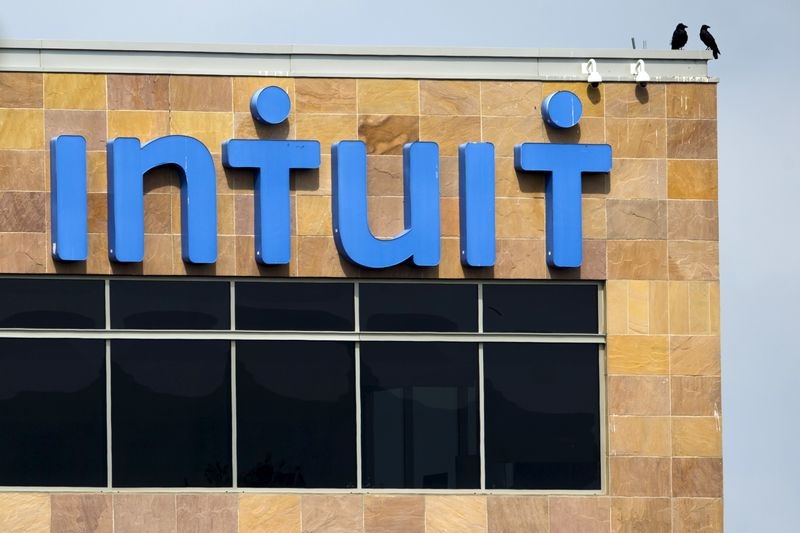
BMO reiterated an Outperform on Intuit with a $550 price target as the stock trades near $457 (P/E 29.78, PEG 0.66). Management will accelerate share buybacks and pause pre-scheduled insider stock sales while multiple firms (Barclays $540, TD Cowen $633, Morgan Stanley $580) maintain bullish ratings and BNP Paribas Exane moves to Neutral with a $463 target after a 31% YTD decline. Fundamentals cited include 17% revenue growth over the last 12 months and 81% gross margins, while IRS data (analyzed by DA Davidson) shows refunds up 12.0% in the first six weeks—supportive for tax-season demand—but 24 analysts have recently cut earnings and AI-related concerns remain near term.
The buyback acceleration combined with a pause in insider selling is a corporate-finance lever that materially changes supply dynamics rather than fundamentals: a modest, sustained repurchase program (3–6% of float over 12 months) mechanically boosts EPS and reduces effective float, amplifying the impact of any positive seasonal revenue surprises during the April filing ramp. Reduced sell-side pressure also tightens borrow and can compress implied volatility in INTU options, improving buy-write returns and lowering financing costs for long equity holders.
Second-order winners include AI infrastructure and server suppliers that benefit from any incremental model ops spend as Intuit scales ML in production—expect outsized order flow heterogeneity (lumpy multi-quarter bookings) for suppliers like high-performance server vendors. Conversely, incumbents with limited cross-sell or recurring revenue (both smaller tax-prep apps and neo-DIY plays) face margin compression if Intuit bundles more AI-enabled services into subscriptions. Over a 3–12 month horizon, the primary catalysts are tax-season volume cadence and buyback cadence; over 1–3 years, the decisive variable is whether AI lowers $/customer by enabling commoditized prep solutions.
The consensus risk is binary: near-term AI fear keeps multiples depressed despite buyback-driven EPS accretion, which suggests asymmetric upside if execution is steady. Tail risks that would reverse this include a sudden policy-driven shift in IRS processing, a marked consumer pullback reducing paid upgrade conversion, or aggressive competitor free offerings that materially change retention; each could erase near-term EPS beats and re-open the multiple contraction trade.
AI-powered research, real-time alerts, and portfolio analytics for institutional investors.
Request DemoOverall Sentiment
mildly positive
Sentiment Score
0.30
Ticker Sentiment
