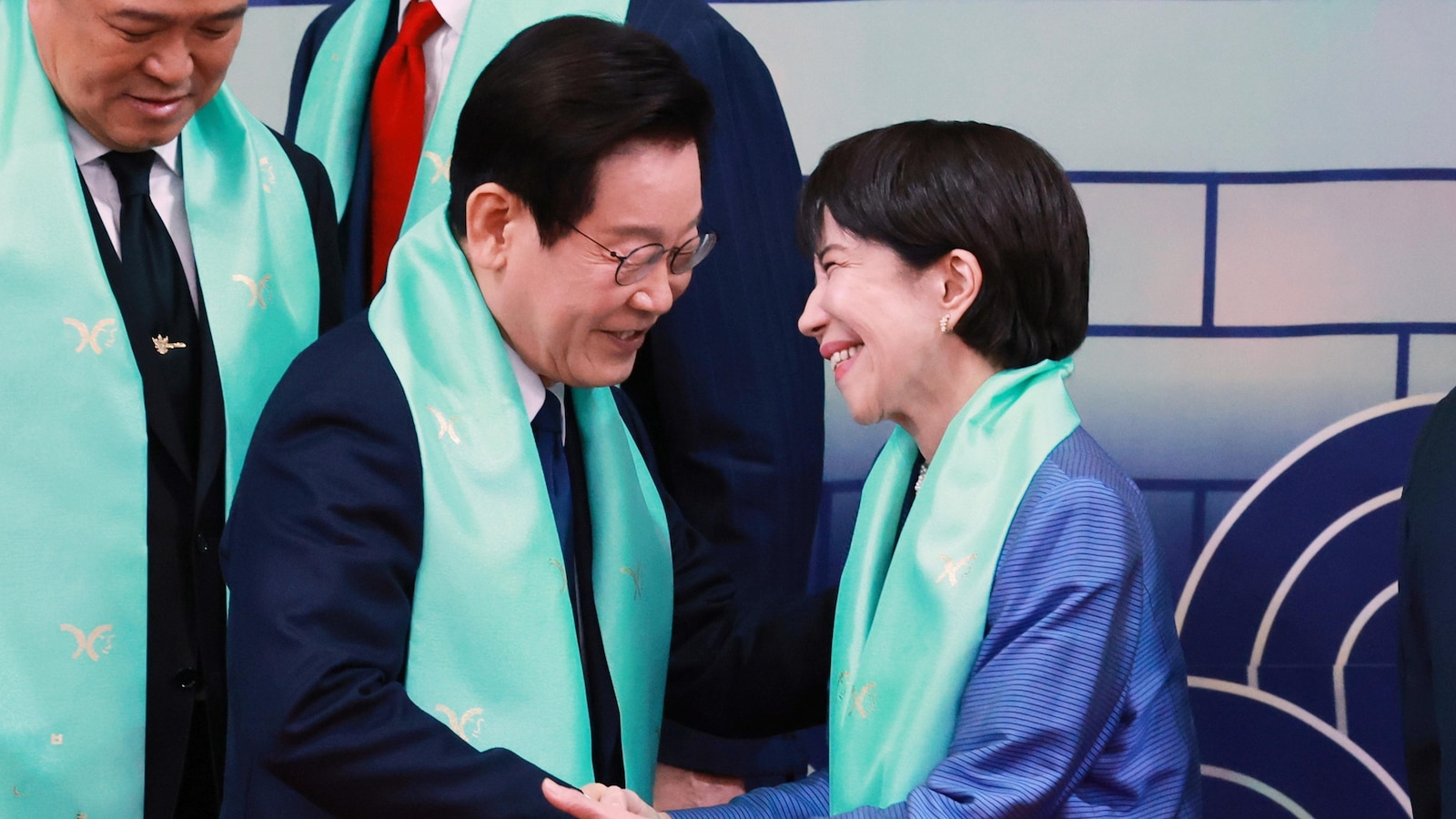
Japanese Prime Minister Sanae Takaichi will host South Korean President Lee Jae Myung in Nara for their first full summit aimed at stabilizing bilateral ties amid rising tensions with China. Talks will center on trade, regional security concerns including China and North Korea, and coordination with the U.S. on defense spending; the meeting follows Lee’s recent visit to China and signals both governments’ intent to manage historical disputes while exploring issues such as humanitarian cooperation on wartime remains. For investors, the summit modestly reduces near-term political tail risk between two key East Asian economies but leaves longer-term strategic friction with Beijing unresolved.
Market Structure: A steady Japan–South Korea rapprochement, framed by shared concern over China and North Korea, structurally favors regional defense, cyber, and advanced manufacturing suppliers. Expect incremental re-rating of Japan/Korea defense primes and semiconductor materials/vendors over 3–12 months; a 5–20% outperformance vs broad Asia if defense budgets rise 5–15% (as US pressures suggest). Trade flows may modestly shift away from China for sensitive tech inputs, improving demand for non-Chinese supply-chain nodes.
Risk Assessment: Tail risks include an escalatory Chinese response (trade curbs, sanctions) or a North Korean provocation prompting market shocks; each could move regional defense equities +10–25% intraday or hit Chinese equities -8–20%. Immediate window (days) sees low market impact; short-term (weeks–months) volatility around diplomatic/military events; long-term (quarters–years) structural budget increases. Hidden dependencies: semiconductor export controls and rare-earth access; a China export restriction is high-impact.
Trade Implications: Favor small, conviction-weighted long positions in defense/semicap supply-chain names and FX hedges: tactical 1–3% portfolio allocations to ETFs/tickers (see decisions). Use 3–9 month option call spreads to cap cost around anticipated catalysts (summits, missile tests, U.S. policy shifts). Rotate out of China large caps and Asia cyclical consumer names vulnerable to retaliatory trade steps.
Contrarian Angles: Consensus expects stable low-impact diplomacy; that underprices the probability of accelerated trilateral defense cooperation and procurement (10–30% chance in 12 months). If markets overreact to conciliatory optics, dip-buy long-exposure to industrials (7011.T, 6503.T) and semicap suppliers (8035.T) on >5% pullbacks. Watch USD/JPY: a move below 140 or above 150 should materially change FX-hedge sizing.
AI-powered research, real-time alerts, and portfolio analytics for institutional investors.
Request DemoOverall Sentiment
neutral
Sentiment Score
0.00
