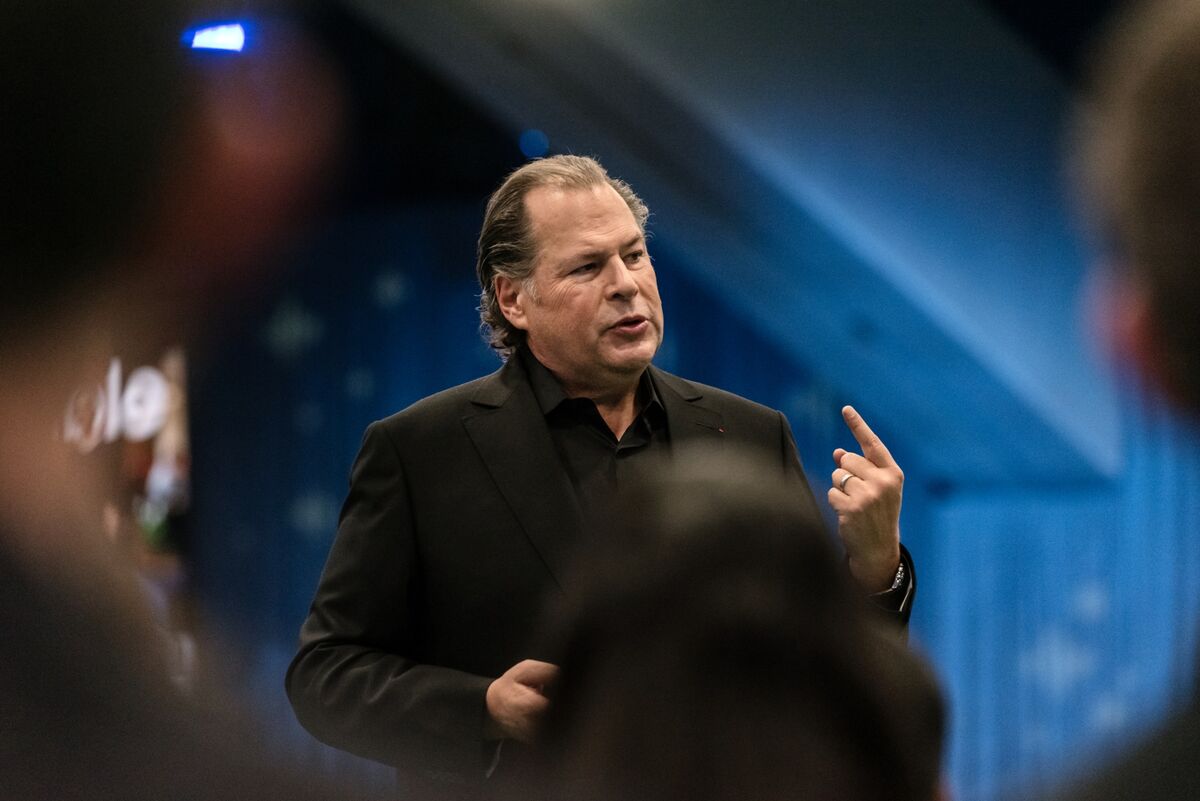
Salesforce CEO Marc Benioff apologized for his previous call to deploy the National Guard in San Francisco, retracting his statement after facing public criticism from local officials and allies. His apology, made on X following the company's Dreamforce conference, signals a response to stakeholder concerns and a shift in his public stance regarding local safety measures, potentially mitigating reputational risks for the company.
Salesforce (CRM) CEO Marc Benioff issued an apology for his prior suggestion to deploy the National Guard in San Francisco, retracting the statement after facing public criticism from local officials and allies. This reversal, communicated via social media platform X, follows nearly a week of public scrutiny and occurred post the company's Dreamforce conference.
The apology indicates a responsive approach to stakeholder feedback and a strategic shift in public stance on local safety, aligning with the "Management & Governance" theme. This action, characterized by a "mildly positive" sentiment score of 0.15, suggests an effort to mitigate potential reputational damage for CRM.
While the incident touched upon "Elections & Domestic Politics," the overall market impact is assessed as low (0.1), implying limited direct financial repercussions for CRM's stock. The swift retraction likely contained the controversy, preventing a more significant negative market reaction.
AI-powered research, real-time alerts, and portfolio analytics for institutional investors.
Request DemoOverall Sentiment
mildly positive
Sentiment Score
0.15
Ticker Sentiment
