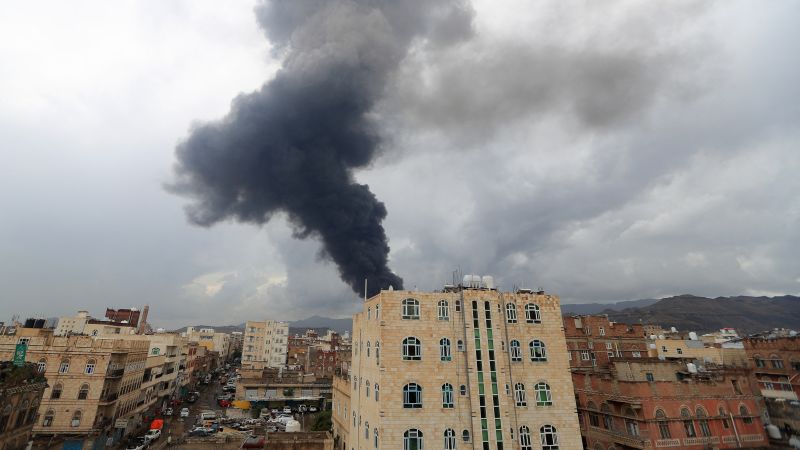
Israel launched retaliatory airstrikes against Houthi military sites, power plants, and a fuel storage facility in Yemen after the Iran-backed rebels fired a new type of missile, reportedly with sub-munitions, at Israel. The IDF stated these strikes, involving over 10 jets and hitting targets up to 2,000 km away, were in response to ongoing Houthi aggression. This escalation highlights the increasing geographical reach and intensity of regional hostilities, with Houthis affirming continued support for Gaza.
A significant escalation in regional hostilities is underway, marked by Israel's retaliatory airstrikes on Houthi-controlled Yemen. The strikes targeted critical infrastructure, including a military site, power plants, and a fuel storage facility, utilizing over 10 fighter jets with an operational range of approximately 2,000 kilometers. This decisive military action was a direct response to the Houthis' use of a new missile variant against Israel, which reportedly contained sub-munitions, indicating a notable advancement in the group's offensive capabilities. The Houthi leadership has affirmed its intent to continue these attacks, framing them as support for Gaza. This exchange expands the geographic scope of the conflict and introduces a higher degree of uncertainty and instability, directly impacting strategic assets and underscoring the potential for further tit-for-tat actions.
AI-powered research, real-time alerts, and portfolio analytics for institutional investors.
Request DemoOverall Sentiment
moderately negative
Sentiment Score
-0.50
