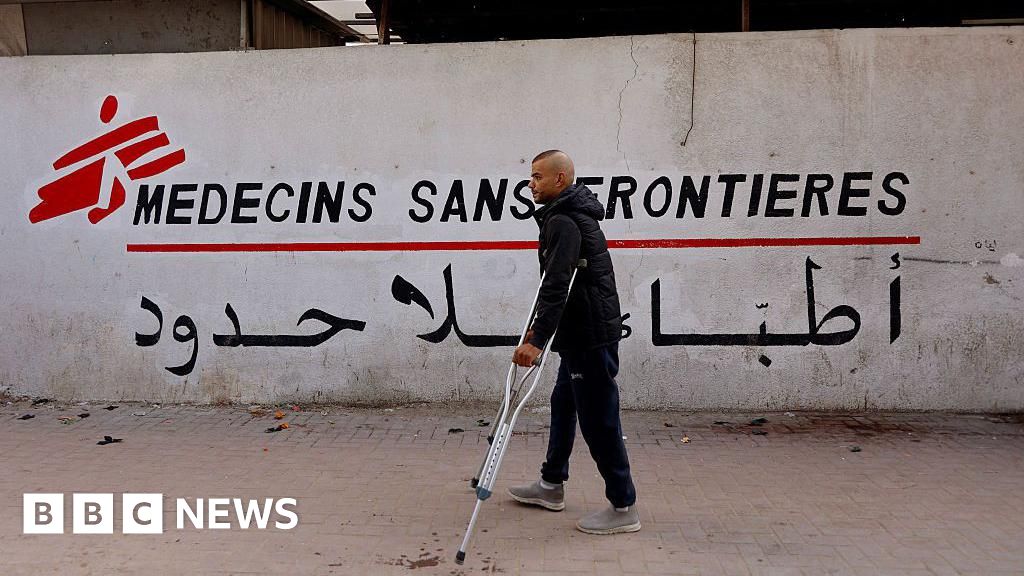
Israel announced it will move to terminate Médecins Sans Frontières' (MSF) activities in Gaza after the charity refused to provide lists of Palestinian and international staff without assurances for their safety; the move follows a December decision to revoke licences for 37 international NGOs, which were given 60 days to end operations. MSF says it provides at least 20% of Gaza hospital beds, operates ~20 health centres, conducted over 800,000 consultations and 10,000+ infant deliveries last year, and reports 15 staff killed among 1,700 healthcare workers killed in the conflict — a development the UN and several countries warn will severely impair access to essential services. International condemnation from at least 10 countries and concerns about staff safety underscore heightened operational and reputational risks for aid delivery amid ongoing hostilities.
Market structure: Immediate winners are listed defense/aerospace contractors and private security/logistics firms able to fill capability gaps (expect outsized demand for med-evac, armored logistics). MSF says it provides ~20% of Gaza beds; removing that capacity creates acute demand for substitute medical services and imports and increases pricing power for private contractors and regional medical suppliers over the next 1–6 months. Losers are NGOs, humanitarian logistics operators, and local healthcare capacity; donor reputational risk may reduce NGO funding flows by a low double-digit percent if access remains blocked.
Risk assessment: Tail risks include regional escalation involving Iran or Lebanon (low probability, high impact) that would push Brent >+10% within weeks and widen Israeli 5yr CDS by 100–300bp. Near-term (days–weeks) risks are operational (attacks on aid convoys); medium-term (3–12 months) risk is protracted withdrawal of international NGOs reducing medical throughput by 20–40% in Gaza. Hidden dependencies: donor conditionality, UN operational pauses, and insurance market withdrawal that could amplify supply shocks to medical imports.
Trade implications: Tactical defensive longs: U.S. defense ETF ITA or names LMT/NOC (2–3% portfolio each) for a 3–12 month horizon; hedge with 1–2% GLD as inflation/flight-to-safety. FX/credit plays: buy 1–3 month USD/ILS call options (strike ~+2% from spot) and consider buying 1–3 year protection via Israel sovereign CDS if spreads breach +50bp versus 1-month average.
Contrarian angles: Consensus focuses on humanitarian fallout; market underprices revenue shifts to private defense/medical contractors and insurance repricing. If Israeli measures are limited to paperwork and NGOs resume within 30–60 days, defense rallies could retrace 30–50% — use call spreads to limit cost. Historical parallels (past NGO suspensions) show service gaps often filled by private contractors within 3–9 months, arguing for medium-term constructive exposure to defense/security names rather than long-term sovereign shorts.
AI-powered research, real-time alerts, and portfolio analytics for institutional investors.
Request DemoOverall Sentiment
strongly negative
Sentiment Score
-0.60
