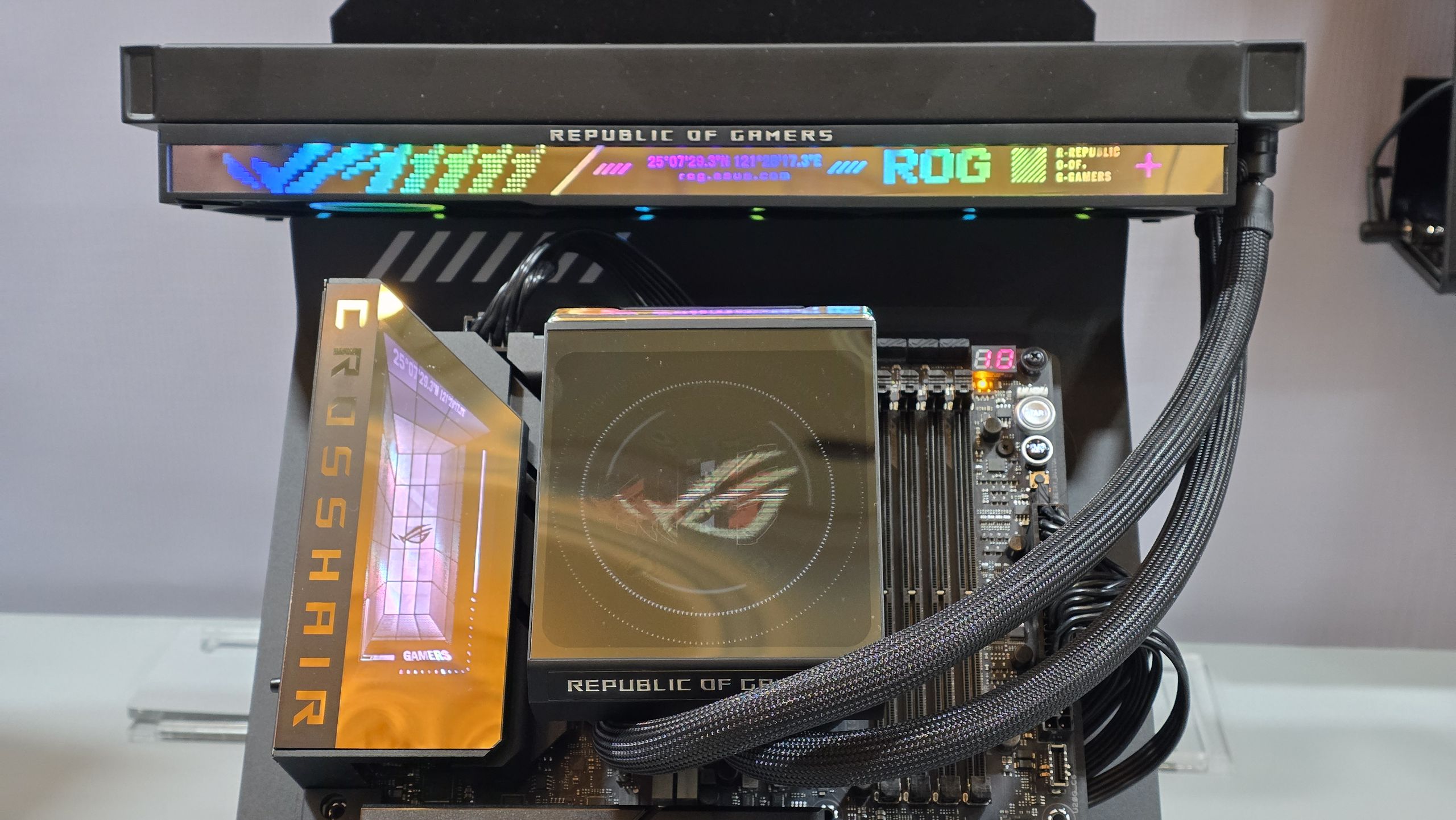
Asus introduced the ROG Strix LC IV series of AIO liquid CPU coolers featuring a first-of-its-kind cable‑free AIO Q-Connector that uses pogo pins to transmit power, PWM and ARGB signals, and (on select models) a 5.08-inch 720x720 LCD. The lineup includes three base 360mm models (two with LCD, one with ARGB logo) across six color/configuration variants, preinstalled triple fans, modular wiring fallback, compatibility tied to four new AM5 motherboards, and a six-year limited warranty; pricing and ship dates were not disclosed. The product positions Asus to differentiate in the premium cooling/motherboard ecosystem and could modestly boost accessory and motherboard attach rates, though it is unlikely to move broader markets absent broader adoption or notable commercial metrics.
Market structure: Asus’ cable-free AIO is a vertical wedge that favors motherboard makers that adopt the AIO Q-Connector (Asus now) and the AM5 ecosystem (AMD). Expect modest share gains for Asus in premium AIOs and for AM5 board SKUs; if Asus captures 5–10% incremental AIO ASP premium, accessory rivals face margin pressure. Retail channels (Best Buy, Newegg) could see higher attach rates for AM5 builds, raising FY demand for high-end components by low single-digit percentages.
Risk assessment: Main tail risks are (1) interoperability failure or high RMA rates from pogo-pin reliability causing recalls within 3–12 months, (2) patent/legal disputes if connector is copied, and (3) weak consumer take-up if pricing is >15–20% above incumbent AIOs. Short-term (days–weeks) risks center on reviews and pricing; medium-term (1–6 months) risks are supply constraints on LCD panels/pogo pins; long-term (1–3 years) is whether other OEMs adopt the standard.
Trade implications: Direct plays are long AMD (AM5 demand driver) and long Asus/Asustek exposure in Taiwan-equity or ADRs conditional on pricing; consider short exposure to pure-play AIO rivals if Asus pricing forces price cuts. Use options to express asymmetric views: buy call spreads on AMD into next 3–6 months product cycle and buy near-term straddles on Asus ADR around the launch/pricing announcement to monetize event volatility.
Contrarian angles: Consensus assumes easy ecosystem roll-out — it may not occur; if Asus keeps the connector proprietary, total addressable market stays niche (<10% of builders). Historical parallels: proprietary PC connectors (FireWire/Apple Lightning) had mixed adoption — licensing friction limited scale. Unintended consequences include higher warranty costs and aftermarket fragmentation that could cap margins.
AI-powered research, real-time alerts, and portfolio analytics for institutional investors.
Request DemoOverall Sentiment
mildly positive
Sentiment Score
0.30
Ticker Sentiment
