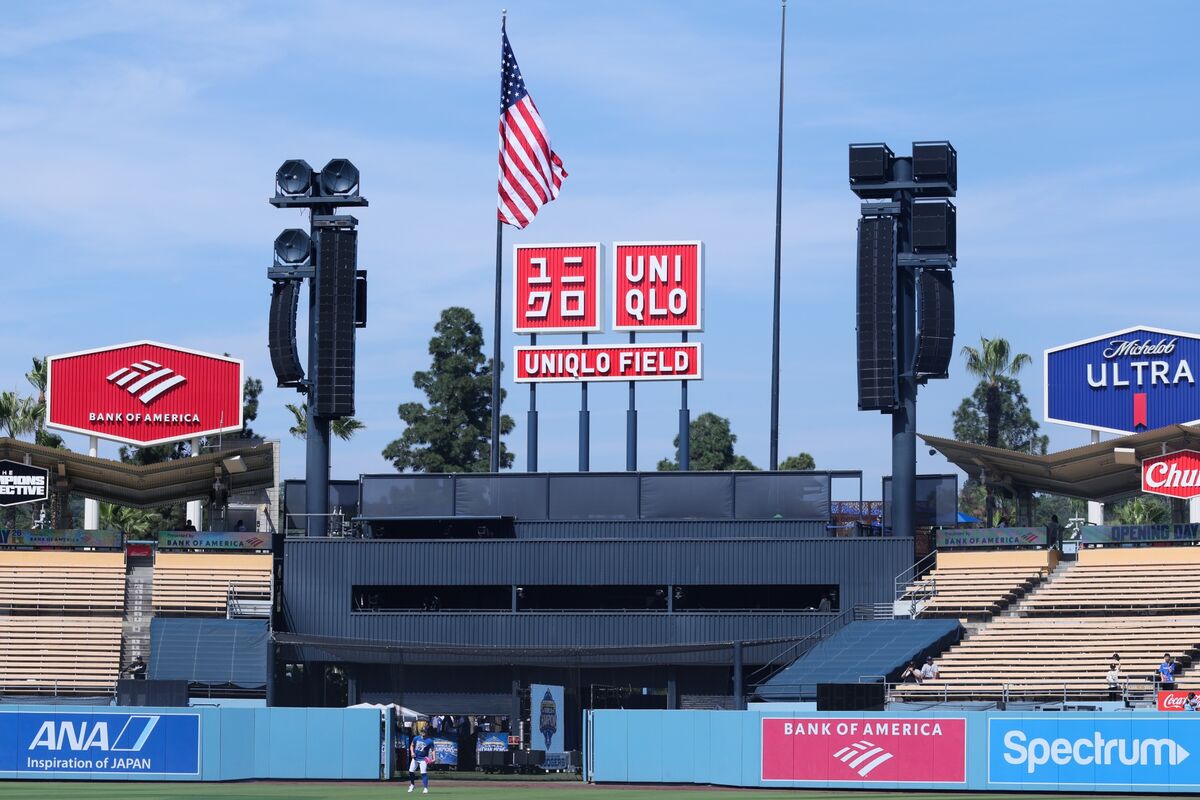
Fast Retailing/Uniqlo struck a landmark sponsorship to rebrand Dodger Stadium as Uniqlo Field, a reported five-year deal worth $125M. The move leverages Shohei Ohtani and Dodgers branding to accelerate Uniqlo's US expansion and raise consumer awareness; financial terms were not officially disclosed. Expect a marketing-driven boost to brand equity and modest incremental revenue over time, but limited near-term impact on core fundamentals or market-moving metrics.
This is a brand-heat play with geographically concentrated activation whose economic impact will be felt unevenly: expect a sharp, short-duration lift in LA-area discovery metrics (search volume, store traffic, e‑commerce conversion) followed by a more muted, persistent national halo if the company converts that attention into assortment depth and inventory flow. Measurable uplift is likely to show up within 1–3 quarters in digital KPIs (search +15–30%, app installs +10–25%) and in reported US comps (order-of-magnitude: low-single-digit percentage points), provided supply chain and replenishment are aligned to the spike.
Second-order winners include US logistics partners and on-shore retail teams that can shorten lead times — firms that can turn awareness into in-stock availability will capture disproportionate share. Conversely, mid-market incumbents that compete on basic apparel and rely on slower seasonal replenishment (gap-like economics) face the greatest displacement risk over 6–12 months; the brand halo also increases wage and peak-shift pressure on distribution centers during holiday cycles.
Tail risks are concentrated and idiosyncratic: athlete-driven campaigns are binary — an injury, reputational event, or underperformance can reverse sentiment in weeks. Macro/margin risks arise if the company over-commits inventory to the US promo and is left with discounted carry into the next season; absent a clear omnichannel fulfillment upgrade, the PR lift could translate into margin erosion rather than durable market share gains. Monitor quarterly US comps, store-level sell-through, and inventory days-supply over the next 2–4 quarters as primary catalysts.
AI-powered research, real-time alerts, and portfolio analytics for institutional investors.
Overall Sentiment
mildly positive
Sentiment Score
0.35
