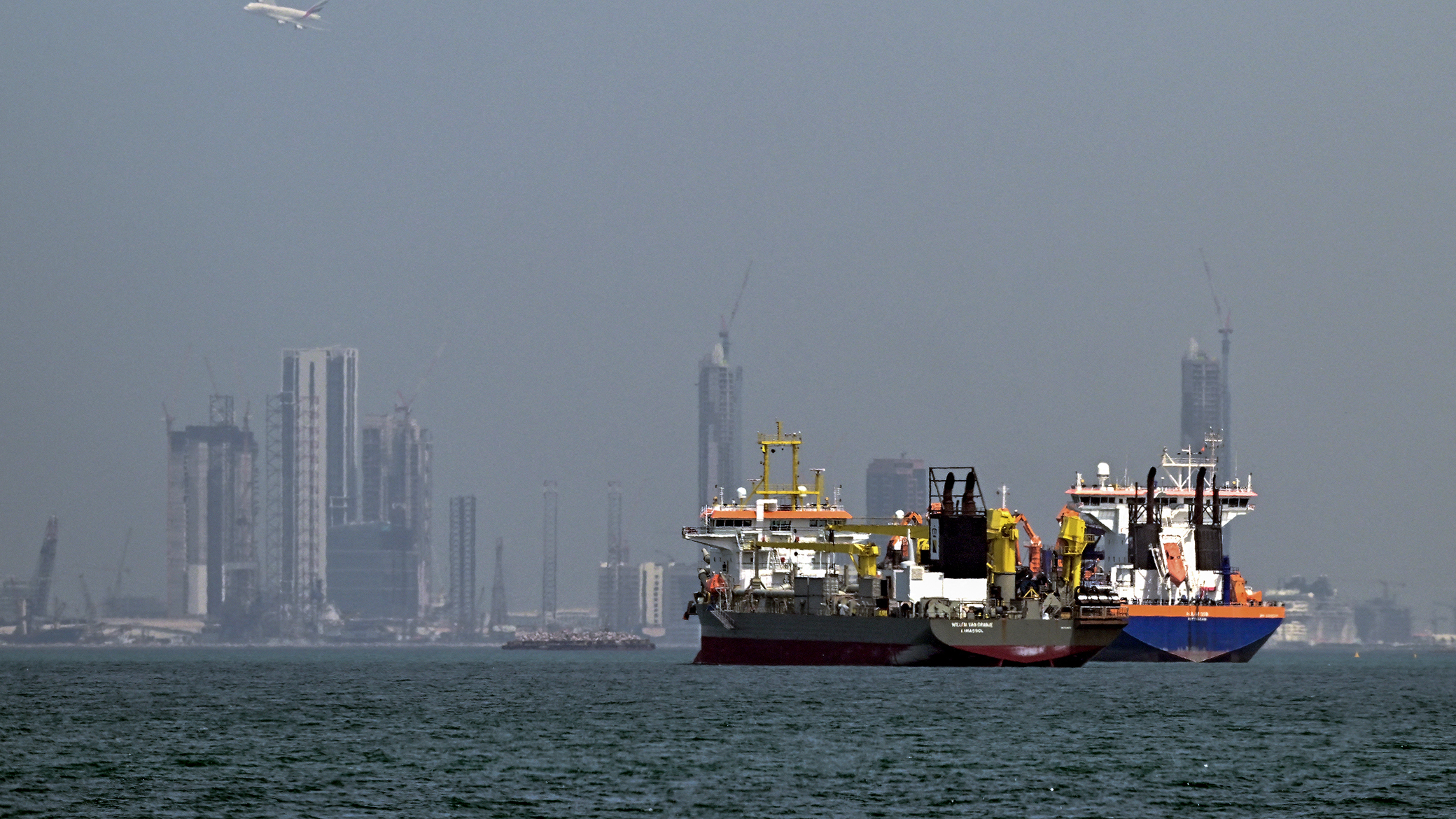
14 countries were targeted by Iran within the first six days of the conflict and the UAE has intercepted at least 2,100 drone/missile strikes, signaling rapid horizontal expansion. The International Energy Agency warns the disruption to energy markets is already worse than the 1973 and 1979 shocks, and threats to the Strait of Hormuz and Bab al-Mandeb risk materially reducing oil flow and raising near-term oil price and supply volatility. With President Trump’s deadline extension and threats to hit Iranian power stations, the probability of further vertical escalation against critical infrastructure is elevated, implying sustained market risk and a risk-off posture for energy and logistics-sensitive portfolios.
Iran’s deliberate horizontal and vertical escalation is creating non-linear transmission channels into global commerce: sustained chokepoint risk (Strait of Hormuz, Bab al‑Mandeb) adds an immediate insurance/transport premium that behaves like a tax on seaborne oil flows — expect the equivalent of $2–5/bbl in effective delivered cost from rerouting and insurance within weeks if attacks continue. That friction compounds quickly because refiners and traders cannot arbitrage the gap as fast as physical flows are diverted, so localized fuel shortages and margin compression will show up in regional spot spreads before headline Brent moves fully reflect the damage.
Energy producers with flexible spare capacity (US unconventionals, LNG exporters) capture cash flow within 1–3 months; integrated majors capture steadier profits but with slower marginal upside. Conversely, airlines, container lines and export-oriented manufacturers face immediate margin pressure: jet fuel rises of $0.10–$0.20/gal typically shave 2–5% off airline operating margins within a single quarter, while shipping reroutes add days and variable cost to container cycles, tightening working capital for trading firms.
Defense suppliers and reinsurance are second‑order winners — procurement cycles lift over 12–36 months and reinsurance rate resets (20–40%+) will raise operating costs for commodity traders and ports that self-insure. Key reversals are binary and short‑dated: a credible ceasefire or coordinated SPR release can normalize transport and knock down the “risk premium” in oil within 7–30 days; structural damage to energy infrastructure, by contrast, creates a 6–24 month premium if repair timelines extend.
Portfolio construction should assume high tail risk and asymmetric payoffs: protect downside with short-duration hedges and express upside via the most liquid energy and defense exposures rather than concentrated regional assets that face direct strike risk. Monitor three live triggers closely — Hormuz/Bab al‑Mandeb closure, SPR/OPEC responses, and US strike commitments — each will move implied volatility and basis trades rapidly.
AI-powered research, real-time alerts, and portfolio analytics for institutional investors.
Request DemoOverall Sentiment
strongly negative
Sentiment Score
-0.75
