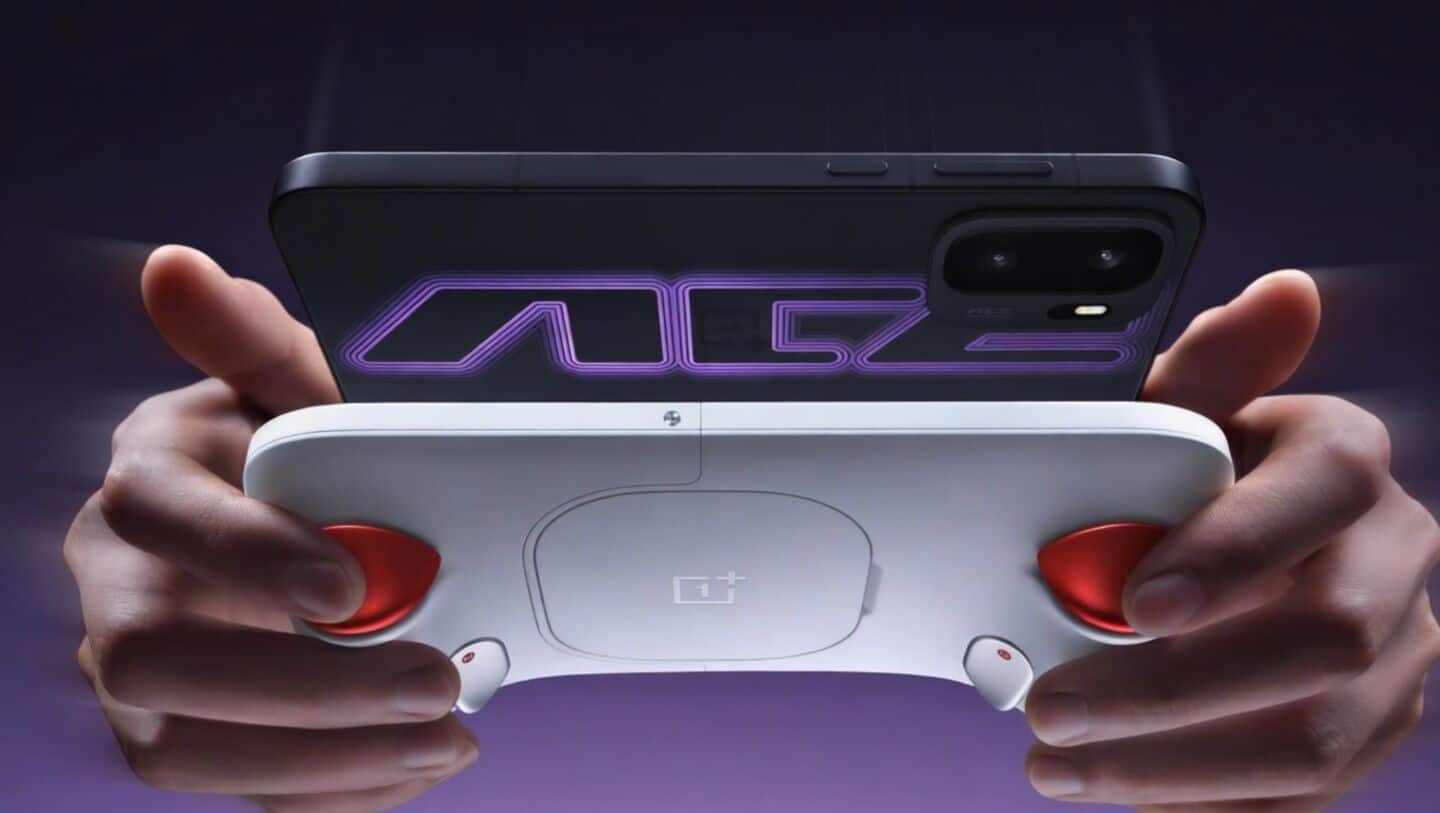
OnePlus's upcoming Ace 6 Ultra will support an attachable gamepad that effectively turns the phone into a handheld gaming console. The device is expected to feature a 6.78-inch 1.5K 165Hz display, MediaTek Dimensity 9500 chip, up to an 8,600mAh dual-cell battery, and 100W fast charging. The announcement is product-focused and modestly supportive of OnePlus's positioning in gaming-oriented smartphones, but it is unlikely to have a material market impact.
This is a signal that premium Android hardware is moving beyond spec-sheet differentiation into ecosystem lock-in around accessories, where the attachable controller and cooling module become the real margin levers. The likely near-term winners are component and ODM suppliers that can monetize higher ASPs per handset unit: battery cells, thermal materials, haptics, low-latency input modules, and display suppliers that can support sustained 165Hz operation without throttling. The second-order effect is that gaming-centric phones may lift accessory attach rates and improve gross margin mix even if handset volumes stay niche. The more important competitive implication is that this narrows the gap between phones and dedicated handhelds for casual/core gamers, which pressures lower-end portable gaming devices more than flagship smartphones. If the thermal and battery claims hold in real-world use, the product can convert long-session gaming from a marketing claim into an actual use case, which is what drives retention and accessory revenue. That said, battery endurance, heat, and ergonomics are all areas where launch-day demos often outperform sustained consumer usage, so the setup is still highly execution-dependent. Catalyst timing is short-term into launch and review cycles, but monetization is medium-term over the next 2-4 quarters if accessory adoption sticks. The main risk is that this remains a halo product with limited unit scale, while added BOM complexity compresses handset margins if the premium pricing does not fully offset the controller/fan ecosystem costs. A weaker-than-expected gaming battery life or thermal throttling would quickly reverse sentiment and likely relegate this to a niche enthusiast play rather than a platform shift. The contrarian view is that the market may be underestimating how much of the value accrues outside the phone itself: controllers, cooling, charging, and replacement parts can become recurring revenue streams if the platform gets traction. On the other hand, investors should not extrapolate this into a broad smartphone upgrade cycle; the likely addressable market is gamers willing to pay a premium for a specific use case, not the mass market. The asymmetry is better in suppliers and accessory ecosystems than in the handset OEM alone.
AI-powered research, real-time alerts, and portfolio analytics for institutional investors.
Request DemoOverall Sentiment
mildly positive
Sentiment Score
0.30
