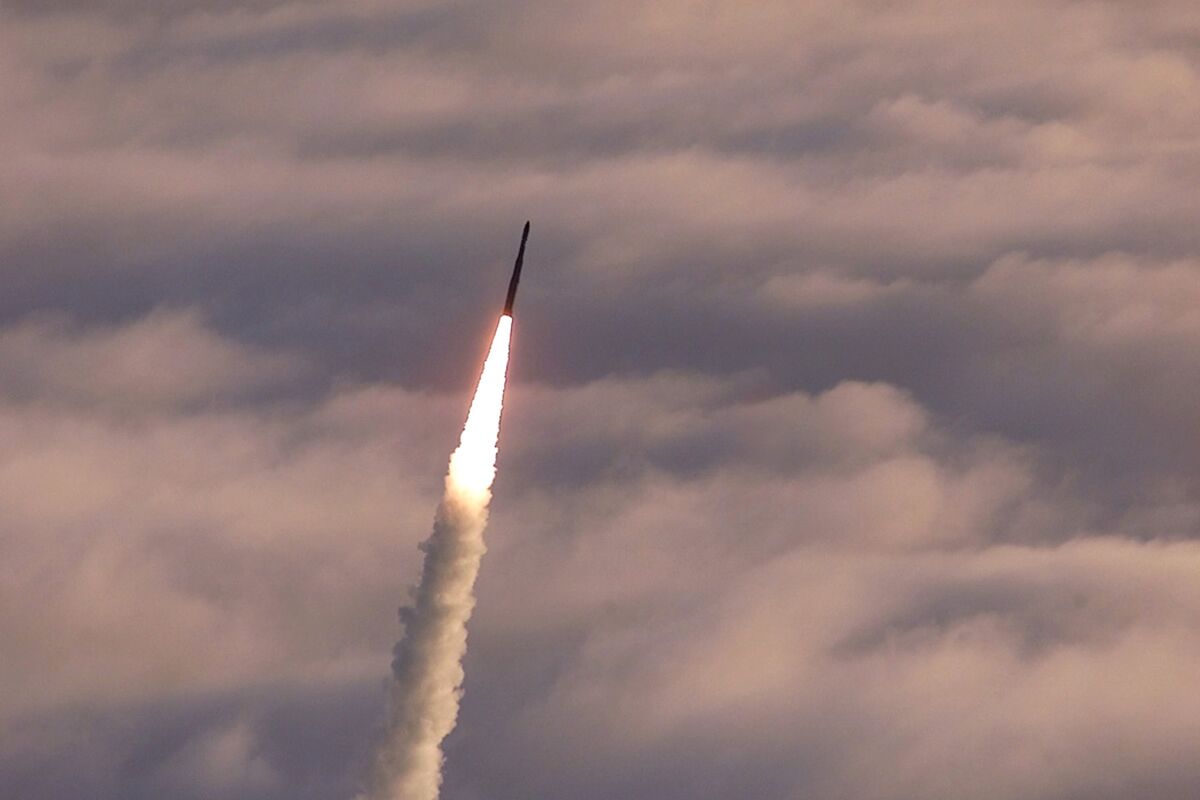
China’s State Council Information Office said in a white paper that recent U.S. moves to resume nuclear testing and broader adjustments to nuclear policy — following President Trump’s order to test — along with the maintenance of large arsenals, heighten the risk of global nuclear conflict. The statement signals elevated geopolitical risk that could lift defence stocks and safe-haven assets and raise risk premia across markets, adding short-term uncertainty for investors.
Market structure: Direct winners are large defense primes (LMT, NOC, RTX) and specialist suppliers (BAE.LIKE, BWXT) plus uranium producers/ETFs (CCJ, URA) as policy shifts increase procurement tails; losers include China-exposed industrials, select EM sovereign credits and firms reliant on stable US-China trade flows. Pricing power shifts to incumbents with classified supply chains and long-term DoD contracts; small-cap defense names may lag due to execution risk.
Risk assessment: Near-term (days–weeks) expect risk-off repricing: higher VIX, USD strength, and lower benchmark yields as flight-to-quality compresses yields by 10–40bp in acute moves; medium-term (3–12 months) elevated defense budget certainty supports revenue growth while long-term (1–3 years) geopolitical fragmentation raises capex and supply-chain onshoring. Tail risks include an actual kinetic escalation or sanctions cascade that disrupts commodity flows (oil/rare earths/uranium) and creates 20%+ moves in affected assets.
Trade implications: Tactical trades should overweight defense primes and uranium exposure while hedging with duration and gold; use option call spreads to pay for exposure rather than outright longs to manage volatility. Cross-asset: buy TLT/GLD as portfolio insurance, and consider short CNH/EM FX exposures; triggers to add risk-off are VIX >25, DXY >+1.5% in 3 sessions, or US 10y <3.50% on flight flows.
Contrarian angles: The market may overpay for immediate “war premium” while underestimating the multi-year rerouting of supply chains and sustained defense spending — favor cash-flow strong primes over momentum names. If headlines fade without testing, expect a 5–12% mean reversion in defense equities; therefore scale in with 20–40% tranches and use stop-losses to capture entry points.
AI-powered research, real-time alerts, and portfolio analytics for institutional investors.
Request DemoOverall Sentiment
moderately negative
Sentiment Score
-0.50
