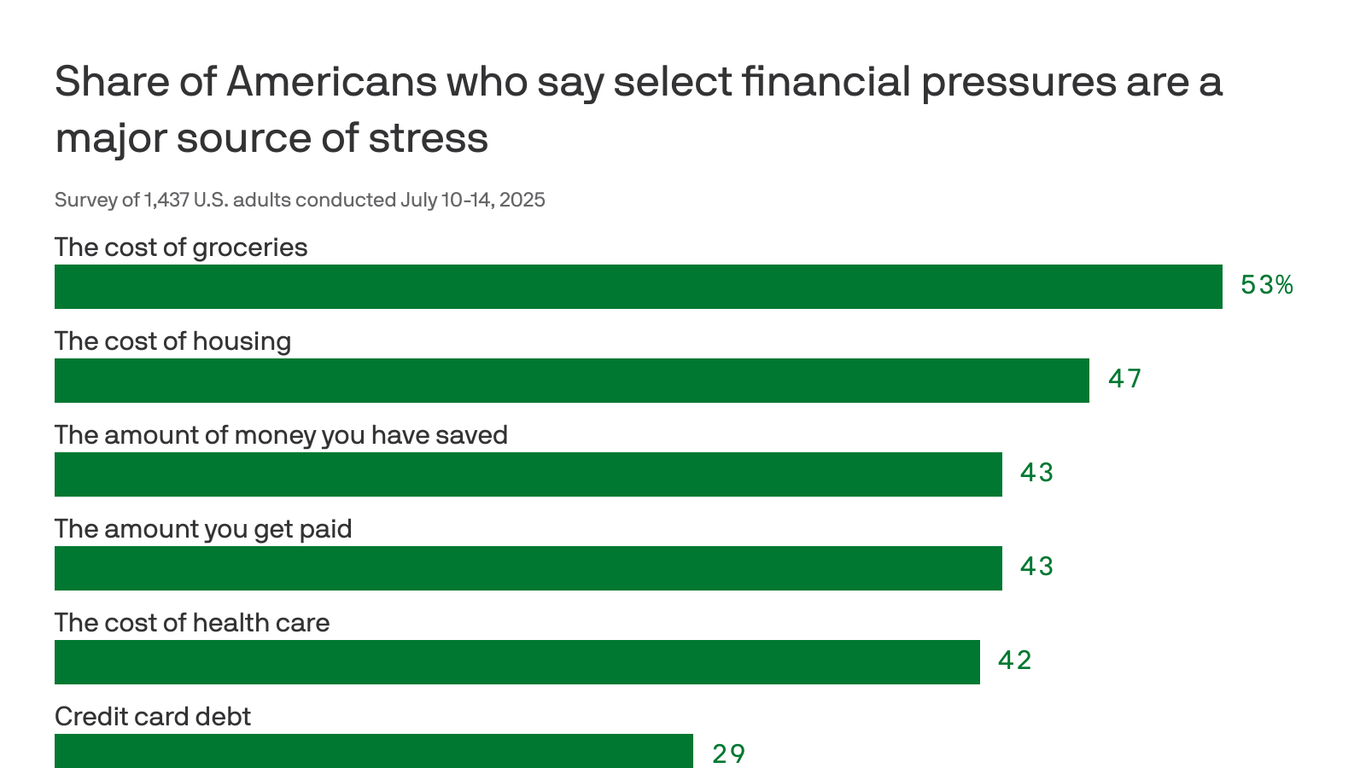
An AP-NORC poll reveals that 53% of Americans are highly stressed by grocery costs, a greater concern than credit card, childcare, or student debt. This heightened consumer financial strain aligns with a 3% year-over-year increase in food prices as of June, driven by supply chain disruptions and geopolitical factors. Notably, 14% of adults are now utilizing Buy Now, Pay Later services for grocery purchases, indicating a shift in consumer payment behavior and mounting pressure on household budgets, which could impact consumer spending patterns and the growth of alternative payment solutions.
A recent AP-NORC poll indicates significant and widespread financial strain among U.S. consumers, with 53% reporting grocery costs as a major source of stress, a level exceeding concerns over housing (47%) or credit card debt. This sentiment is substantiated by a 3% year-over-year increase in food prices as of the June CPI report, driven by persistent supply chain disruptions, geopolitical factors, and climate-related volatility. A critical emerging trend is the behavioral shift towards alternative financing for essential goods; the poll found that 14% of adults now utilize Buy Now, Pay Later (BNPL) services for groceries. This adoption signals that household budgets are severely stretched, forcing a reliance on installment payments for non-discretionary spending. The situation may be further exacerbated by anticipated cuts to federal food assistance, which could suppress volumes for traditional grocers and increase pressure on consumer financial health, creating headwinds for broader consumer spending despite the administration's stated pro-growth policy agenda.
AI-powered research, real-time alerts, and portfolio analytics for institutional investors.
Overall Sentiment
strongly negative
Sentiment Score
-0.65
