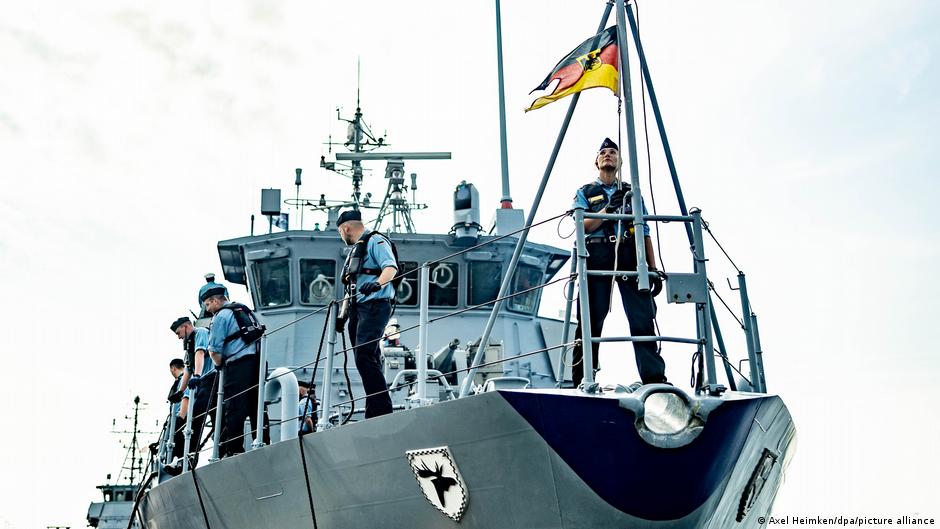
Germany is preparing naval ships for a possible Strait of Hormuz deployment, with Defense Minister Pistorius saying a minesweeper and support ship will be positioned in the Mediterranean pending Bundestag approval. The article also highlights a Signal phishing compromise involving two Cabinet ministers and the broader economic strain from the Hormuz disruption, including a cut in Germany's growth forecast to 0.5% amid higher energy costs.
The most tradable takeaway is not the headline naval deployment itself, but the forced repricing of Germany’s cost base if Hormuz remains intermittently closed. Germany is unusually exposed to imported energy inflation through industry, airlines, and transport-heavy cyclicals; the second-order hit is weaker freight volumes, softer consumer discretionary spend, and higher refinancing stress for already thin-margin operators. That argues for staying skeptical on Germany-centric cyclicals until there is evidence the Strait is reopening sustainably, because the market typically underestimates how fast energy shocks flow into earnings revisions over the next 1-2 quarters.
RYAAY is the cleanest single-name loser in the data set. The problem is not just higher taxes and charges; it is that geopolitical energy stress can quickly turn a fee dispute into a demand problem if consumers trade down or shorten trip duration, especially on leisure routes where price elasticity is highest. If fuel spikes persist for several weeks, smaller European short-haul carriers with weaker balance sheets should underperform Ryanair on a relative basis, but Ryanair still has the sharper earnings leverage because it can redeploy capacity faster than legacy peers.
ADV is more of a sentiment proxy than a direct equity trade, but the broader read-through is negative for German airport operators and airport-linked infrastructure contractors if airlines keep rationalizing capacity. The contrarian view is that markets may be too quick to assume a lasting airline capacity pullback: if talks on charges produce even a modest concession, the selloff in aviation-related names could reverse within days because demand remains robust and route capacity is still constrained across Europe. Meanwhile, the cybersecurity angle increases tail risk for policy execution and coordination, but unless there is evidence of operational compromise, it is more likely to create headline volatility than a lasting fundamental hit.
AI-powered research, real-time alerts, and portfolio analytics for institutional investors.
Request TrialOverall Sentiment
mildly negative
Sentiment Score
-0.20
Ticker Sentiment
