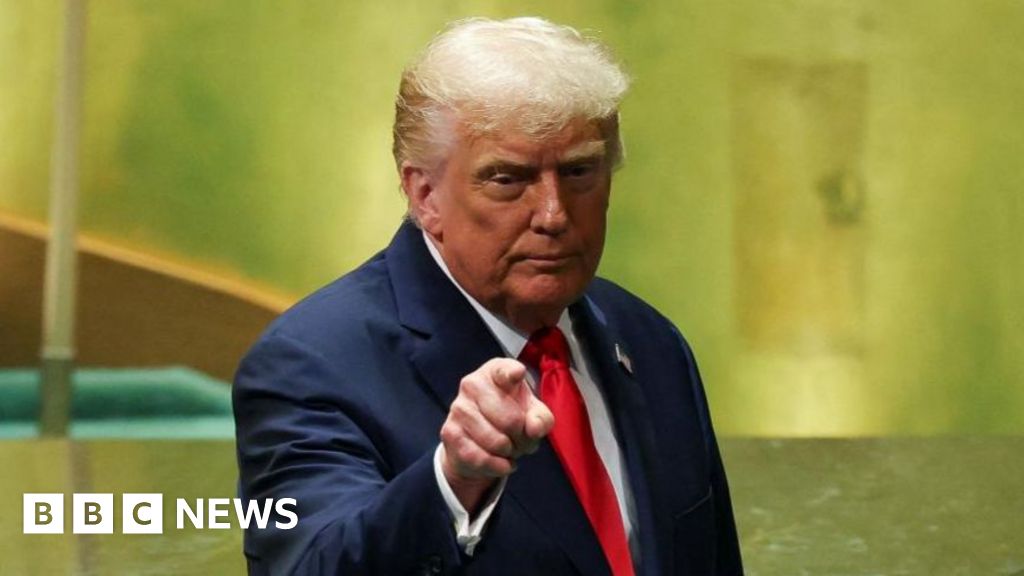
Donald Trump's recent UN address underscored his 'America First' platform, sharply criticizing the UN's efficacy and aid programs, and condemning European renewable energy initiatives and immigration policies as detrimental to their economies and heritage. He threatened Russia with 'strong tariffs' over the Ukraine conflict and admonished European nations for purchasing Russian energy, while also postulating Ukraine's potential to reclaim territory with EU/NATO backing. This speech signals a continued push against multilateralism and a potential shift in global energy and trade policies, with significant implications for international relations and market stability.
Donald Trump's recent United Nations address signals a significant escalation of his anti-globalist and 'America First' doctrine, carrying substantial implications for geopolitical stability and key market sectors. The speech's high market impact score (0.7) and strongly negative sentiment (-0.7) are justified by his direct attacks on multilateral institutions, specifically questioning the UN's efficacy and accusing it of financing 'invasions' via aid to asylum seekers. For energy markets, his characterization of climate change as the 'greatest con job' and European renewable initiatives as a 'suicidal' and 'green energy scam' creates profound policy uncertainty. This stance, coupled with specific criticism of the UK's North Sea oil tax, suggests a potential future policy environment highly favorable to fossil fuels at the expense of the ESG-focused energy transition. In terms of geopolitics, his threat of 'powerful tariffs' against Russia over the Ukraine conflict is noteworthy, yet it is conditioned on European allies ceasing Russian energy purchases—a condition that the article notes applies substantively only to Hungary and Slovakia, suggesting a potential reluctance to sanction larger buyers like India and China. His simultaneous dismissal of Russia as a 'paper tiger' and his assertion that Ukraine could win with EU/NATO support—pointedly omitting US involvement—introduces significant ambiguity regarding the future of American commitment to the conflict, despite a more critical tone toward Moscow. The silent reception from the UN audience, in contrast to laughter six years prior, indicates that his policy pronouncements are now viewed as more consequential, heightening market sensitivity to his agenda.
AI-powered research, real-time alerts, and portfolio analytics for institutional investors.
Request DemoOverall Sentiment
strongly negative
Sentiment Score
-0.70
