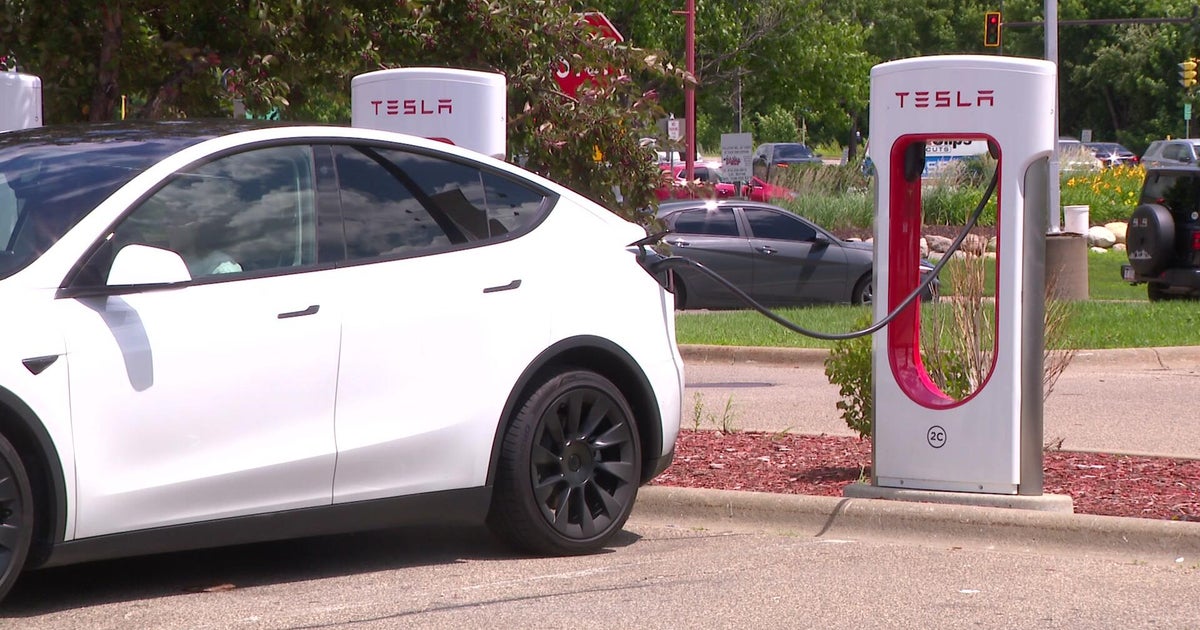
President Trump's proposed budget bill could eliminate federal tax credits for electric vehicles (EVs), which currently offer up to $7,500 for new and $4,000 for used vehicles. While industry leaders like Elon Musk express concern that this could significantly harm EV demand, a University of St. Thomas professor suggests the market has matured sufficiently, with EVs offering inherent cost savings and benefits that will sustain demand even without the incentives, indicating the market will soften but not be ruined.
The potential elimination of federal electric vehicle (EV) tax credits, valued at up to $7,500 for new vehicles, introduces a significant policy-driven risk for the automotive sector, particularly for pure-play EV manufacturers like Tesla. The market reaction is bifurcated: Tesla's CEO Elon Musk anticipates an "incredibly destructive" impact on demand, a view that aligns with the negative sentiment score of -0.4 for TSLA. This suggests that key industry players are pricing in a material hit to sales volume should the subsidy be removed. Conversely, the article presents a counter-narrative of market maturity, articulated by Professor John Abraham, who argues that the EV market will only "soften" but not be "ruined." This perspective is based on the premise that the total cost of ownership, performance benefits, and environmental appeal now constitute a compelling value proposition independent of subsidies. Anecdotal consumer evidence supports this, framing the credit as a "nice perk" rather than the primary purchase driver. The overall mixed sentiment signal reflects this tension between a potential near-term demand shock and the thesis of long-term, self-sustaining market viability.
AI-powered research, real-time alerts, and portfolio analytics for institutional investors.
Overall Sentiment
mixed
Sentiment Score
0.00
Ticker Sentiment
