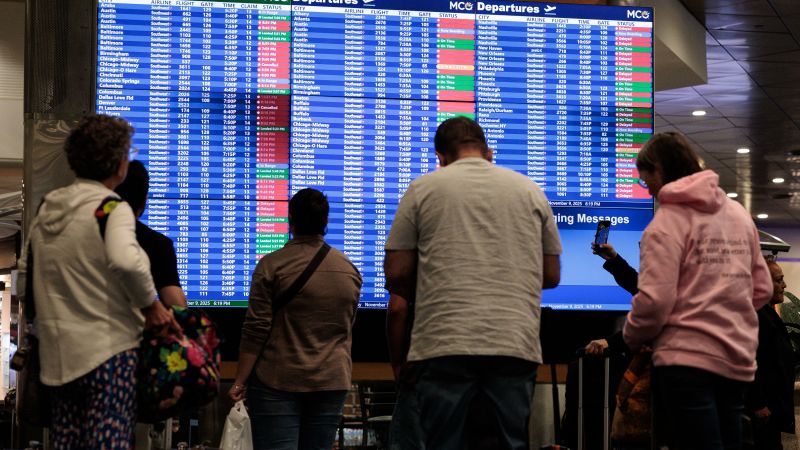
The recent government shutdown's resolution, with President Trump signing a temporary funding bill, is expected to normalize air travel for Thanksgiving after widespread flight cancellations and delays due to FAA cuts and air traffic controller shortages. While major airlines anticipate a rapid operational recovery despite millions in lost revenue, the short-term funding through January raises concerns about potential future disruptions. The episode also underscored critical structural issues, including a significant shortage of air traffic controllers exacerbated by the shutdown, prompting industry calls for legislative action to ensure system stability during future government impasses.
The recent resolution of the government shutdown, marked by President Trump signing H.R. 5371, is expected to normalize air travel operations, with major carriers like Delta (DAL), Southwest (LUV), and American Airlines (AAL) anticipating a return to full capacity for Thanksgiving. This follows widespread flight cancellations and delays, particularly at 40 major airports, where FAA-mandated cuts reached 6% due to air traffic controller shortages. Per-ticker sentiment for DAL, LUV, and AAL is notably positive (0.7, 0.6, 0.6 respectively), indicating market relief for immediate operational recovery.
Despite the immediate positive outlook for airlines, the overall market sentiment remains mixed (-0.25) and uncertain, reflecting underlying structural issues and future risks. The US air traffic control system faces a critical shortage of over 3,000 controllers, a problem exacerbated by the shutdown. Airlines for America highlights the industry's call for legislative action to utilize the FAA's $5 billion trust fund to ensure system stability during future government impasses.
A significant concern is the temporary nature of the funding bill, which extends only through January 30, raising the specter of another potential shutdown and renewed disruptions. While airlines incurred millions in lost revenue, the competitive marketplace, where all major carriers were equally impacted, might mitigate significant ticket price increases. This short-term fix, coupled with unresolved long-term staffing deficits, suggests persistent volatility for the air travel sector.
AI-powered research, real-time alerts, and portfolio analytics for institutional investors.
Request DemoOverall Sentiment
mixed
Sentiment Score
-0.25
Ticker Sentiment
