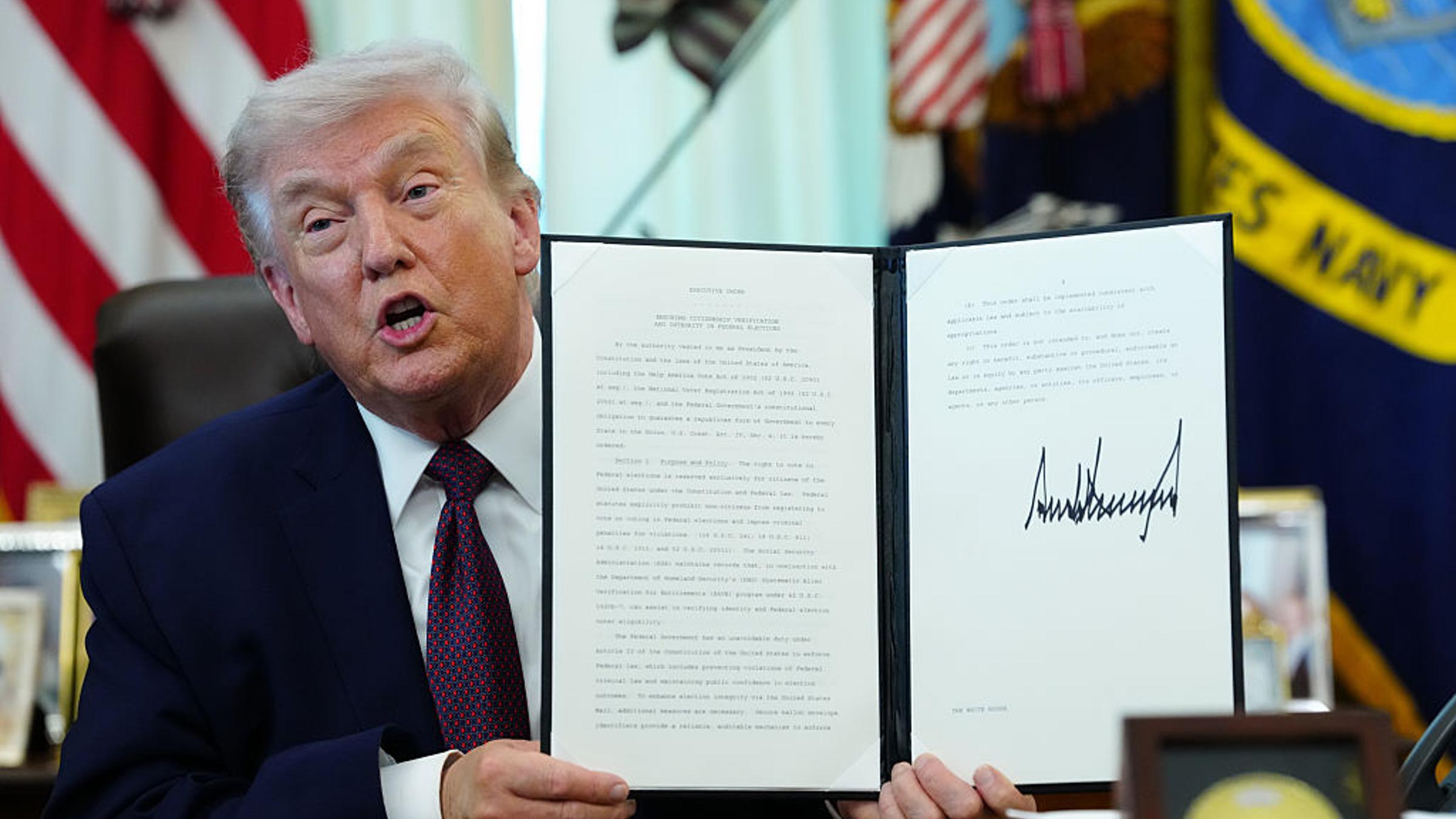
President Trump signed an executive order directing DHS and the SSA to compile state lists of confirmed citizens eligible to vote, restrict USPS from sending absentee ballots to those not on state mail-in/absentee lists, and require trackable barcoded secure ballot envelopes. The order targets mail-in voting, authorizes DOJ investigations and potential prosecutions, and threatens withholding federal funds; it immediately drew legal challenges from states and voting-rights groups — eight all-mail states plus D.C. were specifically noted and the Justice Department has already sued Washington, D.C. and 29 states over voter-roll demands. This raises near-term policy and legal risk ahead of the November midterms, but is unlikely to have a direct, large market impact absent broader legislative or judicial outcomes.
This EO is less a finished policy than a multi-front procurement and litigation catalyst. Expect two distinct budgetary channels: (1) near-term procurement demand for secure mail, barcoding, and end-to-end tracking (operational pilots likely within 30–90 days), and (2) multi-quarter DHS/SSA data-integration and identity-verification projects that will require third‑party contractors and add recurring maintenance costs. Those demand streams favor vendors that already sell mail-tracking, envelope/print solutions, and government IT integration rather than niche “election tech” incumbents that lack scale.
Legal friction is the dominant near-term risk and, paradoxically, a second-order liquidity opportunity. Courts are likely to enjoin major operational changes within days-to-weeks in many states, producing episodic headlines and contract RFPs that can spike small-cap vendor equities by 20–40% on perceived wins, then reverse when injunctions land. The bigger macro effect is political: threats to withhold federal funds raise state budget uncertainty (especially for states with high federal aid ratios) and could widen certain muni spreads over 3–12 months if enforcement is credibly threatened.
Market consensus will oscillate between “policy will stick” and “court stays block it”; our working base case is partial implementation in red-leaning states within 3–6 months and widespread judicial blocks in blue states, creating a geography-specific bifurcation in revenues. Tradeable plays should therefore target companies with immediate, contractable product sets (mailing/tracking, government IT) and short-duration exposure to political ad cycles ahead of midterms, while hedging the headline-driven legal reversal risk that could wipe out speculative premia quickly.
AI-powered research, real-time alerts, and portfolio analytics for institutional investors.
Request DemoOverall Sentiment
mildly negative
Sentiment Score
-0.25
