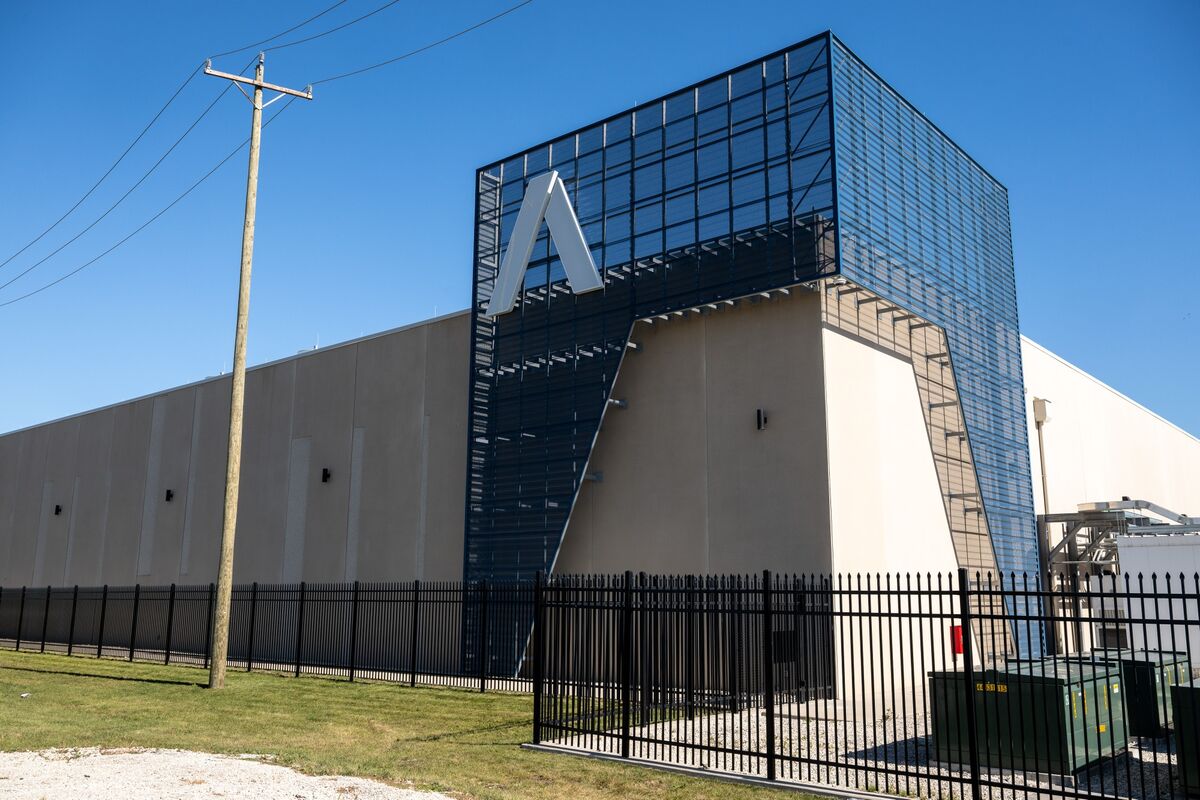
Aligned Data Centers closed a $2.58 billion revolving credit facility to finance U.S. data center expansion. The loan is backed by six data centers in late-stage construction, including sites in Dallas, Phoenix and Northern Virginia. The financing materially enhances liquidity for buildout and accelerates capacity deployment without immediate equity issuance.
The market signal here is a renewed willingness among lenders to underwrite late-stage construction risk when collateral is mission-critical infrastructure; expect that to lower marginal funding costs for well-capitalized data-center developers over the next 6–12 months and to widen the gulf with unsecured CRE borrowers. That shift will make scale operators who can access secured, staggered construction financing relatively advantaged on LTV and flex covenants — a durable competitive edge that compounds across development cycles.
Second-order supply effects are tangible and fast: procurement lead times for medium-voltage transformers, gensets, UPS modules and fiber interconnection slots are likely to extend by several quarters as sponsored builds stack up, raising delivered capital intensity per MW and favoring incumbents with existing supplier agreements. In metros where interconnection capacity is tight, site-level economics will bifurcate — owners with grid/utility relationships will see outsized returns while late movers face both higher capex and longer pre-lease horizons.
Key risks cluster around macro and power: a sustained rise in short-term rates or a sharp increase in wholesale power prices can convert healthy development IRRs into marginal or negative returns within 12–24 months, particularly for projects with merchant-offtake exposure. Operational tail risks — prolonged construction delays, permitting friction around critical transmission upgrades, or a hyperscaler demand pause — are plausible reversal catalysts and would hit leveraged, late-stage projects hardest.
From a position-construction standpoint, the trade is about capturing spread compression and equipment scarcity while hedging occupancy/capex downside. Monitor syndicated loan primary spreads and vendor backlog indicators as 1–3 month early-warning signals; watch REIT guidance and utility interconnection queue metrics as 3–12 month fundamental checks that determine whether this becomes a secular advantage or a crowded mid-cycle build that pressures pricing over multiple years.
AI-powered research, real-time alerts, and portfolio analytics for institutional investors.
Request DemoOverall Sentiment
moderately positive
Sentiment Score
0.35
