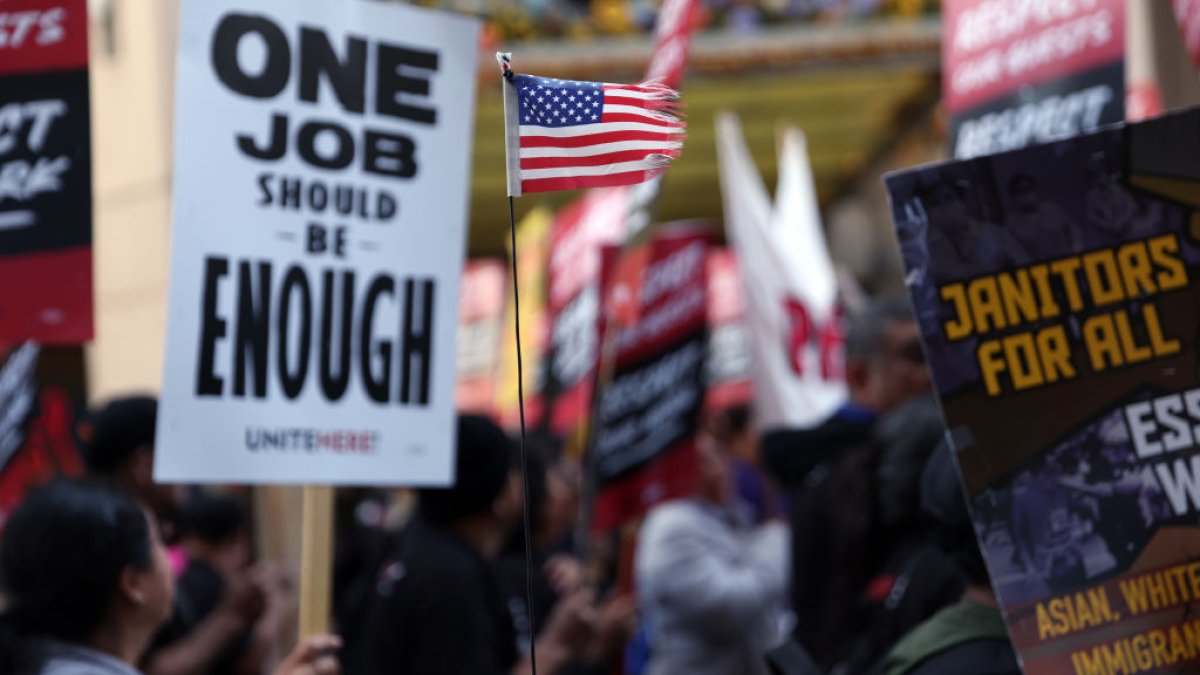
Dozens of May Day rallies are planned across the Bay Area and Northern California, including events in San Jose, San Francisco, Berkeley and Oakland. The demonstrations focus on worker and immigrant rights, with several marches, rallies and school walkouts scheduled throughout Friday. The article is primarily a local events roundup and does not indicate direct market implications.
The immediate market relevance is less about the rallies themselves and more about operational friction around transit, downtown retail, and airport throughput. The most exposed equity angle is not broad consumer demand, but short-duration revenue interruption in venues that depend on predictable foot traffic and scheduled labor shifts; that creates a small but real downside skew for same-day discretionary spend, parking, ride-hail, and airport concessions. The second-order effect is that any headline escalation at a high-visibility airport or downtown march can amplify absenteeism and security costs beyond the event window. For CRM, the cleaner read is reputational rather than financial: Salesforce can become a symbolic target in labor narratives even when there is no direct operating impact. That usually matters only if the protests broaden into a sustained “anti-corporate” campaign that spills into customer-facing events, hiring sentiment, or local employee activism; otherwise the equity impact should fade in days. For TGT, the risk is more practical: localized store traffic disruption and opportunistic theft can pressure same-day comps in affected urban clusters, but the move is likely too transient to justify a structural rerating unless protests persist or coincide with weekend shopping. The contrarian view is that the market may overestimate the durability of any retail or logistics disruption because these events are announced in advance, allowing routing, staffing, and security adjustments. The better trade is to focus on volatility around the event date rather than an outright directional bet on the underlying businesses. If anything, the bigger medium-term signal is political: repeated labor/immigration mobilization raises the odds of city-level regulation, procurement scrutiny, and wage pressure, which is more relevant for operating margins than one Friday of protests.
AI-powered research, real-time alerts, and portfolio analytics for institutional investors.
Request DemoOverall Sentiment
neutral
Sentiment Score
0.00
Ticker Sentiment
