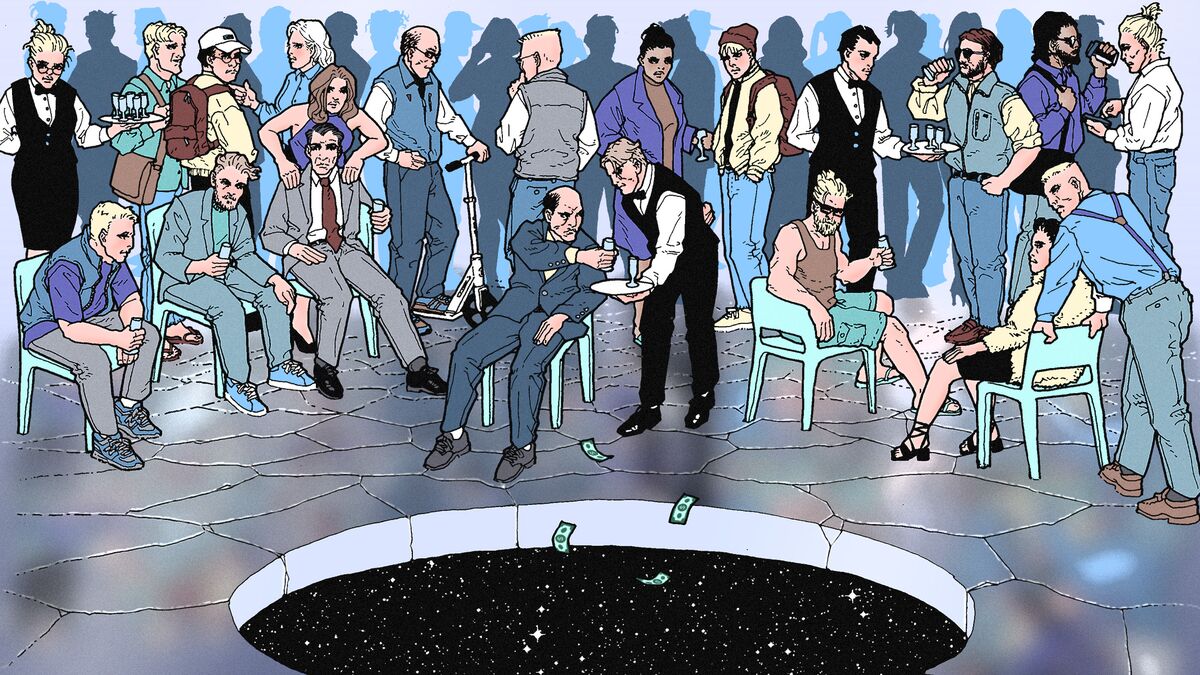
Major private-market firms have voluntarily submitted to UK-style stress tests to plug data gaps and demonstrate resilience to regulators and critics, signaling a willingness to adopt bank-like transparency on liquidity and risk. The move aims to shore up financial-stability oversight of opaque private capital and could influence investor due diligence standards; the article also notes the Benetton family’s renewed investment push and a prominent US firm highlighting venture debt as a leading opportunity within private credit.
Market structure: Voluntary stress tests by major private-market firms shift information asymmetry in favor of large, public alternative asset managers (Blackstone BX, Apollo APO, Ares ARES, Blue Owl OWL) and their LPs by compressing the illiquidity premium; smaller GPs and lightly capitalized BDCs (e.g., AINV) bear compliance costs and potential repricing. Expect incremental fee-bearing AUM flows into private credit/venture-debt strategies over 6–24 months, nudging pricing down ~50–150bp on new deals versus today’s vintage if capital inflows accelerate.
Risk assessment: Tail risks include regulator-mandated disclosure/ higher capital requirements or a public stress reveal of leverage/illiquidity that forces fire sales — a 10–25% NAV repricing is plausible in a severe episode within 3–12 months. Hidden dependencies: mark-to-model valuations, redemption gates, and repo/backstop lines; key catalysts are published stress-test metrics, a large covenant breach or a 75–125bp policy-rate shock that re-tests sponsor bridge capacities.
Trade implications: Tactical overweight large alternative managers (BX, APO, OWL, ARES) for 6–12 months while hedging; use 6–12 month call spreads to limit cash outlay and 12-month puts as tail insurance. Rotate out of small-cap financials/BDCs with weak liquidity ratios (target shorts) and increase exposure to select private-credit proxies (loan/first-lien strategies) as yields reprice.
Contrarian angle: The market may underappreciate continued liquidity mismatch — transparency could be binary: either reassure markets or expose systemic weak spots that force discounts. Historical parallels (shadow-bank runs 2007–09, 2023 regional-bank stress) show initial calm then rapid repricing; allocate conservatively and size hedges given asymmetric downside.
AI-powered research, real-time alerts, and portfolio analytics for institutional investors.
Request DemoOverall Sentiment
mildly positive
Sentiment Score
0.25
