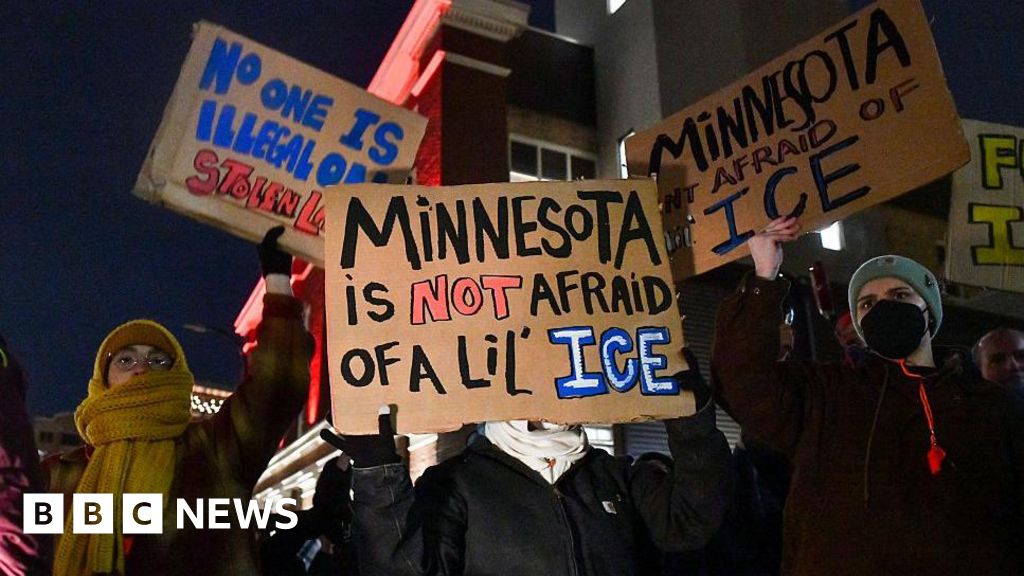
Protests in Minneapolis following the fatal shooting of 37-year-old Renee Nicole Good by an ICE agent drew over 1,000 demonstrators, led to at least 29 arrests (later released) and one minor law‑enforcement injury; videos and eyewitness accounts conflict with the federal self‑defence account. Local and federal authorities, including the FBI and Minnesota investigators, are probing the incident while Minnesota lawmakers were reportedly obstructed from touring an ICE facility, heightening federal‑state political tensions and the prospect of further demonstrations. The situation raises governance and oversight risks for immigration enforcement and state political dynamics but carries minimal direct market implications.
Market structure: Localized civil unrest principally redistributes short-term demand away from downtown hospitality/retail and toward security/legal services. Expect 1–3% weekly RevPAR downside in affected urban hotel names (HST, MAR, HLT) while vendors tied to federal enforcement (GEO, CXW) face headline risk and potential renegotiation pressure; defense/data contractors (PLTR, LHX) could see incremental bid activity for oversight/surveillance work. Cross-asset: expect a small widening in Hennepin County muni spreads (5–20bp) and transient IV upticks in options for GEO/CXW and regional hotel REITs; USD, oil, and broad IG/Govt bonds unlikely to move materially.
Risk assessment: Tail risks include nationwide escalation triggering multi-week shutdowns or substantive federal funding shifts (positive for DHS contractors, negative for private prisons), and an adverse FBI/congressional finding within 30–90 days that forces contract cancellations. Immediate window (days) risks are reputational and revenue shocks; 1–3 month risks are contractual/legislative; 6–18 month risks hinge on election-driven policy changes. Hidden dependencies: federal vs state jurisdiction determines contract survivability; media virality timing is the key catalyst.
Trade implications: Favor short-biased, size-limited positions in private-prison operators (GEO, CXW) sized 1–3% NAV with 30–90 day horizons using put spreads to cap cost; consider 1–2% long exposure to PLTR or LHX as a hedge for increased surveillance spending. For hotels, use 30–60 day put spreads on HST or HLT to capture a 3–8% downside while selling OTM calls to finance premium; avoid broad equity market directional moves.
Contrarian angles: Consensus will over-index on headline outrage and may oversell GEO/CXW beyond fundamental contract risk—historically (e.g., 2014–2016 unrest) market overreactions reversed within quarters when federal demand persisted. Conversely, if Congress initiates rapid hearings (30–60 days) and state moratoria spread, private-prison shorts could accelerate; size positions small and pair with short-dated protection or long PLTR exposure as asymmetric hedge.
AI-powered research, real-time alerts, and portfolio analytics for institutional investors.
Request DemoOverall Sentiment
mildly negative
Sentiment Score
-0.25
