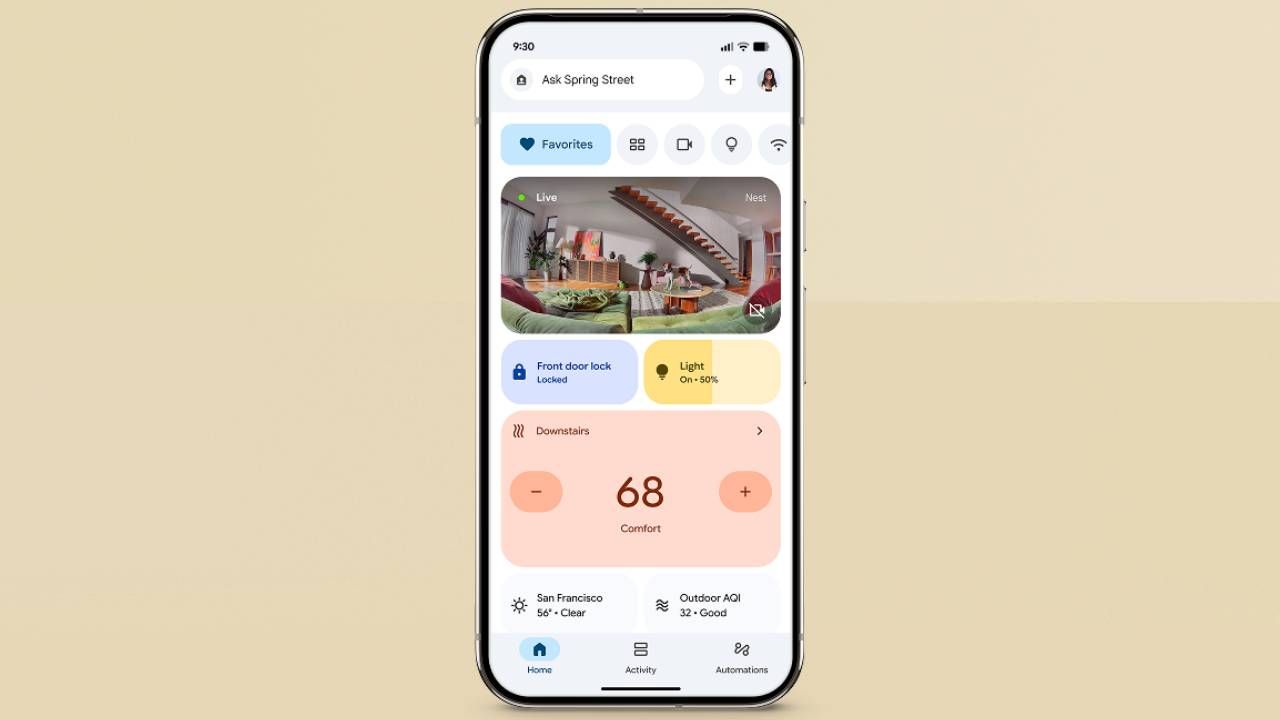
Google Home is experiencing a widespread outage where smart lights, switches, outlets and some other smart-home devices are showing as offline in the Google Home app across brands and integrations, breaking automations though device-native apps and other device classes (cameras, TVs) appear unaffected. Google has acknowledged the issue and said it is working on a fix; the incident represents a reputational and operational risk for Google’s smart-home ecosystem and should be monitored for escalation or regulatory/legal follow-ups given prior related incidents.
Market structure: This is a software reliability issue with limited direct revenue impact but asymmetric reputational risk for Alphabet (GOOGL). Short-term winners are competitors with credible voice/home stacks (AMZN, AAPL) who may capture marginal share; expect at most a 0–2% market-share shift across ecosystems over 6–12 months unless outages persist. Cross-asset impact is minimal; expect a small (<0.5%) bump in near-dated implied volatility for GOOGL/AMZN options and no material move in IG sovereign bonds or FX.
Risk assessment: Tail risks include a 5–10% probability of class-action or regulatory inquiry within 12 months if incidents recur, and a 3–7% user-churn outcome for affected smart-home device active users if unresolved beyond 2–4 weeks. Immediate risk (days) is UX noise; short-term (weeks/months) is broken automations and developer/partner complaints; long-term (quarters) is slower adoption of Google-only integrations. Hidden dependency: many OEMs rely on Google cloud APIs—repeated outages could force OEMs to vest in multi-voice support, raising their operating costs by an estimated 1–3% of revenue.
Trade implications: Size small, tactical positions: establish a 1–2% long position in GOOGL as a contrarian buy if shares dip >3% on this news, target +8–12% in 12 months, stop-loss 6% below entry. Take a 0.5–1% long in AMZN or AAPL to capture wallet-share inflow over 3–12 months. Reduce or short 0.5–1% exposure to niche consumer-IoT hardware names (e.g., SONO) where distribution/brand risk is higher over 3–6 months. Buy a protective GOOGL 3-month put at ~5% OTM sized to cover 0.5–1% portfolio exposure if outage persists past 2 weeks.
Contrarian angles: The market often underestimates ecosystem stickiness—actual long-term revenue impact for Alphabet is likely <1–2% annually absent persistent failures, so a >3% share price drop would be overdone and tradable. Historical parallels (prior Google Home outages) show quick fixes and limited investor damage; if fixes are rolled out within 7–14 days, close hedges and add to GOOGL/AMZN exposures. Unintended consequence: middleware/SaaS integrators that enable multi-assistant support could see 10–20% uplift in RFP activity over 6–12 months—consider scouting small-cap software names in home automation services.
AI-powered research, real-time alerts, and portfolio analytics for institutional investors.
Request DemoOverall Sentiment
mildly negative
Sentiment Score
-0.30
Ticker Sentiment
