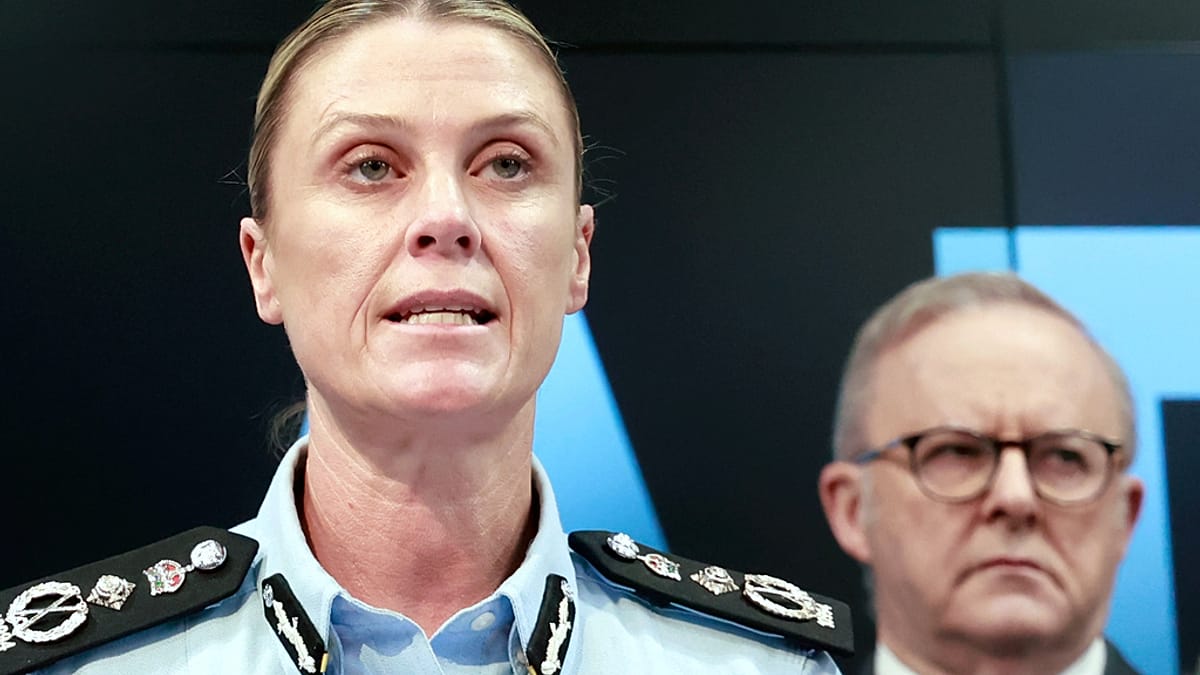
Australian investigators report no evidence the two gunmen who killed 15 and wounded 40 at a Hanukkah event in Bondi Beach were part of a broader terrorist network; Sajid Akram and his son Naveed spent most of November in Davao City, Philippines, rarely leaving their hotel, returned to Australia on Nov. 29, and carried out the Dec. 14 attack in which the father was killed and the son was shot, hospitalized and charged with 15 counts of murder plus a terrorism charge. The incident has driven a large security response — more than 2,500 officers deployed for Sydney New Year's Eve — creating near-term downside risk to local tourism and public-event activity, potential political pressure on policing policy, and likely incremental security spending, even as authorities emphasize the attackers acted alone.
Market structure: Security and policing demand should rise near-term in Australia and globally for visible-armed response, benefiting defense primes and security-services providers while hurting discretionary travel, live-events, and local hospitality receipts in Sydney (potential 5–15% footfall drop for soft targets over 0–3 months). Expect higher tenders for surveillance, armored vehicles, and small-arms procurement — pricing power shifts toward incumbents able to deliver certified law-enforcement equipment (favor scale and compliance-capable suppliers). FX and flows: AUD is vulnerable to a 1–3% downside shock on risk-off and weaker tourism receipts; safe-haven government bonds likely to tighten yields (2–5bp lower in core 2–10yr for short windows).
Risk assessment: Tail risks include a follow-on attack or copycat events (low-probability, high-impact) that could trigger broad travel restrictions and insurance losses; conversely a rapid, visible security response could normalize activity within 1–3 months. Immediate (days) risks are headline-driven liquidity moves; short-term (weeks–months) risks are policy/procurement announcements that reallocate budget; long-term (quarters) risks include higher recurring security O&M budgets and insurance premium repricing. Hidden dependencies: defense wins require certified local partners and budget line items — not automatic after an attack. Key catalysts: NSW/Australian federal procurement announcements, tourism stats, AUD prints, and bond flows in next 30–90 days.
Trade implications: Tactical: play long large-cap defense/physical-security exposure (ITA or LMT/NOC) and short travel/airline exposure (JETS, QAN.AX) as a 1–3 month trade to capture re-rating of risk premium; size small (1–3% net). Use options to cap downside: buy 3–6 month call spreads on LMT/LHX (10–20% OTM) and buy put protection on Australian travel/hospitality names for 1–3 month windows. Hedge portfolio with +1–3% allocation to 2yr–5yr Treasury duration to insulate headline-driven drawdowns.
Contrarian angles: Consensus assumes sustained weakness in Australian tourism; that is likely overdone if security measures are effective — a re-opening and marketing push could produce a sharp mean-reversion bounce in 3–6 months. Mispricing risk: defense equities often price long-term contract risk slowly; if procurement is tendered within 60–120 days, select names with local footprints (LMT/NOC supply partners or global security integrators) may gap higher. Unintended consequence: aggressive policing could spur public backlash and policy reversals, so cap position sizes and watch legislative timelines.
AI-powered research, real-time alerts, and portfolio analytics for institutional investors.
Request DemoOverall Sentiment
moderately negative
Sentiment Score
-0.45
