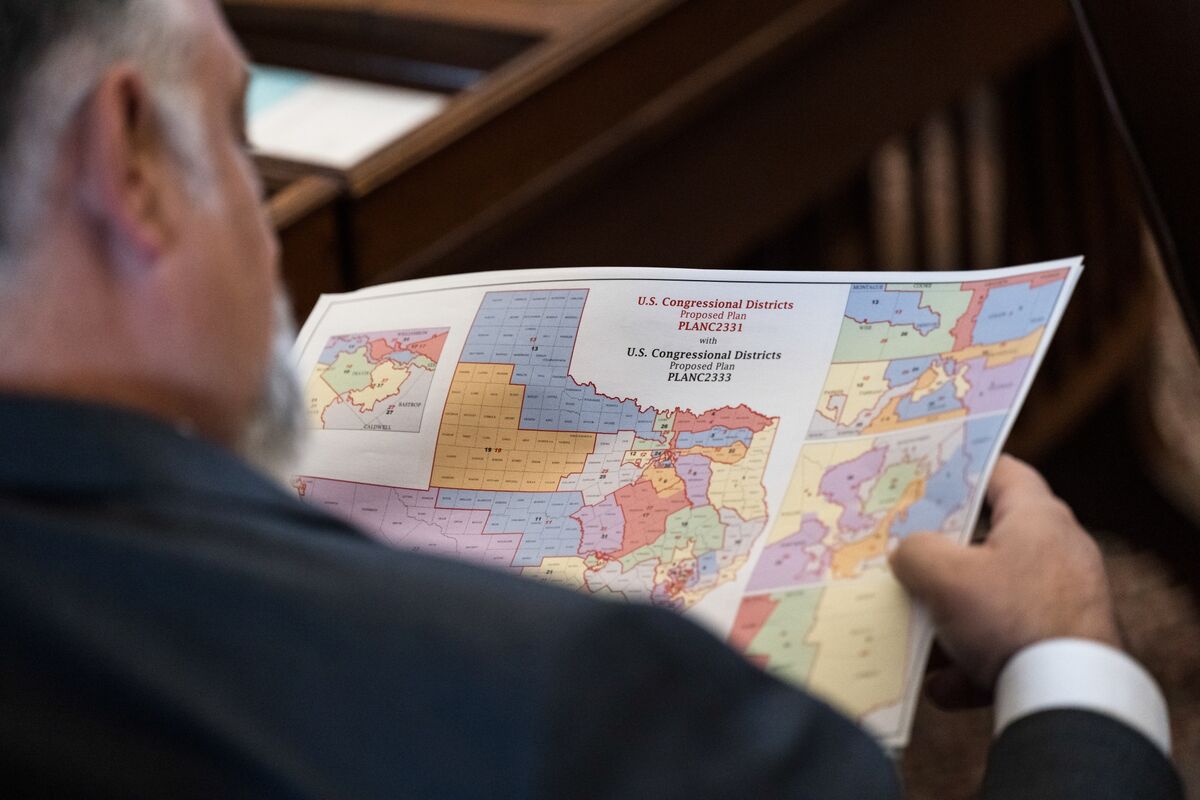
The U.S. Supreme Court, in a divided decision with three dissents, allowed Texas to use a new Republican-drawn congressional map for the 2026 elections by lifting a lower-court injunction. The map, created at former President Trump’s behest, could help Republicans pick up as many as five House seats and materially affect the balance of the U.S. House of Representatives heading into the midterms.
Market-structure: The Supreme Court decision tilts political risk in favor of Republicans in Texas and increases the likelihood that GOP-friendly federal policy (energy permitting, lower regulation, oil-friendly leases) becomes more attainable if the House flips or widens. Direct winners: TX-centric oil & gas producers, oilfield services and midstream (expect 3–6% relative EBITDA tailwinds if permitting and capex increase). Losers: firms dependent on federal clean-energy subsidies and ESG-driven flow (renewable developers, green muni projects) which face headwinds to incentive expansion.
Risk assessment: Immediate market reaction should be muted (days) because this is a legal ruling, not policy enacted; short term (weeks–months) political-market volatility will rise as 2026 campaigning and fund flows react; long term (through 2026–2028) legislative outcomes hinge on Senate and Presidency, so policy change probabilities are asymmetric not certain. Tail risks include reversal via subsequent litigation or state-level voter backlash, major campaign-finance shifts, or a Senate/Presidential configuration that blocks federal change — assign these 5–15% conditional probabilities depending on midterm polling.
Trade implications: Bias portfolio toward energy and defense equities exposed to Texas-friendly outcomes: selective longs in XOM, CVX, SLB and defense staples RTX/LMT for 6–18 month holds; short renewable ETFs (TAN, ICLN) as a hedge. Use options to express conviction with defined risk: buy 9–15 month call spreads on XOM/CVX 20–30% OTM sized 1–3% of portfolio. Pair trade idea: long XOM (2–3% weight) / short TAN (1–2% weight) to capture relative policy exposure.
Contrarian angles: Consensus may underprice political gridlock — even with more GOP seats, substantive federal reform is unlikely without Senate support, so energy upside could be capped; market may be over-rotating into cyclicals. Historical parallel: 2010 redistricting gave GOP positional gains but limited immediate federal-tax reform. Unintended consequences include prolonged litigation and investor uncertainty; size positions accordingly and use option spreads to cap downside.
AI-powered research, real-time alerts, and portfolio analytics for institutional investors.
Request DemoOverall Sentiment
neutral
Sentiment Score
0.00
