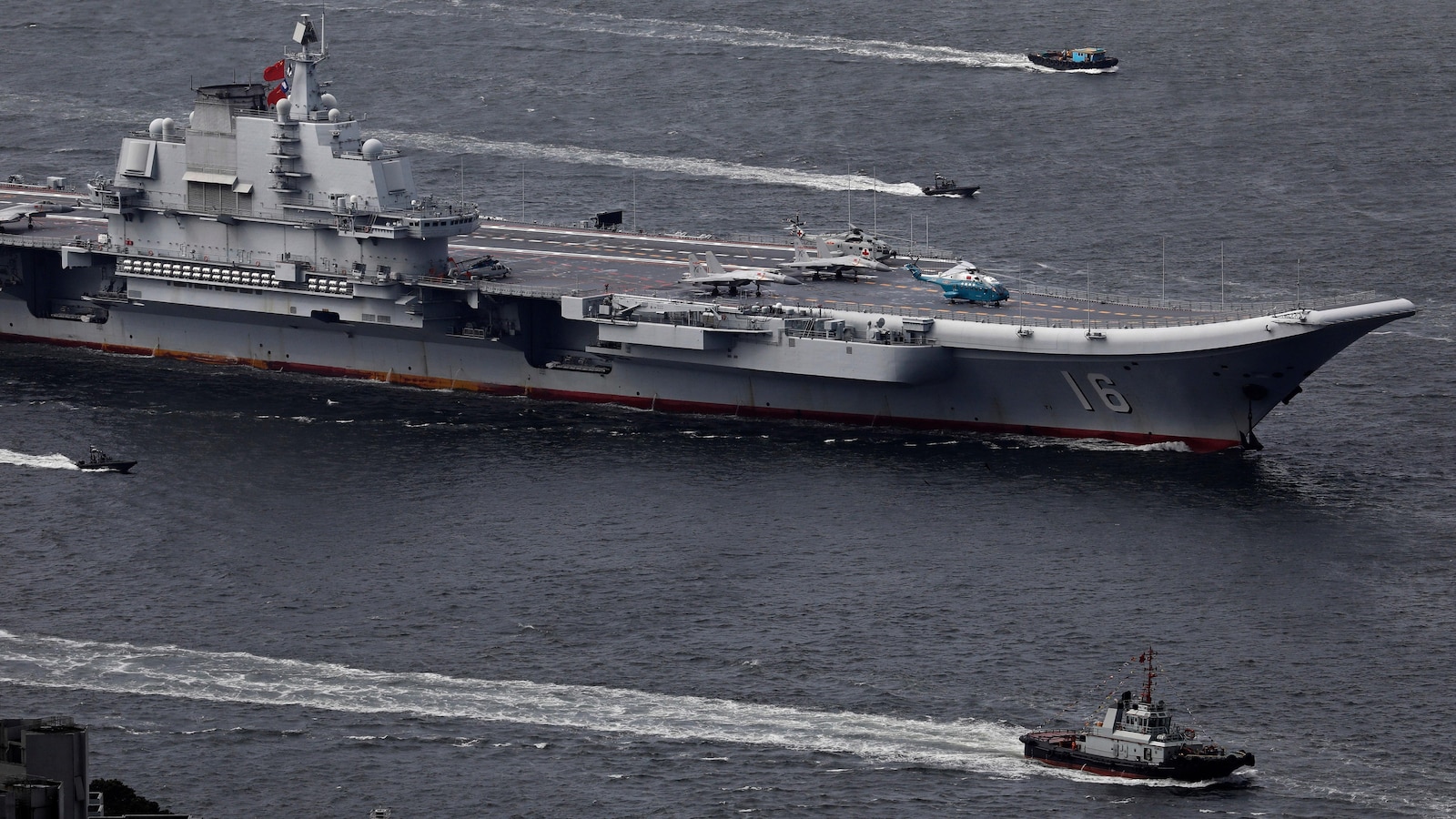
Japanese defense officials reported that a Chinese J-15 fighter launched from the carrier Liaoning intermittently locked radar on Japanese F-15s near Okinawa on two occasions (about three minutes in the late afternoon and about 30 minutes in the evening), prompting Japan to lodge a formal protest and demand preventive measures; there was no airspace breach or damage. The incident, occurring after Japanese leader Sanae Takaichi’s Taiwan remarks and amid broader regional frictions (including Chinese flares fired at a Philippine patrol plane), raises the risk of further China-Japan military confrontations and heightens geopolitical uncertainty for investors with exposure to the region.
Market structure: Geopolitical friction is a positive shock to defense OEMs (Lockheed LMT, Northrop NOC, RTX, General Dynamics GD) and Japanese defense primes (MHI 7011.T) through likely near-term order acceleration and pricing power; expect a 3–8% revenue tailwind for Tier-1 contractors over 12 months if regional procurement reprioritizes. Civilian losers: Japanese tourism, airlines, and highly cyclic exporters (EWJ-sensitive) face demand and FX volatility risks; commodities (oil) and gold bid higher on risk premia if naval chokepoints are perceived threatened.
Risk assessment: Tail risks include a kinetic incident or Taiwan contingency (low probability <5% over 12 months but high impact), which would trigger sanctions, supply-chain decoupling and semiconductor export controls; expect immediate volatility spikes (VIX +20–50% intraday) and safe-haven flows into JPY, JGBs, and USTs. Hidden dependencies: Japanese political rhetoric and US force posturing are binary catalysts; BOJ or FX intervention could reverse JPY moves and amplify market reactions.
Trade implications: Tactical plays favor overweight defense equities and ETFs (ITA, LMT, NOC) with 6–12 month horizons and hedges via FX and Japan exposure; buy gold (GLD) and long-duration Treasuries (TLT) as portfolio ballast for 1–3 month risk-off episodes. Use options to express asymmetric risk: buy LEAPS calls on LMT/NOC for 6–12 months and 3-month put spreads on EWJ to hedge Japan exposure; stagger entries over 2–4 weeks and add if >2 PLA operational incidents occur within 30 days.
Contrarian angles: The market underestimates multi-year Japanese defense spending normalization — probability of a sustained +10–20% capex cycle over 2–3 years is underpriced; conversely, immediate JPY strength may be overdone if the BOJ reasserts FX control. Historical analog (Crimea/2014) saw defense equities outperform by 20–40% in 12 months; unintended consequences include commodity price shocks that could compress global manufacturing margins and hurt cyclicals.
AI-powered research, real-time alerts, and portfolio analytics for institutional investors.
Request DemoOverall Sentiment
moderately negative
Sentiment Score
-0.45
