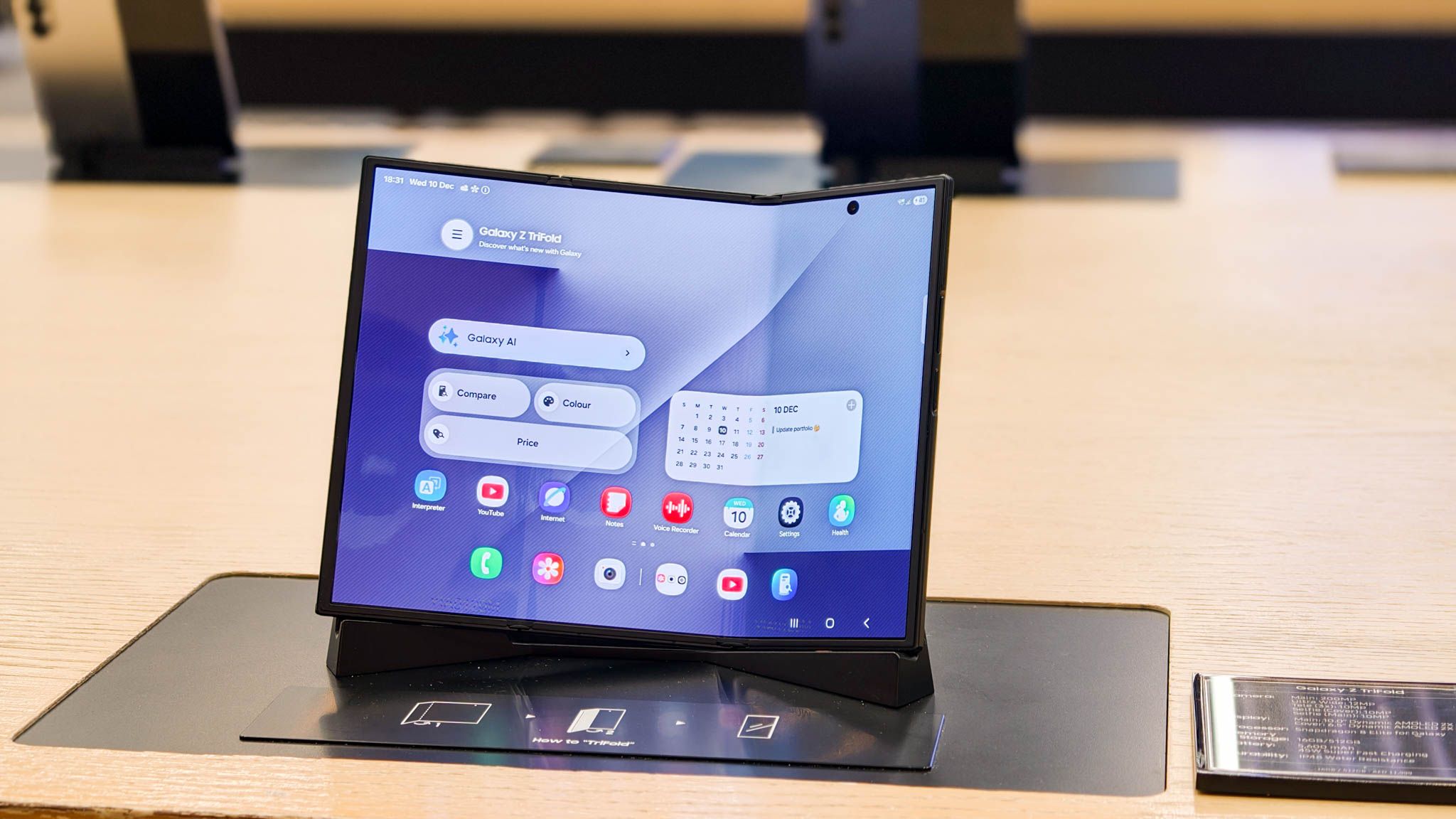
Samsung has launched the Galaxy Z TriFold, a new tri-fold premium smartphone with a 6.5‑inch cover screen and a 10‑inch inner display, which is priced at KRW 3,590,400 (~$2,434) in South Korea where pre‑orders reportedly sold out in minutes; broader market availability is planned for 2026. The device draws scrutiny for design and software choices—no intermediate folded configuration like Huawei’s Mate XT, no S Pen support, DeX not set as the default large‑display experience—and it ships with the Snapdragon 8 Elite for Galaxy rather than the latest Gen 5 chip, which could blunt its flagship positioning. For investors, the TriFold underscores Samsung’s push into higher‑price niche hardware amid DRAM shortages that may sustain elevated pricing and tight supply, although early Korean demand suggests strong brand pull even if long‑term mainstream adoption remains uncertain.
Samsung has launched the Galaxy Z TriFold with a 6.5-inch cover screen and a 10-inch inner display, priced at KRW 3,590,400 (~$2,434) in South Korea where pre-orders reportedly “sold out in minutes,” and the company plans broader market availability in 2026. The article notes functionality and design compromises: no intermediate folded configuration like Huawei’s Mate XT, no S Pen support, DeX Mode not enabled by default, and the phone ships with the Snapdragon 8 Elite for Galaxy rather than the newer Gen 5 variant.
Those product choices have commercial implications. An asking price roughly $400 above the base Galaxy Z Fold 7 positions the TriFold as a niche, high-ASP device likely to rely on brand loyalty and constrained initial production runs; the author flags DRAM shortages and component scarcity as drivers that could sustain elevated pricing but limit volumes. Missing flagship-chip and software optimizations reduce its halo effect versus competitors, increasing the risk that adoption will be front-loaded among enthusiasts rather than mainstream.
For investors, third-party sentiment toward the launch is mildly negative and market-impact signals are modest (0.25), underscoring execution and demand-readout risks through the 2026 rollout; critical near-term indicators are North American pricing, unit allocation, and sell-through outside Korea as determinants of revenue upside and margin sustainability.
AI-powered research, real-time alerts, and portfolio analytics for institutional investors.
Request DemoOverall Sentiment
mildly negative
Sentiment Score
-0.30
Ticker Sentiment
