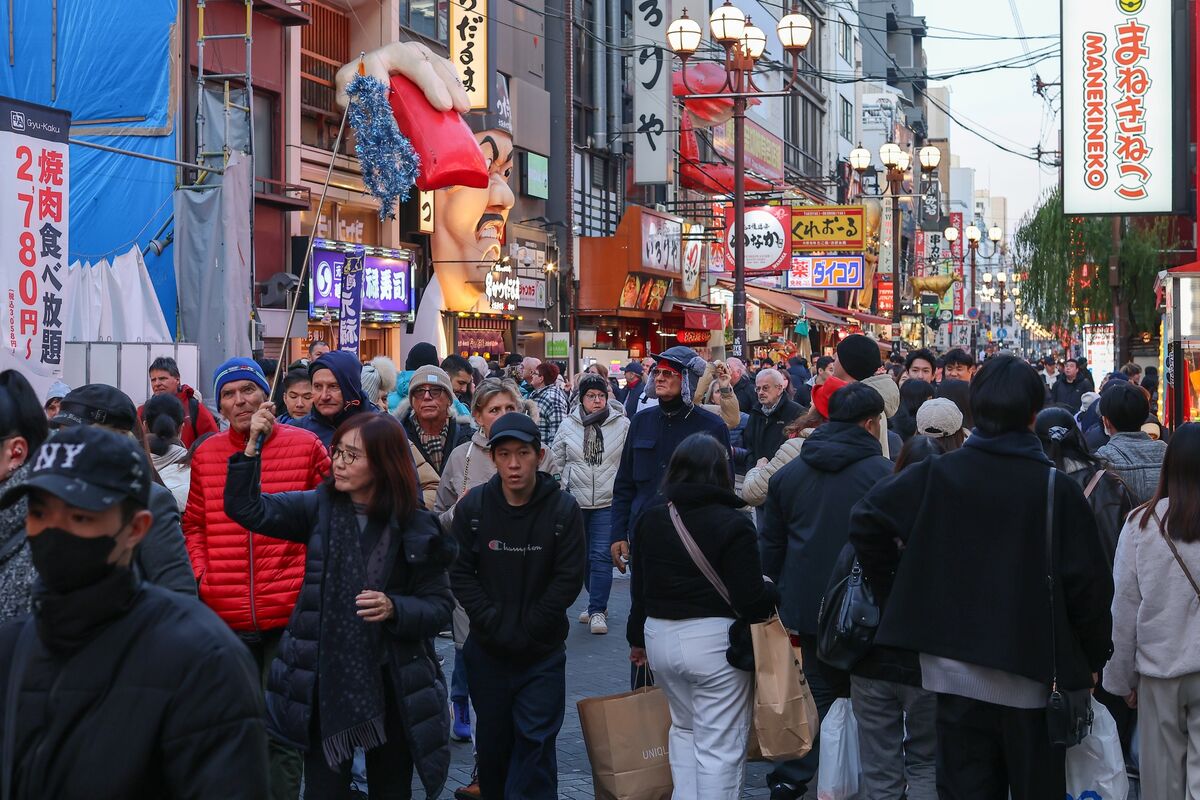
Total inbound arrivals to Japan rose 6.4% in February after a contraction in January, according to Japan National Tourism Organization data. The increase was driven by gains from other markets that offset a continued slump in Chinese visitors—arrivals from South Korea jumped 28%, with Taiwan, Hong Kong and the US also up, indicating an uneven but improving tourism recovery concentrated by region.
The more important signal is a compositional recovery rather than a pure China-driven rebound: when demand shifts from a small number of very high-spend visitors to a broader pool of regional tourists, you get higher lift in volumes but a smaller lift in tourism receipts per head. Model a 10–20% decline in average spend-per-visitor in this scenario — that compresses margins for luxury retailers and duty-free operators even as occupancy and foot traffic recover, shifting profits from high-margin specialty retail toward volume-driven food & beverage and midscale hotels. Operationally, expect rapid redeployment of airline widebodies and seat capacity within Asia rather than transpacific expansion; this favors airport operators and short-haul carriers with flexible regional fleets and robust slot access over long-haul carriers with fixed bilateral constraints. Ancillary revenue streams (airport retail, ground transport, regional rail passes) will see outsized growth relative to ticket yields, creating asymmetric upside for travel-adjacent real assets versus core airline equities. Near-term catalysts to watch are seasonality and policy levers: visa easings, low-cost carrier schedule announcements, and JPY moves will drive 30–90 day earnings surprises at the margins. Key tail risks—rapid re-acceleration of Chinese outbound travel or renewed geopolitical friction—can flip spend composition and route economics within a single quarter, disproportionately hurting assets priced for a prolonged “new mix” of tourists. Strategically, prefer owners of travel flow and capture (airport concession operators, regional hotel chains, booking platforms) over pure luxury retail exposure. The highest-convexity bets are options on FX (JPY) and travel platform bookings into Japan for the next 6–12 months, paired with defensive hedges against a sudden return of Chinese demand that would re-route spending patterns.
AI-powered research, real-time alerts, and portfolio analytics for institutional investors.
Request DemoOverall Sentiment
mildly positive
Sentiment Score
0.25
