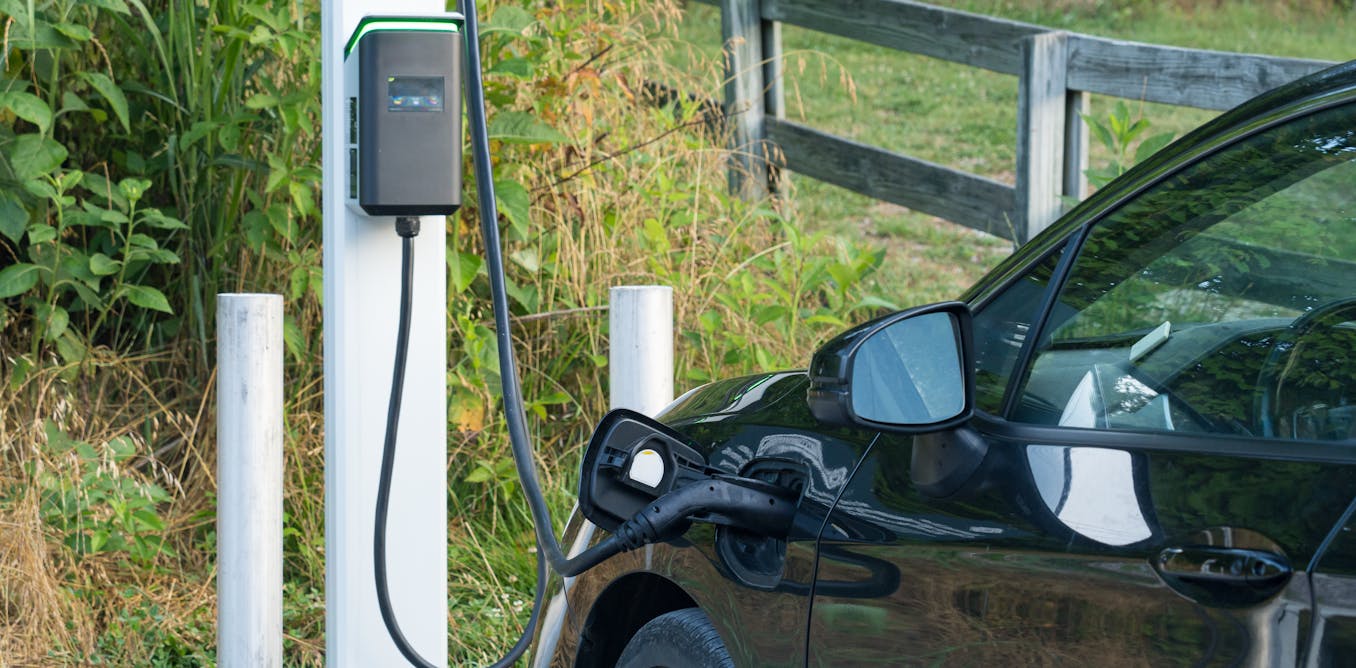
U.S. investment in electric vehicle (EV) production has collapsed following the 2025 'One Big Beautiful Bill Act,' which eliminated most incentives previously introduced by the 2022 Inflation Reduction Act. This policy reversal not only impedes progress in decarbonizing transportation but, critically, also diminishes the incentive for new, cleaner power generation, as EV charging demand drives investment in renewables like solar and wind. Consequently, the U.S. risks ceding further ground to China in a strategic future industry and faces prolonged higher emissions across its two largest sectors, transportation and power generation.
The 2025 passage of the 'One Big Beautiful Bill Act' has triggered a collapse in U.S. investment in the electric vehicle (EV) ecosystem by eliminating key incentives established by the 2022 Inflation Reduction Act. This policy reversal directly undermines U.S. competitiveness against China, which strategically dominates the EV and battery material supply chains. A new study from Carnegie Mellon University reveals a critical second-order effect: the slowdown in EV adoption also curtails investment in the electricity sector. The research indicates that reduced EV charging demand removes a primary driver for building new power generation capacity, which, due to cost-competitiveness, would largely consist of solar, wind, and battery storage. This creates a negative feedback loop, where decelerating decarbonization in the transportation sector simultaneously hinders the transition to cleaner energy in the power sector, locking in higher emissions for the two largest emitting sectors in the U.S. While the global transition to EVs is expected to continue, driven by falling battery costs and technological advancements, this legislative shift positions the U.S. to significantly lag, ceding leadership in a crucial future industry.
AI-powered research, real-time alerts, and portfolio analytics for institutional investors.
Overall Sentiment
moderately negative
Sentiment Score
-0.60
