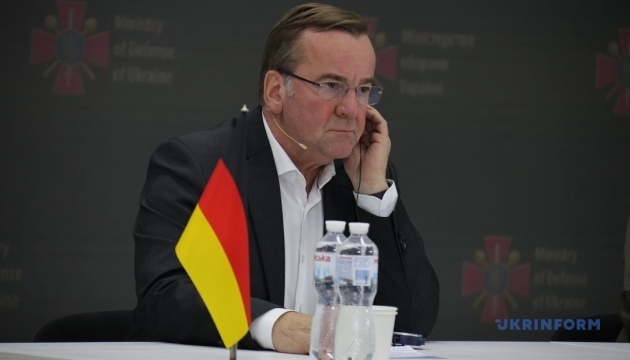
German Defense Minister Boris Pistorius urged Europeans to strengthen their own conventional defense and strategic sovereignty amid growing unpredictability from the U.S., citing President Trump’s remarks on Greenland and stressing NATO’s role in Arctic security. He noted the 1951 U.S.-Denmark base agreement remains in force (historically ~10,000 U.S. troops in Greenland, now ~200), described recent maritime security partnerships with Denmark, Norway, Canada and increased Iceland involvement, and signaled sustained geopolitical risk that could support higher European defense spending and affect defense-sector exposure.
Market structure: A credible European pivot to greater conventional defense autonomy boosts order visibility for European primes (Rheinmetall RHM.DE, BAE Systems BAESY, Thales HO.PA, Leonardo LDO.MI, Saab SAAB-B.ST) and upstream commodity suppliers (steel, copper) with potential orderbook growth of +15–30% across 2–4 years as national budgets reallocate. US primes will still benefit from NATO activity but may lose incremental European market share on domestic-content rules, lifting pricing power for EU incumbents and specialty suppliers (radar, naval, missile subsystems). Cross-asset: expect modest upward pressure on EUR sovereign yields (Germany +25–75bps risk over 12 months), firmer EUR vs safe-haven FX on structural demand, and commodity upside (steel, copper +5–15% over 6–18 months) if procurement accelerates.
Risk assessment: Tail risks include kinetic escalation with Russia triggering a >30% spike in European gas and oil within days and a simultaneous safe-haven bid into EUR-reverse volatility; political/regulatory risk is high—procurement protectionism could emerge within 3–12 months. Immediate effects (days) will show FX and bond volatility; short-term (weeks–months) tender announcements and repricing; long-term (2–5 years) is where capex and margins materialize. Hidden dependencies: critical subsystems (advanced semiconductors, turbine engines) are concentrated—supply-chain bottlenecks or export-controls can cap delivered revenue; catalysts: NATO summit, German budget vote, and US election cycles.
Trade implications: Tactical direct plays favor Europe-focused defense names with near-term tender exposure: staggered longs in RHM.DE and BAESY sized 1–3% each, financed by trimming cyclicals with weak balance sheets; use ITA (A&D ETF) for diversified exposure (3–4% overweight). Options: buy 9–12 month call spreads on RHM.DE (limit premium to <2% portfolio) to leverage upside while limiting cost, and buy German 10Y bund put options sized 0.75–1% portfolio to hedge a >50bps yield shock. Entry: phase into positions over 2–8 weeks, add on confirmed budget/tender announcements, take profits at +25–35% or re-evaluate after 12 months.
Contrarian angles: The market underestimates procurement lag—contracts and margin flow will largely realize 12–36 months out, so near-term rallies can be overbought; don’t pay >18x forward for small-cap defense names absent visible order backlog. Historical parallel: post‑2014 Ukraine increases delivered multi-year orderbooks but also supply-chain inflation and execution delays—expect similar execution risk now. Unintended consequence: rapid re-shoring/procurement protectionism could create winners domestically but raise input costs and extend delivery timelines, favoring large, vertically integrated primes over niche specialists.
AI-powered research, real-time alerts, and portfolio analytics for institutional investors.
Request DemoOverall Sentiment
mildly negative
Sentiment Score
-0.25
