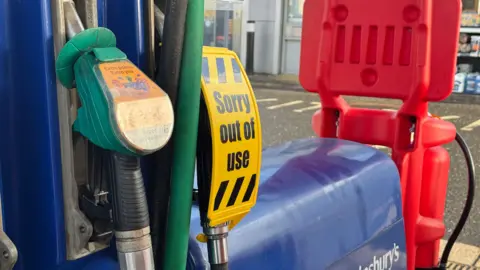
US national average gasoline price rose to $4.02/gal — the first time above $4 since August 2022 — up ~$1.04 (≈35%) from the pre-conflict level of $2.98/gal; diesel averages about $5.45/gal, roughly $1.69 (≈45%) above its pre-conflict $3.76 level. The rise is attributed to surging crude prices after effective closure of the Strait of Hormuz and heightened spring-break demand, with US pump prices still below June 2022 record highs ($5.01 gas, $5.81 diesel). Global knock-on effects include higher wholesale fuel costs and rising retail petrol/diesel in other countries, plus some nations implementing rationing.
Winners in an elevated-crude regime will be the asset-flexible parts of the hydrocarbon complex—liquids-weighted E&P and refiners that can capture widening gasoline/diesel cracks—while high-mileage transport operators and low-margin logistics providers will see margins compress. Expect diesel-driven cost inflation to pass through into freight rates within 4–8 weeks, producing second-order margin pressure for consumer staples with long, fuel-intensive distribution legs and boosting pricing power for LTL/rail intermodal operators that can re-contract freight up to quarterly cadence.
Key downside catalysts are near-term and distinct from structural risk: a coordinated SPR release, a temporary shipping-security corridor that restores Hormuz throughput, or an OPEC+ production surprise can compress spreads inside 30–90 days. Over a 3–12 month horizon, the persistence of higher fuel elevates capex and FCF for US onshore producers and increases the optionality value of redeployable drilling rigs, but it also accelerates durable demand substitution (EVs, modal shift) that materially erodes gasoline volumes over several years.
The market consensus underprices the speed of passthrough and the timing nuance between gasoline and diesel cracks—diesel typically lags and then spikes, amplifying trucking stress and inventory-led bottlenecks. That creates asymmetric trade opportunities: short-duration refiners/transport pairs to capture crack moves, and longer-duration E&P exposure to capture FCF re-rating if prices persist, while layering tail protection against policy or diplomatic reversals.
AI-powered research, real-time alerts, and portfolio analytics for institutional investors.
Overall Sentiment
moderately negative
Sentiment Score
-0.35
