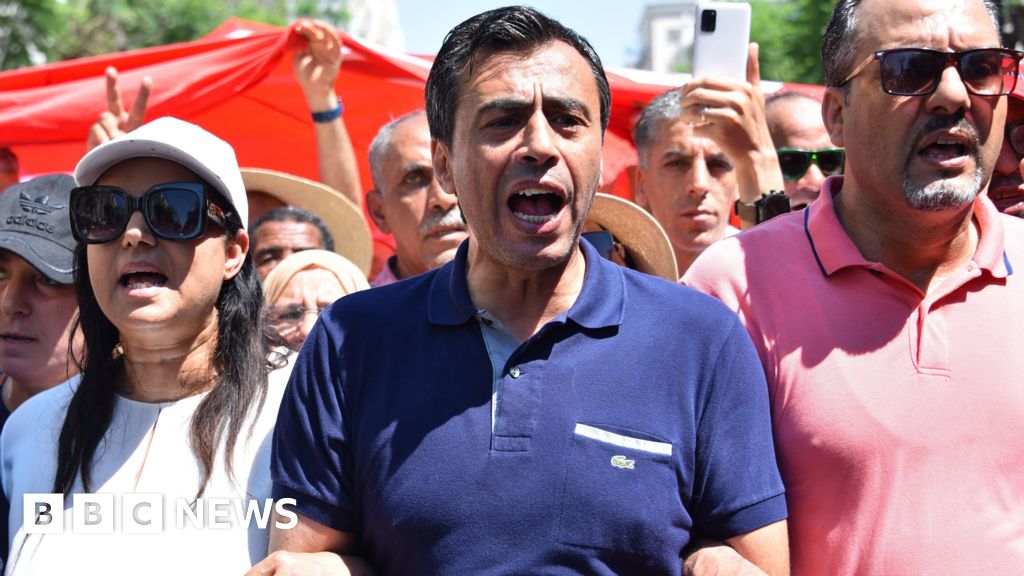
A Tunisian appeals court has sentenced around 40 opposition figures, lawyers and businessmen to prison terms of four to 45 years over an alleged plot to overthrow President Kais Saied, with 20 tried in absentia and several detained since a 2023 crackdown. Key figures include opposition leader Jawahar Ben Mbarek (20 years), party leaders Issam Chebbi and Ghazi Chaouachi (20 years each), businessman Kamel Ltaif (45 years) and Khyam Turki (35 years); notable names tried in absentia include Bochra Belhaj Hmida and Bernard-Henri Levy. Human rights groups and the UN have condemned the prosecutions as politically motivated, while large anti-government protests have erupted in Tunis, increasing political risk and potential scrutiny of Tunisia’s governance and sovereign-risk profile for investors.
Market structure: The immediate winners are domestic security contractors and state-linked liquidity providers as capital concentrates toward safe, regime-aligned counterparties; losers are Tunisian sovereign bondholders, local equity (BVMT) and tourism-dependent SMEs as risk premia rise. Expect sovereign spreads to widen 200–500bps and the Tunisian dinar to weaken 5–15% over 1–6 months, pressuring FX reserves and import-dependent sectors.
Risk assessment: Tail risks include a rapid path to default or international sanctions (low probability, high impact) which could spike CDS >1,000bps and cut off external financing; near-term (days–weeks) risk is capital flight and deposit runs, medium-term (3–12 months) is ratings downgrades and a multi-year growth slump. Hidden dependencies: French bank and EU aid exposure, tourism receipts, and remittances create contagion vectors to European credit and EM investor flows.
Trade implications: Expect short-lived risk-off in EM equities and widened EM sovereign spreads; tactical hedges (3-month put protection on EEM, modest long-duration Treasuries) are cost-effective, while selective short exposure to French banks with MENA ties (BNP.PA, GLE.PA) is warranted if EUR stress rises. Cross-asset flows: buy gold (safe haven) and USD (UUP), reduce EM carry positions; monitor sovereign CDS and FX moves as triggers for sizing adjustments.
Contrarian angles: Consensus may overprice permanent contagion—historical parallels (Egypt 2013) show initial widening then stabilization with IMF/EU engagement within 6–18 months, creating re-entry opportunities. If spreads climb >300bps and international mediation begins, look to buy selective EM cyclicals/Tourism names on 20–35% drawdowns; conversely, escalating sanctions would make recovery unlikely for years.
AI-powered research, real-time alerts, and portfolio analytics for institutional investors.
Request DemoOverall Sentiment
strongly negative
Sentiment Score
-0.65
