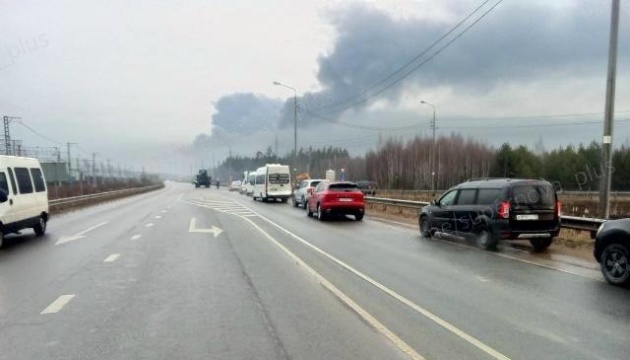
Seven UAVs were shot down overnight; an explosives factory in the village of Morozov (Leningrad region) sustained damage and two people were hospitalized with non-life-threatening injuries. Moscow reported two UAVs shot down approaching the capital, and Taganrog (Rostov region) was also attacked. The incidents raise localized security risk and could increase defense-sector and regional risk premia, but are unlikely to move broader markets materially absent further escalation.
The persistent use of low-cost UAVs against fixed industrial and urban targets reprices the marginal value of counter-UAS (C‑UAS) systems and hardened infrastructure. Expect procurement cycles to shift: militaries and strategic industrial operators prioritize layered sensors, electronic warfare modules and mobile interceptor systems that can be fielded in months — this favors small-cap specialists for near-term revenue and primes for multi-year retrofit contracts.
Near-term tail risks are asymmetric: a successful escalation to longer-range, precision standoff strikes would propagate into commodity and logistics shocks within weeks, while a localized suppression of UAV capability (via large defensive stockpiles or diplomatic pauses) can revert risk premia within 30–90 days. The medium-term (6–24 months) catalyst set includes announced emergency defense budgets, visible contract awards, and measured changes in insurance/reinsurance pricing for exposed industrial zones.
Market microstructure will bifurcate: small names with demonstrable C‑UAS hardware/software stand to re-rate sharply on a handful of contracts, whereas large primes capture stable, multi-year systems-integration upside but are already partially priced for sustained defense spending. Second-order winners include regional port/rail operators that reroute high-value cargo (potential tactical demand), and fertilizer/munitions suppliers whose logistics disruption risk trades as an option on commodity prices rather than a steady revenue stream for producers.
AI-powered research, real-time alerts, and portfolio analytics for institutional investors.
Request DemoOverall Sentiment
strongly negative
Sentiment Score
-0.70
