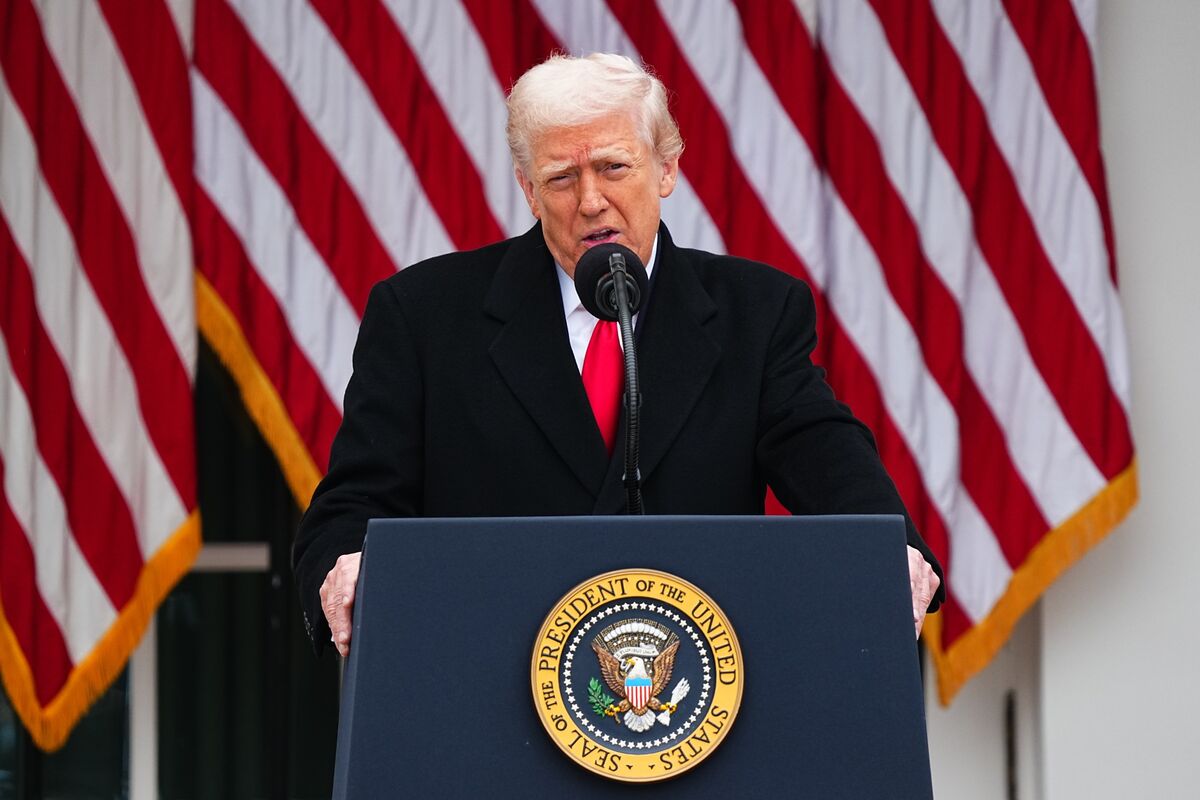
A Georgia Superior Court judge, Scott McAfee, dismissed the last remaining criminal charges against former President Donald Trump related to alleged interference in the 2020 election after new prosecutor Peter Skandalakis declined to pursue the case. The prosecution had been hampered earlier by the disqualification of Fulton County District Attorney Fani Willis; the dismissal removes the immediate Georgia legal exposure tied to this indictment and may modestly reduce political/legal uncertainty for markets and investors, though it is unlikely to have a direct material impact on financial fundamentals.
Market structure: The Georgia dismissal reduces a near-term political/legal tail risk and should modestly compress a risk premium priced into US equities; expect a knee‑jerk bid in cyclicals and financials and modest underperformance in defensives. Mechanically, this lowers event-driven hedging demand (SPY puts, VIX) and can push a 1–3 day reallocation into IWM/XLF-sized pockets; estimate a 2–4% idiosyncratic boost for small‑caps vs 1–2% for large caps if flows follow historical event relief.
Risk assessment: Tail risks remain material — appeals, separate federal/state actions, protests or sudden DOJ filings could reprice markets fast; assign a 10–20% conditional probability that this relief is reversed or offset within 3 months. Immediate horizon (days): lower implied volatility; short-term (weeks–months): directional positioning may persist but is vulnerable to campaign/policy catalysts; long-term (quarters+): policy/regulatory shifts (tax, antitrust, energy subsidies) could swing sector returns ±5–15%.
Trade implications: Prefer tactical long exposure to financials (XLF) and small‑caps (IWM) and a paired short or underweight of growth/defensive sectors (QQQ/XLU) for 1–3 month plays. Options: sell near-term VIX or buy 1–3 month call spreads on XLF/XLI sized small (0.5–1% risk) to express compressed volatility; use strict stops (cut at 3–4% adverse price moves).
Contrarian angles: Consensus may underweight the chance of re-escalation — if DOJ/state filings emerge within 30–60 days the market could snap back 3–8% and vol reprice. Conversely, if relief persists into 6–12 months it can tighten credit spreads and lift cyclical earnings; watch for an unintended tightening of monetary policy via a 10–25bp rise in 10‑yr yields which would hurt rate‑sensitive sectors and blunt the apparent rally.
AI-powered research, real-time alerts, and portfolio analytics for institutional investors.
Request DemoOverall Sentiment
neutral
Sentiment Score
0.00
