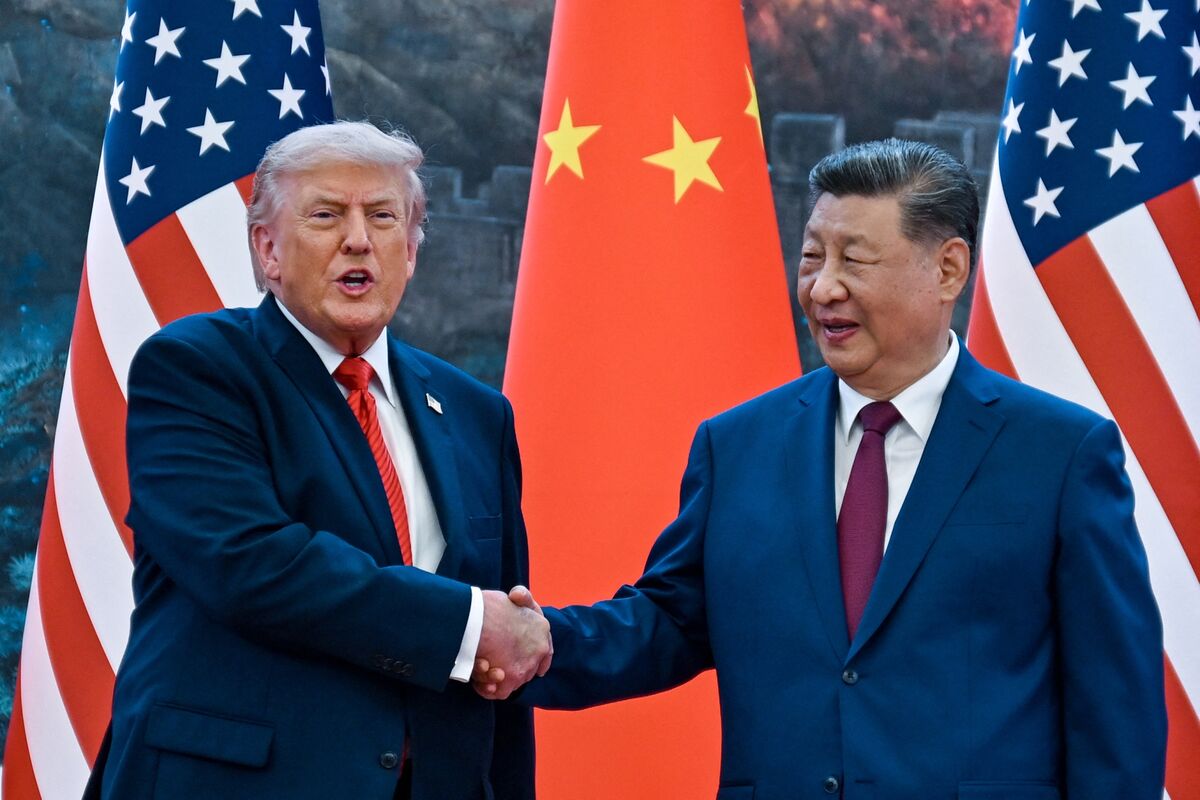
Trump and Xi held a cordial meeting in Beijing that appears to keep the US-China trade truce intact for now. China also delivered a firm message on Taiwan, underscoring that geopolitical tensions remain elevated despite the positive optics. The article is broadly neutral, with limited immediate market impact beyond reinforcing the status quo on trade.
The near-term market implication is less about the optics and more about the removal of a timing risk premium: when both sides choose choreography over confrontation, procurement managers, customs brokers, and CFOs can keep shipments moving without front-loading inventory or accelerating supplier diversification. That tends to support cyclical Asia exporters, semicap equipment names, and freight-linked businesses in the next 1-3 months, but only as long as rhetoric stays contained and no new tariff deadlines are weaponized. The bigger second-order effect is that a calm summit can delay the re-pricing of supply-chain redundancy. If this détente holds for a few quarters, companies that have been benefiting from “China + 1” re-shoring anxiety may see slower order growth than consensus expects, while Chinese manufacturers with global scale regain some negotiating leverage on price and lead times. The loser in that scenario is not just alternative manufacturing hubs; it is also anyone long the idea that geopolitical fragmentation is a straight-line beneficiary of every headline. The contrarian read is that this kind of bilateral warmth often produces the least durable policy change: good atmospherics can suppress volatility without fixing the underlying points of friction, especially around tech controls, agriculture, and Taiwan. That means the market could be underpricing a binary reversal risk over the next 30-90 days if either side needs to reassert toughness for domestic politics. In other words, the trade is not to chase the truce, but to own the volatility decay while keeping cheap downside protection on headline risk. For rates and credit, a stable trade truce marginally reduces the probability of an inflationary tariff shock, which supports duration and tightens credit spreads at the margin. But the real signal is that both leaders may prefer managed competition, which argues for lower realized volatility across Asia FX and industrials until the next policy catalyst arrives. If that is right, the alpha is in selective beta exposure plus event hedges, not in a wholesale macro pivot.
AI-powered research, real-time alerts, and portfolio analytics for institutional investors.
Request DemoOverall Sentiment
neutral
Sentiment Score
0.05
