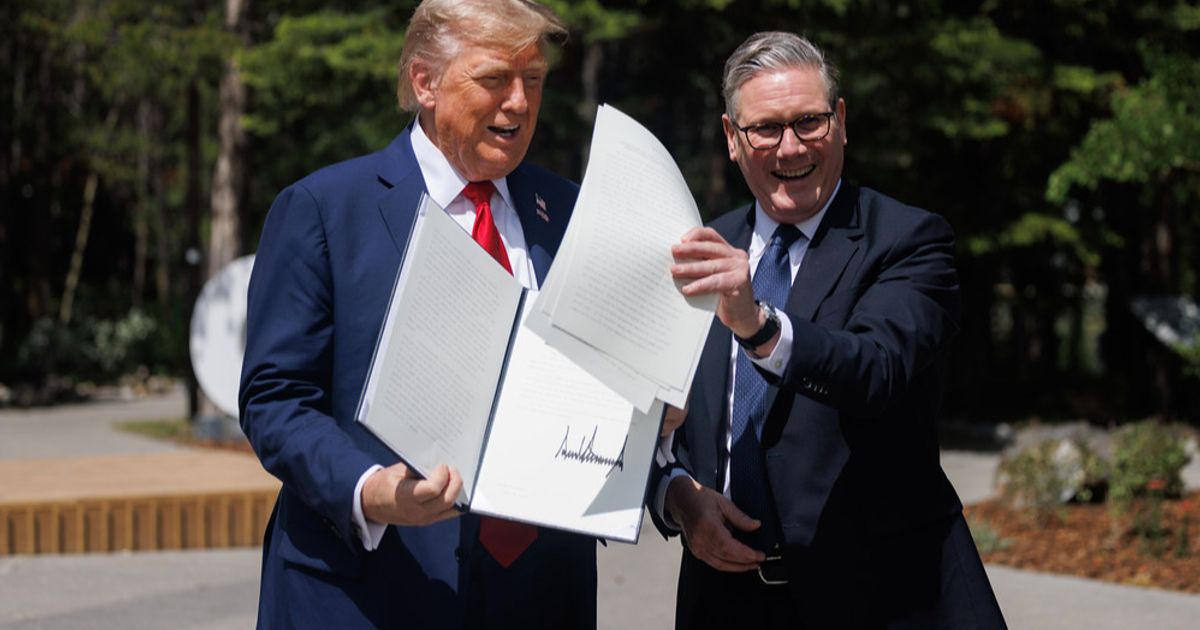
Rolls-Royce shares declined 1.2% despite the signing of a US-UK trade deal eliminating tariffs on British aerospace exports, including Rolls-Royce's jet engines. The positive impact of the trade agreement, which also reduces tariffs on auto and steel exports, was overshadowed by escalating geopolitical tensions in the Middle East, specifically renewed conflict between Iran and Israel. While Rolls-Royce shares are up 10% since the deal's initial announcement in May, the market's focus shifted to broader global concerns.
Shares of Rolls-Royce Holdings PLC (LSE:RR.) experienced a 1.2% decline on Tuesday, June 17, 2025, despite the formal signing of a US-UK trade deal that eliminates tariffs on British aerospace exports to the US. This development, confirmed by US President Donald Trump at a G7 meeting, is significant for Rolls-Royce as a major jet engine manufacturer. However, the positive news was largely overshadowed by escalating geopolitical tensions in the Middle East, specifically renewed conflict between Iran and Israel and a US presidential call for the evacuation of Tehran, which unsettled financial markets. While Rolls-Royce shares have appreciated 10% since the trade deal was first outlined in mid-May, the immediate market focus shifted to these broader global concerns. The trade agreement also stipulates a reduction in US tariffs on UK auto exports to 10% from a 25% global rate, and on steel to 25% compared to a 50% global levy, although steel tariffs were described as "still a work in progress." Fellow aerospace supplier Melrose Industries PLC also saw its shares dip 0.5%. The mixed market reaction is reflected in the overall sentiment score of -0.1, indicating a neutral to slightly negative perception despite the fundamentally positive trade development for the UK aerospace sector.
AI-powered research, real-time alerts, and portfolio analytics for institutional investors.
Overall Sentiment
mixed
Sentiment Score
-0.10
