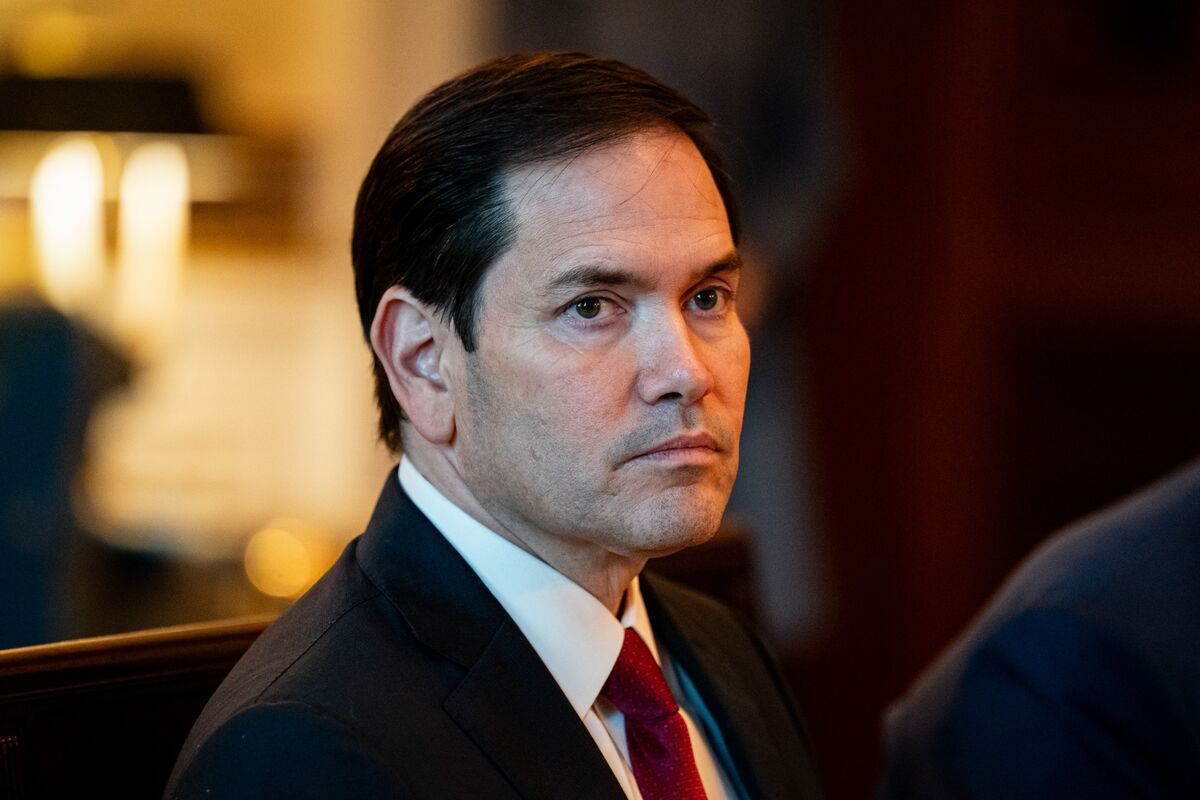
US Secretary of State Marco Rubio is set to meet Russian counterpart Sergei Lavrov amidst continued US military aid to Ukraine and allied discussions for Ukraine's postwar revival. Simultaneously, the US announced new tariff demands, including a 50% rate on Brazil and 20% on the Philippines effective August, signaling escalating trade policy. Furthermore, President Trump indicated significant progress towards a potential Israel-Hamas ceasefire within weeks, aiming for hostage release.
The current geopolitical landscape presents a complex mix of diplomatic engagement, escalating trade tensions, and potential conflict de-escalation, creating significant cross-currents for the market. The scheduled meeting between US Secretary of State Marco Rubio and Russian Foreign Minister Sergei Lavrov occurs against a backdrop of continued US military support for Ukraine, indicating a dual-track strategy of dialogue and deterrence. Simultaneously, the US administration is intensifying its trade policy with the announcement of new tariff demand letters, including a substantial 50% rate on Brazil and 20% on the Philippines, set to take effect in August. This aggressive tariff posture introduces considerable uncertainty for global supply chains and companies exposed to these markets. In a contrasting development, President Trump's statement that an Israel-Hamas ceasefire deal is "very close" offers a potential catalyst for reduced geopolitical risk in the Middle East. On the corporate front, while details are sparse, Nvidia's mention of a "key milestone" is a positive signal, whereas Meta's acquisition of an Apple engineer for over $200 million highlights the intense and costly competition for top-tier talent, representing a strategic investment for Meta but a potential human capital loss for Apple.
AI-powered research, real-time alerts, and portfolio analytics for institutional investors.
Request DemoOverall Sentiment
mixed
Sentiment Score
0.00
Ticker Sentiment
