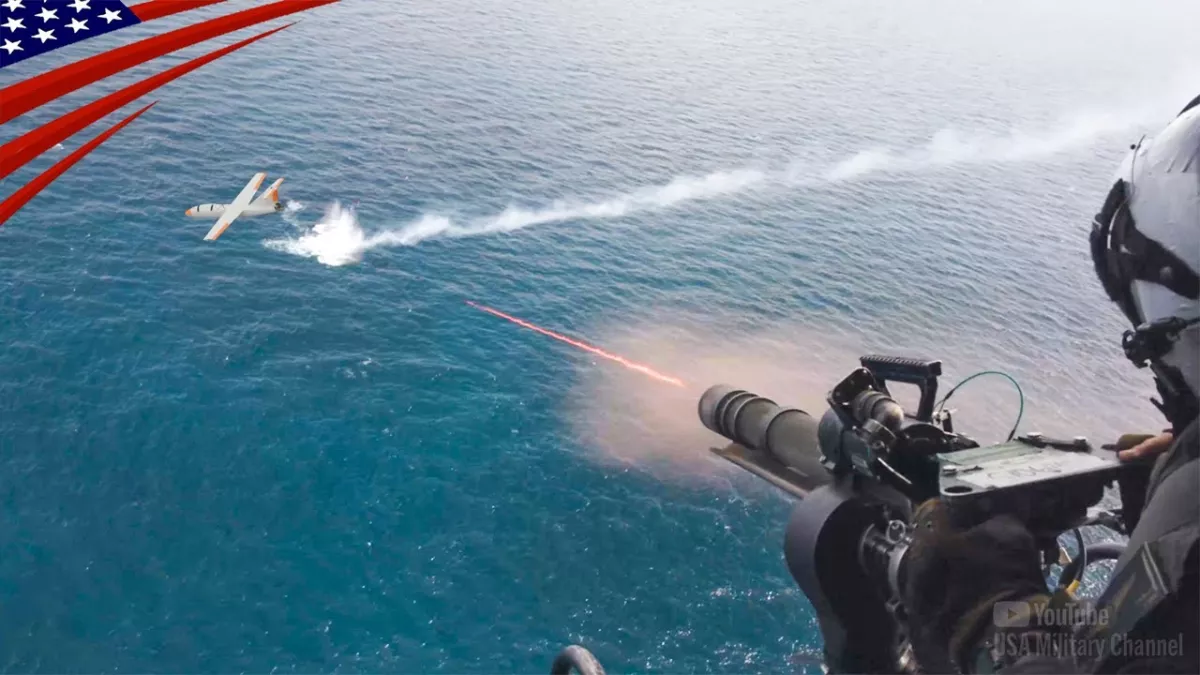
US Marines tested MADIS in the Philippines as the US looks for cheaper counter-drone options against low-cost swarms. The article highlights the cost gap between $1 million AIM-120 missiles, roughly $430,000 Stingers, $100,000 Coyote interceptors, and Iranian Shahed-type drones at about $30,000, with 30 mm proximity-fused rounds potentially reducing the per-intercept cost to around $11,000. The takeaway is a shift toward layered, lower-cost air defense rather than pure missile-based interception.
The strategic shift here is not just about cheaper air defense; it is about forcing a cost-exchange ratio back in the defender’s favor before mass drone attacks become operationally routine. The second-order winner is whoever can industrialize layered counter-UAS at scale: vehicle integrators, radar/electronics suppliers, EW vendors, and especially ammunition producers that can deliver proximity-fused rounds with consistent quality and high-volume throughput. The loser set is more subtle: premium missile inventories become reserve assets rather than frontline consumables, which should compress near-term demand growth for the highest-end interceptors even as headline defense spending rises.
The key catalyst is not one drill, but procurement doctrine over the next 6-24 months. If the Marines can prove that a mixed kinetic/EW stack materially reduces cost per kill, this should accelerate budget migration toward low-cost interceptors, sensor fusion, and vehicle-mounted point defense—areas where adoption can scale faster than bespoke missile production. A less obvious beneficiary is the small-caps and primes with exposure to programmable munitions, fire-control software, and ruggedized tactical vehicle platforms; the bottleneck becomes magazine depth and logistics, not just sensor performance.
The contrarian risk is that the market may overestimate how quickly cheap countermeasures can be fielded against evolving drone swarms. In contested EW environments, autonomy, navigation hardening, and decoys can lower the effectiveness of jamming and force defenders back into expensive hard-kill options; that would keep demand anchored to premium interceptors longer than expected. Another tail risk is procurement slippage: if budgets get absorbed by larger theater priorities, the tactical transition may take years rather than quarters, leaving the best trade in the “picks and shovels” layer rather than the headline defense names.
AI-powered research, real-time alerts, and portfolio analytics for institutional investors.
Request TrialOverall Sentiment
neutral
Sentiment Score
0.05
