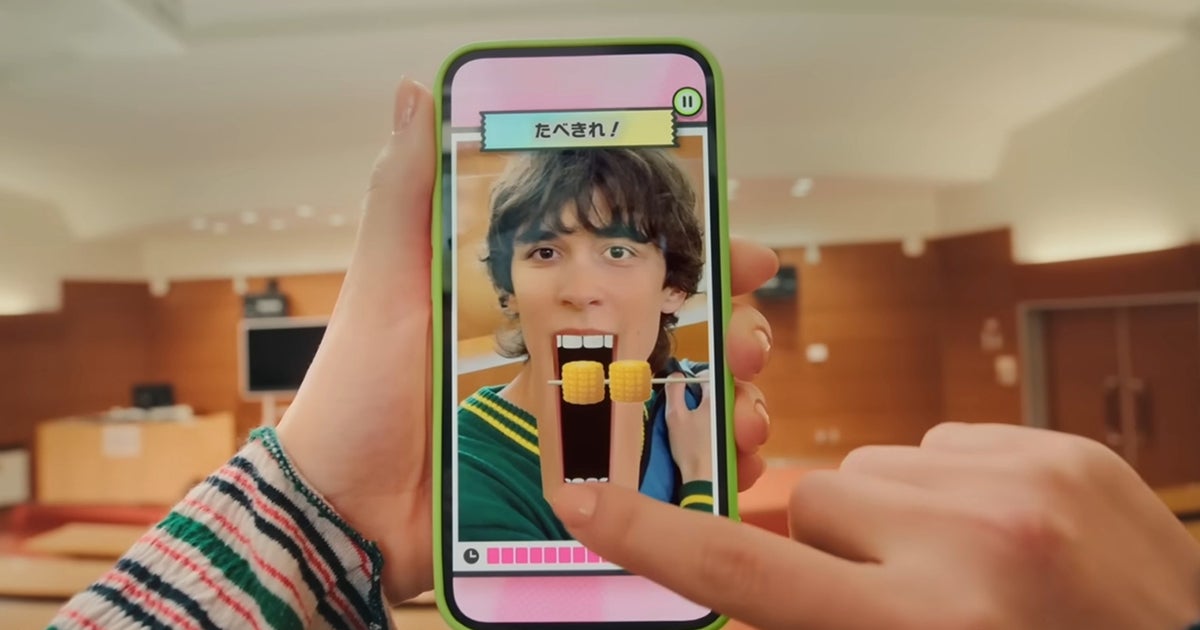
Nintendo announced Pictonico!, a free-to-start mobile game launching on 28th May for iOS and Android, with a free demo containing three minigames and additional game volumes sold separately. The title leans on camera-based, Wario Ware-style minigames developed with Intelligent Systems, highlighting Nintendo's smaller-scale mobile experimentation. The company also emphasized that users' photos are not sent to Nintendo servers, limiting data-privacy concerns.
This is less a one-off game announcement than a signal that Nintendo is testing a low-capex, recurring-revenue format on mobile with a privacy-friendly wrapper. The second-order read is that it can monetize the long tail of IP without the console install-base dependency, while keeping user acquisition cheap through novelty and social virality rather than paid performance marketing. The key commercial question is whether “volume” purchases can create a durable ARPDAU flywheel or whether the novelty decays after one or two content drops. The competitive implication is that Nintendo is borrowing the engagement loop of casual UGC/mobile titles but with first-party IP trust and brand safety, which is a difficult combination for peers to replicate quickly. That favors companies with strong recognizable characters and under-monetized catalogs, while pressuring pure-play casual mobile publishers whose content is easier to imitate and whose ad-supported economics are more fragile if Nintendo proves willing to keep pricing consumer-friendly. In privacy-sensitive mobile gaming, an explicit no-photo-transfer stance also lowers adoption friction at the margin and reduces regulatory tail risk versus many ad-tech-heavy apps. Near term, the catalyst is mostly sentiment and download conversion over the next 1-3 weeks; the real P&L impact only matters if Nintendo begins stacking similar releases and proves repeat purchase behavior over 3-6 months. The risk is that this remains a novelty demo with weak retention, which would cap any multiple re-rating and reinforce the market’s view that mobile is incremental rather than strategically material. Another tail risk is content moderation or reputational issues if user-generated photos create unexpected safety/privacy controversies, though the company’s local-first framing should mitigate that versus the broader market. The contrarian angle is that the setup may be underappreciated as an option on Nintendo’s ability to monetize dormant IP outside consoles, especially if this becomes a template for low-cost experimental releases with strong cross-promotion. Consensus will likely dismiss it as small potatoes; that’s precisely why the asymmetric value lies in watching for follow-on announcements rather than trading the single title headline. If adoption is even modestly sticky, it could justify a higher “IP platform” multiple over a 6-12 month horizon rather than a pure hardware-cycle valuation.
AI-powered research, real-time alerts, and portfolio analytics for institutional investors.
Request DemoOverall Sentiment
mildly positive
Sentiment Score
0.22
